|
|

064-Vesta-Dawn_1024-PCF-LXTT.jpgFeatures of 4-Vesta (Enhanced Natural Colors; credits for the additional process. and color.: Dr Paolo C. Fienga - Lunar Explorer Italia)183 visiteCaption NASA:"Why is the Northern Half of Asteroid 4-Vesta more heavily cratered than the Southern one? No one is yet sure. This unexpected mystery has come to light only in the past few weeks since the robotic Dawn Mission became the first Spacecraft to orbit the second largest object in the Asteroid Belt between Mars and Jupiter. The Northern Half of 4-Vesta, seen on the upper left of the above image, appears to show some of the densest cratering in the Solar System, while the Southern Half is unexpectedly smooth. Also unknown is the origin of Grooves that circle the Asteroid nears its Equator, and the nature of the Dark Streaks that delineate some of 4-Vesta's Craters (for example the Crater just above the the image center). As Dawn spirals in toward 4-Vesta over the coming months, some answers may emerge, as well as Higher Resolution and color images".MareKromium
|
|
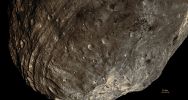
065-Vesta-PIA14322-PCF-LXTT.jpgThe South Pole of 4-Vesta (Enhanced Natural Colors; credits for the additional process. and color.: Dr Paolo C. Fienga - Lunar Explorer Italia) 189 visitenessun commentoMareKromium
|
|
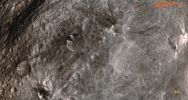
066-Vesta-PIA14324-PCF-LXTT.jpgBizarre-looking Surface Feature of 4-Vesta (Natural Colors; credits for the additional process. and color.: Dr Paolo C. Fienga - Lunar Explorer Italia) 177 visitenessun commentoMareKromium
|
|
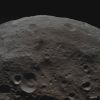
067-Vesta-PIA14694-1.jpgFeatures of 4-Vesta: Dark Material on Hilltops (Absolute Natural Colors; credits for the additional process. and color.: Dr Paolo C. Fienga - Lunexit Team) 131 visiteCaption NASA:"NASA's Dawn Spacecraft obtained this image with its framing camera on Aug. 18, 2011. This image was taken through the framing camera's clear filter aboard the Spacecraft. The image has a resolution of about 260 mts per pixel".
MareKromium
|
|
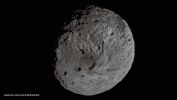
068-Vesta-South_Pole_Dawn_3840.jpgFeatures of 4-Vesta: South Pole and South Polar Regions (Absolute Natural Colors; credits for the additional process. and color.: Dr Paolo C. Fienga - Lunexit Team)229 visitenessun commentoMareKromium
|
|

070-Vesta-PIA14973.jpgVesta's Northern and Equatorial Regions (Absolute Natural Colors; credits for the additional process. and color.: Dr Paolo C. Fienga - Lunexit Team)223 visitenessun commentoMareKromium
|
|
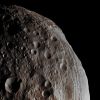
072-Vesta-Striations-PIA14678-PCF-LXTT.jpgStriations on Vesta (Absolute Natural Colors; credits for the additional process. and color.: Drr Gianluigi Barca and Paolo C. Fienga - Lunexit Team)177 visitenessun commentoMareKromium
|
|
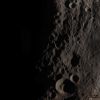
074-Vesta-PIA14776.jpgNight and Day on 4-Vesta (Absolute Natural Colors; credits for the additional process. and color.: Dr Paolo C. Fienga - Lunexit Team)182 visitenessun commentoMareKromium
|
|

080-Craters-Tuccia_Crater-TQ-PIA15081-PCF-LXTT.jpgTuccia Crater (Absolute Natural Colors; credits for the additional process. and color.: Drr Gianluigi Barca and Paolo C. Fienga - Lunexit Team)158 visiteThis Dawn FC (framing camera) image is dominated by bright Rayed Craters of different sizes. The most prominent bright Rayed Crater is the approximately 8 Km diameter crater in roughly the center of the image. This Crater is named Tuccia and the Quadrangle in which it is located is named after it. Towards the bottom of the image its bright rays extend for over 10 Km but towards the top the Rays are much less extensive. Tuccia Crater has a smaller, fresher, younger Crater on its Rim which also seems to have bright rays emanating from it. It is clear that this smaller Crater is younger because it overprints the larger one and has a fresher, sharper Rim than Tuccia's. Slightly above these Craters is a much smaller, roughly 2 Km diameter, bright Rayed Crater. To the left of this Crater there is a patch of bright material that is associated with Craters that are only a few pixels in diameter. There is also a good example of the Hummocky (---> wavy/undulating) Terrain of Vesta's South Polar Region (visible at the bottom left of the frame). Tuccia Crater has been emplaced onto this Hummocky Terrain.
This image is in Vesta's Tuccia Quadrangle and the center Latitude and Longitude of the image is 38,8° South and 200,2° East. NASA's Dawn Spacecraft obtained this image with its framing camera on October 17th 2011. This image was taken through the camera's clear filter. The distance to the Surface of Vesta is about 702 Km and the image has a resolution of about 70 meters per pixel. This image was acquired during the HAMO (High Altitude Mapping Orbit) phase of the mission.MareKromium
|
|

081-Craters-Sextilia_Crater-PIA15085-PCF-LXTT.jpgSextilia Crater and Surroundings (Absolute Natural Colors; credits for the additonal process. and color.: Dr Paolo C. Fienga - Lunar Explorer Italia)159 visiteThis Dawn FC (framing camera) image is centered on the Sextilia Crater in Vesta's Southern Hemisphere. Craters on Vesta are named after Vestal virgins, priestesses of the Roman goddess Vesta. The Sextilia Crater is a large, approximately 15 Km diameter and distinctive Crater, therefore its name was used to name the whole Quadrangle in which it is located. Sextilia Crater is distinctive because it has a fresh, sharp Rim which is also scalloped in shape. It also contains Rocky Outcrops of both bright and dark material. These originate along its Rim and sides and slump towards the center of the Crater. There are some especially large slumps of material on the right side of it. Surrounding Sextilia Crater is the Hummocky (---> wavy/undulating) Terrain of Vesta's Southern Hemisphere and some dark and bright Rayed Craters.
This image is in Vesta's Sextilia Quadrangle and the center Latitude and Longitude of the image is 39,5° South and 155,7° East. NASA's Dawn Spacecraft obtained this image with its framing camera on October 10th 2011. This image was taken through the camera's clear filter. The distance to the surface of Vesta is approx. 702 Km and the image has a resolution of about 70 meters per pixel. This image was acquired during the HAMO (High Altitude Mapping Orbit) phase of the mission.MareKromium
|
|

082-Craters-Unnamed_Crater-PIA15222-PCF-LXTT.jpgIn the Shadows... (Absolute Natural Colors; credits for the additional process. and color.: Dr Paolo C. Fienga - Lunexit Team)219 visiteThis image, one of the first obtained by NASA's Dawn Spacecraft in its low altitude mapping orbit, shows part of the Rim of a (relatively) fresh Unnamed Crater. The Terrain shown here is located in an area known as the Heavily Cratered Terrain in the Northern Hemisphere of 4-Vesta.
The image, taken by Dawn's framing camera, is centered at around 17° North Latitude and 77° East Longitude. It was obtained on Dec. 13, 2011, from an altitude of approx. 119 miles (about 191 Km). It covers an area of about 11 by 11 miles (such as approx. 18 by 18 Km).MareKromium
|
|

083-Craters-Caparronia_Crater-PIA15129-PCF-LXTT.jpgCaparronia Crater and Surroundings (Natural Colors; credits for the additional process. and color.: Dr Paolo C. Fienga - Lunexit Team)229 visiteThis Dawn FC (framing camera) image is dominated by Caparronia Impact Crater. Caparronia Crater is approximately 55 Km in diameter and has a mostly fresh, irregularly shaped Rim. It also has a curved, linear mound running across most of its base. For all of these reasons Caparronia is a distinctive Crater and this is why it was chosen to name the Quadrangle in which it is situated. The smooth region around Caparronia Crater is most likely fine Impact Ejecta, which were thrown out from the Crater at the time of its formation. Other impact related features are the linear chains of small, less than 1 km wide, Secondary Craters that occur throughout the image. Some particularly distinctive Crater Chains are in the bottom part of the frame.
Secondary Crater Chains are formed when relatively large debris are ejected from an impact and skip along the Surface, much like a stone skipping across a lake. There are also some linear scars running diagonally across the image, which are due to debris scouring across the Surface.
This image is centered in Vesta's Caparronia Quadrangle and the center Latitude and Longitude of the image is 52,5° North and 149.2° East. NASA's Dawn Spacecraft obtained this image with its framing camera on October 23rd 2011. This image was taken through the camera's clear filter. The distance to the Surface of Vesta, at the time the picture was taken, was approx. 700 km and the image has a resolution of about 70 meters per pixel. This image was acquired during the HAMO (High Altitude Mapping Orbit) phase of the mission.MareKromium
|
|
| 55 immagini su 5 pagina(e) |
 |
|
4 |
|





