Mars Reconnaissance Orbiter (MRO)
|
|
|
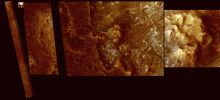
PSP_001454_2030_zoom3d-01.jpgLayered Terrain Near Mawrth Valles Phyllosilicates (High-Def-3D + natural colors; credits: DR M. Faccin & Lunar Explorer Italia)69 visiteMars Local Time: 15:27 (early afternoon)
Coord. (centered): 22,8° North Lat. and 341,7° East Long.
Spacecraft altitude: 284,1 Km (such as about 177,6 miles)
Original image scale range: 28,4 cm/pixel (with 1 x 1 binning) so objects ~85 cm across are resolved
Map projected scale: 25 cm/pixel
Map projection: EQUIRECTANGULAR
Emission Angle: 1,3°
Phase Angle: 47,6°
Solar Incidence Angle: 49° (meaning that the Sun is about 41° above the Local Horizon)
Solar Longitude: 136,9° (Northern Summer)
Credits: NASA/JPL/University of Arizona
Additional process.: Lunar Explorer ItaliaMareKromium
|
|
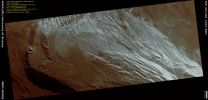
PSP_001456_1695_RED_abrowse-00.jpgLight Layered Deposits in Valles Marineris Region (CTX Frame - Natural Colors; credits: Lunexit)76 visiteThis image shows bright Layered Deposits near the junction of Coprates Chasma and Melas Chasma, both part of the Valles Marineris Canyon System.
The Outcrop visible in this frame is found in a wide Alcove located in the Northern Wall and it forms a broad mound which is several kilometers wide; dark, wind-blown materials cover it in places.
Similar light-toned rock occurs in many places of the Valles Marineris.
An important question is when these materials formed: were they deposited within the Troughs after they opened and then eroded, or are they remnants of the Wall Rock?
Analysis of the orientation of the layers using HiRISE images may help scientists answer this question.
There are no fresh Impact Craters preserved on the Outcrop Surface, suggesting that the Layered Deposits are being eroded rapidly enough to erase the Craters.
In many places, the light rocks have regular fractures called "Joints". Joints are common in Earthly rocks and HiRISE images show them in many places on Mars as well.
These Joints can provide information about the forces that affected - in time - the rocks of this area, and therefore they could also help us to (at least partially) unravel the Geologic History of Mars in general and this Outcrop in particular.MareKromium
|
|

PSP_001456_1695_RED_abrowse-01.jpgLight Layered Deposits in Valles Marineris Region (EDM - Superdef. + Natural Colors; credits: Dr M. Faccin & Lunexit)66 visiteL'estrazione del dettaglio in formato JP2 e Superdefinizione è del Dr Faccin; la colorizzazione Multispettrale e la calibrazione sono del Dr Fienga. A nostro parere, il risultato si commenta da solo...MareKromium
|
|
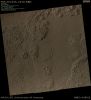
PSP_001456_2010_RED_abrowse.jpgFlood-carved Canyon in Kasei Valles (Natural Colors; credits: Lunexit)79 visiteThis HiRISE image shows a wonderfully complex surface on the floor of this ancient Flood-carved Canyon.
The floor of this Canyon, now, does not show any kind of landform that scientists expect to see from the occurrence of flood erosion phenomena.
Instead, it appears that the floor of the valley has been covered, after the inundation that first designed it, by another flow made by some very dense material that also contained huge ridged plates.
Some of the plates are more than 1 Km (0,6 miles) across. The ridges appear to have formed when the solid crust on the flow crumpled; the plates are pieces of the crust that were rafted apart.
Actually, very large Lava Flows can produce a surface like this, but also water-ice and frozen mud can create similar features.MareKromium
|
|

PSP_001474_2520_RED-new_lake-00.jpgThe Northern Lakes: Lake "Lunexit" (context image)92 visiteQuando si sa dove guardare e che cosa cercare...Si finisce SEMPRE (o quasi...) con il trovare.
L'albedo del dettaglio che vedete a mezza altezza alla Vostra Sx è assolutamente INCONFONDIBILE.
Il detail-mgnf che abbiamo operato (e che vedrete nel prossimo quadro) è chiarissimo: c'è un nuovo Lago nelle Grandi Pianure Nordiche di Marte!
"Lake Lunexit", in onore della nostra Fondazione di Ricerca e di coloro che la rendono viva, e cioè i vari Lorenzo Foschini, Gianluigi Barca, Matteo Fagone, Alessio Feltri, Lorenzo Leone e tanti altri Ricercatori ed Appassionati che, con grandissima umiltà e modestia, stanno contribuendo a scrivere una (piccola, ma non per questo insignificante) porzione della Storia del Pianeta Rosso (nota: Lake Lunexit è stato battezzato - purtroppo - "unofficially", ma con buona pace di IAU, NASA, ESA e di tutti i Fenomeni che guardano, guardano, guardano...senza vedere mai niente e poi blaterano, blaterano e blaterano...senza dire mai nulla!).
MareKromium
|
|

PSP_001474_2520_RED-new_lake-00~0.jpgThe Northern Lakes: Lake "Lunexit" (context image; MULTISPECTRUM - Credits: Lunexit)81 visitenessun commentoMareKromium
|
|

PSP_001474_2520_RED-new_lake-01.jpgThe Northern Lakes: Lake "Lunexit" (extra-detail mgnf)78 visiteEd una volta operato un extra-detail mgnf a noi pare che non possano esserci più dubbi di sorta: sul fondo di questo Cratere c'è un deposito di ghiaccio (l'albedo del ghiaccio d'acqua non tradisce!) e quindi, come già fatto in passato, possiamo parlare tranquillamente di Frozen Lake.MareKromium
|
|

PSP_001483_1545_RED-more_lakes.jpgThe "Dirty Lakes" of Solis Planum (False Colors)76 visiteLe immagini sino ad oggi ottenute dalla Sonda NASA "Mars Reconnaissance Orbiter" posseggono una qualità visiva semplicemente straordinaria: un fatto evidente ed incontestabile (altro che le orribili mistificazioni ESA-Mars Express!). Ed è proprio grazie a questa qualità che, un passo alla volta, stiamo incominciando a vedere Marte davvero come nessuno mai lo aveva visto prima. Un Marte sempre più affascinante, enigmatico e...vivo!
Dopo il Lago Gelato di Vastitas Borealis e dopo gli altri tre Laghi che riteniamo di aver individuato nelle Pianure Nordiche, ecco un frame su cui riflettere.
Anche in questa immagine, infatti, riteniamo di aver individuato, sul fondo di svariati crateri, la presenza di "qualcosa" che non pare proprio essere sabbia, o terriccio o, comunque, il prodotto di un semplice accumulo di sabbie e polveri.
Osservate Voi stessi: sul fondo di alcuni crateri (specie quelli posizionati alla Vostra Sx) c'è qualcosa che evidenzia una tessitura morbida e semi-trasparente. Non stiamo parlando certamente nè di sabbie, nè di polveri ultrasottili. Stiamo parlando, con ogni probabilità, di "acque fangose" (e quindi torbide o "sporche", come le abbiamo noi stessi - scherzosamente - definite). Acque ancora liquide, molto probabilmente, che ci sembra facile individuare anche grazie alla contemporanea presenza, sulla medesima porzione di territorio, di crateri che, invece, sono chiaramente "vuoti" oppure che vedono la presenza sui loro fondi delle ormai caratteristiche "dunette fangose" che già abbiamo visto MOLTO da vicino studiando i Crateri Endurance e Victoria.
Ora guardate il tutto ancora una volta Voi stessi e poi, se volete, diteci che cosa ne pensate...MareKromium
|
|

PSP_001483_1545_RED-more_lakes~0.jpgThe "Dirty Lakes" of Solis Planum (Enhanced Absolute Natural Colors; credits for the additional process. and color.: Dr Paolo C. Fienga - Lunexit Team)396 visitenessun commentoMareKromium
|
|
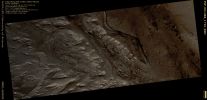
PSP_001488_1750_RED_abrowse.jpgEdge along Gale Craters's Interior Mound (Natural Colors; credits: Dr Paolo C. Fienga - Lunexit Team)65 visiteGale Crater is one of several craters around the Equator that show the presence of Light-Toned Layered Deposits (or LTLD). This HiRISE image covers the northern edge of the LTLD in the Central Mound of Gale Crater, as well as a small portion of the Crater Floor. The right side of the image shows a relatively flat surface with some Impact Craters.
Moving to the left (Southward), there is a large Canyon where Dark Sands have accumulated and formed Ripples and Dunes.
As one moves further to the South, the LTLD rises upward in topography and Layering is visible in some locations. The Surface of the LTLD is very fractured, producing meter-size blocks.
The fact that we don't see many loose rocks along the Surface suggests that the rocks are quickly being destroyed by winds due to their fragile nature.
Resistant Hills, on the other side, tend to be elongated, which is consistent with upslope or downslope winds eroding the rocks themselves.MareKromium
|
|

PSP_001493_1815_RED_abrowse-1.jpgTerra Meridiani (possible True Colors; credits: Dr Paolo C. Fienga - Lnexit Team)71 visiteThis HiRISE image shows dark sand covering bright Bedrock in the Terra Meridiani (Meridiani Planum) Region of Mars.
The MER Opportunity Rover is currently exploring Meridiani, but is located about 500 Km to the West-South/West from this area.
There are three broad classes of Terrain in this image: the regular spacing of the Dark Ridges, with one side of the Ridges (in this case generally facing North/West) shallower than the other, indicates that the material is windblown sand deposited in the form of Dunes or large Ripples. On the slopes of and in between the Dunes and Ripples are smaller-scale Ripples.
The dark orangish tone of the Sand and the analysis of analogous material by Opportunity indicates that is composition might be Basaltic and this is in contrast to most sand on Earth, which is dominated by Quartz.MareKromium
|
|

PSP_001501_2280_RED_abrowse-00.jpgThe Viking Lander 2 Landing Site - Gerald Soffen Memorial Station (ctx frame - Natural Colors; credits: Lunar Explorer Italia)67 visiteViking Lander 2 (VL2) landed on Mars on 3 September 1976, in Utopia Planitia. The Lander, which has a diameter of about 3 meters, has been precisely located in the HiRISE image, and likely locations have been found for the Heat-Shield and Backshell.
The Lander location has been confirmed by overlaying the lander-derived topographic contours on the HiRISE image, which provides an excellent match.
VL2 was one element of an ambitious mission to study Mars, with a 4-spacecraft flotilla consisting of 2 Orbiters and 2 Landers.
Large Boulders, Dunes and other features visible in Lander images can be located in the HiRISE image. The polygonal pattern of the Surface is typical at these latitudes and may be due to the presence of deep subsurface ice.
As chance would have it, this image is blurred in some places due to the abrupt motion associated with the restart of the High Gain Antenna tracking during the very short image exposure. This is the first time after acquiring hundreds of pictures that an image has been unintentionally smeared, but the overall performance has been excellent.
A prime motivation for early viewing of these Viking sites is to calibrate what we see from space with the data previously acquired by the Landers. In particular, determining what sizes of rocks can be seen from MRO aids the interpretation of data now being taken to characterize sites for future landers.MareKromium
|
|
| 2236 immagini su 187 pagina(e) |
 |
|
|
|
|
96 | |
|
|
|
|








