Mars Reconnaissance Orbiter (MRO)
|
|
|
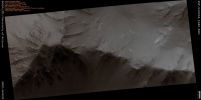
ESP_020958_1680_RED_abrowse-PCF-LXTT.jpgMassif in Coprates Chasma (Absolute Natural Colors; credits for the additional process. and color.: Dr Paolo C. Fienga - Lunexit Team)97 visitenessun commentoMareKromium
|
|

ESP_020959_0985_RED_abrowse-PCF-LXTT.jpgEarly Spring at Inca City (Natural Colors; credits for the additional process. and color.: Dr Paolo C. Fienga - Lunexit Team)86 visitenessun commentoMareKromium
|
|

ESP_020959_0985_RED_abrowse.jpgEarly Spring in Inca City (Absolute Natural Colors; credits for the additional process. and color.: Dr Paolo C. Fienga - Lunexit Team)318 visitenessun commentoMareKromium
|
|
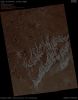
ESP_020960_1160_RED_abrowse-PCF-LXTT-2.jpgDunes in Aonia Terra (Absolute Natural Colors; credits for the additional process. and color.: Dr Paolo C. Fienga - Lunexit Team)158 visitenessun commentoMareKromium
|
|
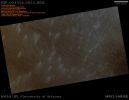
ESP_021454_0925_RED_abrowse-00-PCF-LXTT.jpgPolar Streaks (Absolute Natural Colors; credits: Dr Paolo C. Fienga - Lunexit Team)325 visiteThis is the first HiRISE image taken after Solar Conjunction (2010), when Mars passes behind the Sun as seen from Earth. The Solar Corona interferes with radio communication with MRO for a few weeks during conjunction, so no HiRISE imaging was planned until reliable communication resumed.
This image is one of a set of images taken to monitor the evolution of the South Polar Seasonal Cap. The Seasonal Caps on Mars are mostly composed of Carbon Dioxide, the major component of the Martian Atmosphere. It is currently Spring in the Southern Hemisphere of Mars, so the Cap is warming and evaporating into the Atmosphere by way of Sublimation.
The Dark Streaks visible in this image are thought to be sand ejected onto the Surface of the Cap by "Jets" of CO2. It is thought that Sunlight penetrates to the base of the Seasonal Cap, warming the soil at its base. This in turn warms the Cap from below, causing Carbon Dioxide to evaporate and build pressure until the gas escapes through Vents to the Surface. Sand grains are apparently entrained in this flow and deposited in Fans on the Surface.
The White Streaks may be formed by recondensation of ice on the Surface of the Cap.MareKromium
|
|
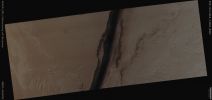
ESP_021464_1900_RED_abrowse-PCF-LXTT-00.jpgFissure in Cerberus Fossae (CTX Frame - Absolute Natural Colors; credits for the additional process. and color.: Dr Paolo C. Fienga - Lunar Explorer Italia)199 visiteMars Local Time: 15:05 (Early Afternoon)
Coord. (centered): 10,1° North Lat. and 157,6° East Long.
Spacecraft altitude: 295,6 Km (such as about 184,7 miles)
Original image scale range: 29,6 cm/pixel (with 1 x 1 binning) so objects ~89 cm across are resolved
Map projected scale: 25 cm/pixel
Map projection: EQUIRECTANGULAR
Emission Angle: 21,2°
Sun-Mars-Spacecraft (or "Phase") Angle: 74,9°
Solar Incidence Angle: 56° (meaning that the Sun is about 34° above the Local Horizon)
Solar Longitude: 242,5° (Northern Fall)
Credits: NASA/JPL/University of Arizona
Additional process. and coloring: Dr Paolo C. Fienga - Lunar Explorer ItaliaMareKromium
|
|
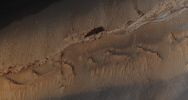
ESP_021464_1900_RED_abrowse-PCF-LXTT-01.jpgFissure in Cerberus Fossae (EDM - Absolute Natural Colors; credits for the additional process. and color.: Dr Paolo C. Fienga - Lunar Explorer Italia)214 visitenessun commentoMareKromium
|
|
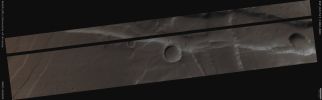
ESP_021527_1960_RED_abrowse-00-PCF-LXTT.jpgFeatures of Tharsis (CTX Frame - Absolute Natural Colors; credits for the additional process. and color: Dr Paolo C. Fienga - Lunexit Team)197 visiteMars Local Time: 15:06 (Early Afternoon)
Coord. (centered): 15,8° North Lat. and 238,2° East Long.
Spacecraft altitude: 275,1 Km (such as about 171,9 miles)
Original image scale range: 55 cm/pixel (with 2 x 2 binning) so objects ~1 mt and 65 cm across are resolved
Map projected scale: 50 cm/pixel
Map projection: EQUIRECTANGULAR
Emission Angle: 6,2°
Sun-Mars-Spacecraft (or "Phase") Angle: 65,2°
Solar Incidence Angle: 60° (meaning that the Sun is about 30° above the Local Horizon)
Solar Longitude: 245,6° (Northern Fall)
Credits: NASA/JPL/University of Arizona
Additional process. and coloring: Dr Paolo C. Fienga - Lunar Explorer ItaliaMareKromium
|
|
ESP_021527_1960_RED_abrowse-01-PCF-LXTT.jpgFeatures of Tharsis (EDM - Absolute Natural Colors; credits for the additional process. and color: Dr Paolo C. Fienga - Lunexit Team)210 visitenessun commentoMareKromium
|
|

ESP_021536_1780_00-PCF-LXTT.jpgSanta Maria Crater and "Oppy" (Absolute Natural Colors; credits: Dr Paolo C. Fienga - Lunexit Team)267 visitenessun commentoMareKromium
|
|

ESP_021551_1710_RED_abrowse-PCF-LXTT.jpgElorza Crater (Natural Colors; credits for the additional process. and color.: Dr Paolo C. Fienga - Lunexit Team)242 visitenessun commentoMareKromium
|
|

ESP_021559_1780_RED_abrowse-PCF-LXTT.jpgProximities of Libya Montes (Absolute Natural Colors; credits for the additional process. and color.: Dr Paolo C. Fienga - Lunexit Team)488 visitenessun commentoMareKromium
|
|
| 2236 immagini su 187 pagina(e) |
 |
|
|
|
|
49 | |
|
|
|
|








