Mars Reconnaissance Orbiter (MRO)
|
|
|
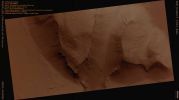
ESP_018075_1955_RED_abrowse-00.jpgAn Hill cut by Cerberus Fossae (Natural Colors; credits for the additional process. and color.: Dr Paolo C. Fienga - Lunexit Team)64 visitenessun commentoMareKromium
|
|
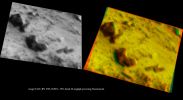
ESP_018075_1955_RED_abrowse-01.jpgUnusually-looking Surface Feature in Cerberus Fossae (credits for the additional process.: Dr Marco Faccin - Lunexit Team)90 visitenessun commentoMareKromium
|
|
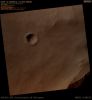
ESP_018094_1720_RED_abrowse.jpgRelatively recent Impact Crater in Meridiani Planum (Absolute Natural Colors; credits: Dr Paolo C. Fienga - Lunexit Team)67 visiteThe approximately 650-mt (2135 foot) diameter Crater in this image is relatively fresh, as evidenced by its sharp Rim and unmodified shape. Ejecta appears on top of pre-existing craters, and stands out against the background, again indicating relative youth.
However, there is something else interesting about the ejecta for this Crater: it is butterfly-shaped, with much more expansive ejecta along one axis, and much less along the other one.
Butterfly-shaped ejecta indicate that the body that caused the crater struck Mars at an oblique (or very shallow) angle. When this happens, the crater shape may be elliptical, although round craters can result from oblique impacts, too. During an oblique impact, much more ejecta is thrown out perpendicular to the direction of impact, and relatively little material is ejected along the impactor's trajectory.
Oblique impacts are relatively rare, and so a fresh, oblique impact like this one is an attractive target.MareKromium
|
|
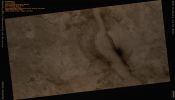
ESP_018161_2270_RED_abrowse-1.jpgFuture Mars Landing Site in Acidalia Mensa (Natural Colors; credits for the additional process. and color.: Dr Paolo C. Fienga - Lunexit Team)69 visitenessun commentoMareKromium
|
|

ESP_018273_2245_RED_abrowse-00.jpgPossible Water-Ice in a "fresh" Crater (CTX Frame - Natural Colors; credits for the additional process. and color.: Dr Paolo C. Fienga - Lunexit Team)78 visitePrevious HiRISE images of Fresh Craters in the Middle to High Northern Latitudes show exposed Water Ice on the Poleward-facing slopes. Here is another example.
The EDM shows an approx. 6 meters (20 feet) diameter Crater. Based on before and after images acquired by the Odyssey THEMIS and MRO CTX cameras, respectively, this Crater formed some time between April 2004 and January 2010.
The Crater is at a latitude of 44° North and is itself located on the ejecta of a larger crater. The image was acquired in early Summer, when frost at this latitude is not expected.
It is therefore believed that the bright blueish material that can be seen in the EDM is Subsurface Ice that was exposed by the impact.
This ice is probably at the same depth and has a similar origin to that excavated by the Phoenix Lander back in 2008. The area of exposed ice based on the HiRISE images is about 1-2 square meters (such as 10-20 square feet).MareKromium
|
|
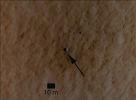
ESP_018273_2245_RED_abrowse-01.jpgPossible Water-Ice in a "fresh" Crater (EDM - Natural Colors; credits for the additional process. and color.: Dr Paolo C. Fienga - Lunexit Team)77 visitenessun commentoMareKromium
|
|

ESP_018301_2505_RED_abrowse-00.jpgLouth Crater (CTX Frame- Natural Colors; credits for the additional process. and color.: Dr Paolo C. Fienga - Lunexit Team)78 visiteThis HiRISE image shows a large Ice Mound located in Louth Crater. At 70° North (in the Region of Vastitas Borealis), this is the lowest latitude permanent deposit of water ice on Mars.
The HiRISE image, taken in early Summer, shows details of the Mound and non-ice portions of the Crater Floor.
The Mound is characterized by rough textures and layering similar to features seen on the North Polar Layered Deposits near the Martian North Pole. Zooming in to an area in the South-Eastern part of the Mound (see the following EDMs), dark Sinuous Ridges appear.
These may be the crests of partially defrosted Dark Sand Dunes or perhaps some other feature that we do not understand.
This is the only area on Louth where these enigmatic Ridges are found.MareKromium
|
|
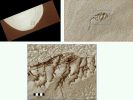
ESP_018301_2505_RED_abrowse-01.jpgLouth Crater (CTX Frame + EDMs - Natural Colors; credits for the additional process. and color.: Dr Paolo C. Fienga - Lunexit Team)72 visitenessun commentoMareKromium
|
|
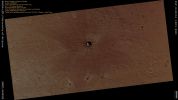
ESP_018352_1805_RED_abrowse1.jpgRayed Crater in Elysium Planitia (Natural Colors; credits for the additional process. and color.: Dr Paolo C. Fienga - Lunexit Team)71 visiteMareKromium
|
|
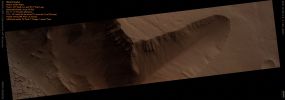
ESP_018374_1740_RED_abrowse-01.jpgWest Candor (Possible True Colors; credits: Dr Paolo C. Fienga - Lunexit Team)80 visitenessun commentoMareKromium
|
|
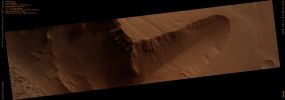
ESP_018374_1740_RED_abrowse.jpgWest Candor (Natural Colors; credits: Dr Paolo C. Fienga - Lunexit Team)86 visitenessun commentoMareKromium
|
|
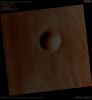
ESP_018376_2020_RED_abrowse-01.jpgUnnamed Crater on Olympus Flank (Natural Colors; credits for the additional process. and color.: Dr Paolo C. Fienga - Lunexit Team)81 visitenessun commentoMareKromium
|
|
| 2236 immagini su 187 pagina(e) |
 |
|
|
|
|
33 | |
|
|
|
|








