Mars Reconnaissance Orbiter (MRO)
|
|
|

ESP_014339_1710_RED_abrowse.jpgLight-Toned Units along the Wallrock and Floor of Melas Region (Natural Colors; credits: Lunexit)86 visitenessun commentoMareKromium
|
|

ESP_014342_0930-00.jpgSouth Polar Residual Cap Intraseasonal Change Monitoring (CTX Frame - Natural Colors; credits: Lunexit)63 visitenessun commentoMareKromium
|
|

ESP_014344_2195_RED_abrowse.jpgFeatures of Galaxias Fossae (Natural Colors; credits: Lunexit)63 visitenessun commentoMareKromium
|
|

ESP_014348_1345_RED_abrowse.jpgUSGS Dune Database Entry Number 0419-449 (Natural Colors; credits: Lunexit)64 visitenessun commentoMareKromium
|
|

ESP_014351_1995_RED_abrowse.jpgSanta Fé Crater (Natural Colors; credits: Lunexit)74 visitenessun commentoMareKromium
|
|

ESP_014353_1685_RED_abrowse-01.jpgLight-Toned Deposits in Noctis Labyrinthus (EDM - Natural Colors; credits: Lunexit)78 visiteCRISM observations of this Region of the Noctis Labyrinthus formation have shown indications of Iron-bearing Sulfates and Phyllosilicate (such as "clay" ----> argilla) minerals.
HiRISE observations have revealed exposed layers which are possibly the sources of the signatures seen by CRISM.
In this image, the layering can be seen on the right side of the image.
On the lower left, instead, a large Dunefield which covers other beds can also be seen.MareKromium
|
|
ESP_014356_2090_RED_abrowse.jpgNorth of Tartarus Fossae (Natural Colors; credits: Lunexit)67 visitenessun commentoMareKromium
|
|
ESP_014358_1310_RED_abrowse.jpgUnnamed Southern Crater with deeply incised Gullies (Natural Colors; credits: Lunexit)75 visitenessun commentoMareKromium
|
|
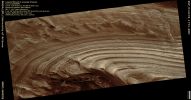
ESP_014378_1755_RED_abrowse.jpgLayered Mound in Juventae Chasma (Natural Colors; credits: Lunexit)90 visitenessun commentoMareKromium
|
|
ESP_014379_0925_RED_abrowse.jpgSouth Polar Residual Cap Monitoring (Natural Colors; credits: Lunexit)74 visitenessun commentoMareKromium
|
|

ESP_014380_1775-PSP_009913_1910.jpgCollapse Features in Cerberus Fossae and Tharsis (Image-mosaic; credits: Dr M. Faccin)77 visitenessun commentoMareKromium
|
|
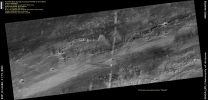
ESP_014380_1775_RED_abrowse-00.jpgExtremely Unusually-looking Skylight, N/E of Arsia Mons (CTX frame)70 visiteDopo il possibile Skylight recentissimamente individuato sulla Luna grazie ad immagini orbitali ottenute della Sonda Nipponica "Kaguya" e dopo i vari "Buchi su Marte" (pozzi da collasso) individuati dalla Sonda MRO nei mesi trascorsi, ecco un nuovo (possibile) Pozzo Marziano la cui forma - come meglio vedrete nei successivi EDM realizzati dal nostro sempre bravo e puntuale Dr Barca - è decisamente inusuale.
In realtà, il collasso non sembra essersi aperto su un normale "lava tube" (ossìa una galleria sotterranea attraverso la quale, un tempo, scorse della lava fusa), bensì sopra una grande caverna sul cui fondo pare proprio che sorga un "mound", ossìa un dosso, una collinetta dai fianchi dolci e smussati.
Una collinetta sotterranea che, come vedrete, occupa tutta la porzione Ovest del pozzo.
I margini del pozzo sono, come sempre, estremamente frastagliati (chiari segni di un cedimento tanto devastante, quanto improvviso) e - presumibilmente - scoscesi.
Attendiamo nuove immagini con diverse geometrie di illuminazione per poter vedere e quindi dire qualcosa di più su questa nuova e, come sempre, affascinante Martian Surface Feature.MareKromium
|
|
| 2236 immagini su 187 pagina(e) |
 |
|
|
|
|
25 | |
|
|
|
|








