Mars Reconnaissance Orbiter (MRO)
|
|
|

Q-V-Argyre Basin-PIA08067.jpgArgyre Basin65 visiteThis picture (MARCI2-2b) shows a color composite made from the MARCI red, green, and blue bands.
It differs from the MOC wide angle color composite because, to create a color image with MOC data, we synthesize (fake) a green channel by adding the red and blue channels together and dividing by two. The slightly greenish tint of the MARCI image shows that the approximation used for MOC images underestimates the amount of green. Further calibration will be needed before a "true" color image — as it would appear to a human eye looking down from orbit — can be reconstructed from the MARCI data.
|
|

Q-V-Atmosphere.jpgMars' Atmosphere70 visiteAs part of the checkout of the Mars Reconnaissance Orbiter (MRO) payload after the 10 March 2006 orbit insertion, the Mars Color Imager (MARCI) acquired a seven band color wide angle view of Mars on 24 March 2006. Illustrated here are some of these test images. Note that the linear banding seen in these images are artifacts resulting from incomplete removal of the detector pixel to pixel variations. Such deviations from ground testing calibration are an important reason for taking checkout images.
In the first figure (MARCI2-2a), three views acquired by MRO MARCI are compared to a color composite of two views acquired about 4 hours later by the Mars Global Surveyor (MGS) Mars Orbiter Camera (MOC). MRO imaging occurred during the early morning on Mars, while the MGS observations were made at around 2 PM local solar time. The region of Mars imaged by MRO on this day was south of the Valles Marineris and includes the large Argyre Basin, its interior plains, Argyre Planitia, and the mountains that comprise the basin rim, Nereidum Montes to the northwest (middle of images) and Charitum Montes to the southeast (bottom of images).
The ultraviolet (UV) image (260 nm in MARCI2-2a) shows how the planet appears in an ozone absorption band. Relatively darker areas in this band normally will indicate the presence of ozone, and relatively lighter areas will indicate the absence of ozone. Water vapor on Mars is anticorrelated with ozone, meaning that lighter areas can be used to track water vapor. The term "relatively" is used here because Mars itself is very dark in the UV owing to absorption of UV light by iron-bearing minerals, and sunlight is deficient in UV relative to visible light, so in general Mars will always look dark in the UV. A second UV band on MARCI (not shown in the figure above) at a longer wavelength allows these differences to be quantified. The MOC wide angle image shows wispy, light water-ice clouds to the northwest of Argyre in the afternoon, but we cannot as yet correlate these clouds with the UV information (especially because the times of day are different). When in its final mapping orbit, MRO will view the same area as MGS separated by only 1 hour, and such correlations will be much more direct.
|
|

Q-pia08014-01-AEB1-full-reduced1.jpgMartian Southern Highlands (1) - HR81 visitenessun commento
|
|

Q-pia08014-02-AEB1-full-reduced1.jpgMartian Southern Highlands (2) - HR76 visitenessun commento
|
|

Q-pia08014-03-AEB1-full-reduced1.jpgMartian Southern Highlands (3) - HR91 visitenessun commento
|
|

Q-pia08014-04-AEB1-full-reduced1.jpgMartian Southern Highlands (4) - HR86 visitenessun commento
|
|

Q-pia08014-05-AEB1-full-reduced1.jpgMartian Southern Highlands (5) - HR81 visitenessun commento
|
|

Q-pia08014-06-AEB1-full-reduced1.jpgMartian Southern Highlands (6) - HR74 visitenessun commento
|
|

Q-pia08014-07-AEB1-full-reduced1.jpgMartian Southern Highlands (7) - HR67 visitenessun commento
|
|

Q-pia08014-08-AEB1-full-reduced1.jpgMartian Southern Highlands (8) - HR120 visitenessun commento
|
|
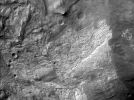
R-JusChasma-PIA08789.jpgJus Chasma80 visiteThe high resolution camera on NASA's Mars Reconnaissance Orbiter captured its first image of Mars in the mapping orbit, demonstrating the full resolution capability, on Sept. 29, 2006. The High Resolution Imaging Science Experiment (HiRISE) acquired this image at 8:16 AM (Pacific Time), and parts of the image became available to the HiRISE team at 1:30 PM. With the spacecraft at an altitude of 280 kilometers (174 miles), the image scale is 29.7 centimeters per pixel (about 12 inches per pixel).
This sub-image covers a small portion of the floor of Ius Chasma, one branch of the giant Valles Marineris system of canyons. The image illustrates a variety of processes that have shaped the Martian surface. There are bedrock exposures of layered materials, which could be sedimentary rocks deposited in water or from the air. Some of the bedrock has been faulted and folded, perhaps the result of large-scale forces in the crust or from a giant landslide. The darker unit of material at right includes many rocks. The image resolves rocks as small as small as 90 centimeters (3 feet) in diameter. At bottom right are a few dunes or ridges of windblown sand. If a person was located on this part of Mars, he or she would just barely be visible in this image.
Image TRA_000823_1720 was taken by the High Resolution Imaging Science Experiment (HiRISE) camera onboard the Mars Reconnaissance Orbiter spacecraft on September 29, 2006. Shown here is a small portion of the full image. The full image is centered at minus 7.8 degrees latitude, 279.5 degrees East longitude. The image is oriented such that north is to the top. The range to the target site was 297 kilometers (185.6 miles). At this distance the image scale is 29.7 centimeters per pixel (with one-by-one binning) so objects about 89 centimeters (35 inches) across are resolved. The image was taken at a local Mars time of 3:30 PM and the scene is illuminated from the west with a solar incidence angle of 59.7 degrees, thus the sun was about 30.3 degrees above the horizon. At an Ls of 113.6 degrees, the season on Mars is Northern Summer/Southern Winter.
|
|
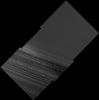
R-NorthPolarLayers-PIA08791_modest.jpgNorth Polar Layers (or "Bands")65 visiteThe HiRISE on NASA's MRO acquired this image during its first day of test imaging from the spacecraft's low-altitude mapping orbit, such as on Sept. 29, 2006.
This image of Mars' North Polar Layered Deposits was taken during the summer season (Solar Longitude of 113,6°), when CO2 frost had evaporated from the surface. The bright spots seen here are most likely patches of water frost, but the location of the frost patches does not appear to be controlled by topography. Layers are visible at the right side of the image, mostly due to difference in slope between them. The variations in slope are probably caused by differences in the physical properties of the layers. Thinner layers that have previously been observed in these deposits are visible, and may represent annual deposition of water ice and dust that is thought to form the polar layered deposits. These deposits are thought to record global climate variations on Mars, similar to ice ages on Earth. HiRISE images such as this should allow Mars' climate record to be inferred and compared with climate changes on Earth.
Image TRA_000825_2665 was taken by the High Resolution Imaging Science Experiment (HiRISE) camera onboard the Mars Reconnaissance Orbiter spacecraft on September 29, 2006. Shown here is the full image, centered at 86.5 degree latitude, 172.0 degrees east longitude. The image is oriented such that north is to the top. The range to the target site was 298.9 kilometers (186.8 miles). At this distance the image scale is 59.8 centimeters (23.5 inches) per pixel (with two-by-two binning} so objects about 1.79 meters (70 inches) across are resolved. In total the original image was 12.2 kilometers 7.58 mile; 10024 pixels) wide and 6.1 kilometers (3.79 miles; 5000 pixels) long. The image was taken at a local Mars time of 3:30 PM and the scene is illuminated from the southwest with a solar incidence angle of 63.5 degrees, thus the sun was about 26.5 degrees above the horizon.
|
|
| 2236 immagini su 187 pagina(e) |
 |
|
|
|
|
180 | |
|
|
|
|








