Mars Reconnaissance Orbiter (MRO)
|
|
|
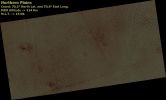
Psp_001490_2505_red.jpgThe Northern Plains (Natural Colors; credits for the additional process. and color.: Dr Paolo C. Fienga - Lunexit Team)75 visiteM.L.T.: 15:06 (early afternoon)
Latitude (centered): 70,5° North
Longitude: 70,6° East
Range to target site: 314 Km (about 194,8 miles)
Original image scale range: 31,4 cm/pixel (with 1 x 1 binning) so objects ~94 cm across are resolved
Map Projected Scale: 25 cm/pixel
Map Projection: POLAR STEREOGRAPHIC
Emission Angle: 5,1°
Phase Angle (Sun-Mars-MRO): 56,5 °
Solar Incidence Angle: 61° (meaning that the Sun is about 29° above the Local Horizon)
Solar Longitude: 138,3° (Northern Summer)MareKromium
|
|

Psp_001497_2480_red-00.jpgThe Northern Lakes: Lake "Ginny" (CTX Frame - False Colors)79 visiteQuando si sa dove guardare e che cosa cercare...Si finisce SEMPRE (o quasi...) con il trovare.
L'albedo del dettaglio che vedete in basso alla Vostra Dx è inconfondibile. Il detail-mgnf che abbiamo operato (e che vedrete nel prossimo quadro) è chiarissimo: c'é un nuovo Lago nelle Grandi Pianure Nordiche di Marte!
"Lake Ginny", questa volta (sempre con buona pace di IAU, NASA, ESA e di tutti gli altri Fenomeni che guardano, guardano, guardano...etc.).MareKromium
|
|
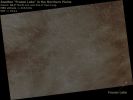
Psp_001497_2480_red-00~0.jpgThe Northern Lakes: Lake "Ginny" (CTX Frame - Natural Colors; credits: Dr Paolo C. Fienga - Lunexit Team) 146 visitenessun commentoMareKromium
|
|

Psp_001497_2480_red-01.jpgThe Northern Lakes: Lake "Ginny" (EDM - False Colors)65 visiteEd una volta operato un extra-detail mgnf a me pare che non ci possano essere più dubbi di sorta: sul fondo di questo Cratere c'é un deposito di ghiaccio (l'albedo del ghiaccio d'acqua non tradisce!) e quindi, come già fatto in passato, si può parlare tranquillamente di Frozen Lake.
E poi, dato che NASA ed ESA non vedono (e se hanno visto, non hanno detto nulla), io, in qualità di "scopritore" di questo Terzo Lago Marziano, ho deciso di battezzarlo con il nome della mia defunta moglie: "Lake Ginny".
Attenzione: io lo so che la IAU non approverà mai questa decisione né avallerà mai questa scoperta (almeno finché sarò vivo...).
Tuttavia, se in un futuro (lontano) mi verrà resa un pò di giustizia, forse qualcuno dei nomi che ho dato ad alcuni rilievi Lunari e Marziani che, tutto sommato ed a ragion veduta, ritengo legittimamente di aver individuato per primo, potrebbe anche essere confermato.
E nel dubbio, operando con entusiasmo e con il cuore pieno di speranza...Io "battezzo"!MareKromium
|
|
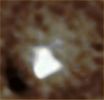
Psp_001497_2480_red-01~0.jpgThe Northern Lakes: Lake "Ginny" (EDM - Natural Colors; credits: Dr Paolo C. Fienga - Lunexit Team) 141 visiteProbabilmente (a differenza di quanto da me supposto e speculato in passato) questa surface feature non è altro che un deposito di ghiaccio persistente - o di neve - il quale è sopravvissuto al disgelo sia grazie alla sua particolare posizione (in effetti giace leggermente infossato), sia in conseguenza di un benevolo regime dei Venti Dominanti (i quali non sono riusciti a spazzarlo via).
Certo, potrebbe anche trattarsi di un mini-laghetto, però...non lo so.MareKromium
|
|

Psp_001503_2180_red-00.jpgTricks of the Light, Tricks of the Surface... (context image - 1)66 visitenessun commento
|
|

Psp_001503_2180_red-01.jpgTricks of the Light, Tricks of the Surface... (extra-detail mgnf - 2)71 visitenessun commento
|
|

Psp_001503_2180_red-02.jpgTricks of the Light, Tricks of the Surface... (extra-detail mgnf - 3)65 visitenessun commento
|
|

Psp_001691_1320_red.jpgGullied Trough in Noachis Terra(False Colors)79 visitePSP_001691_1320 shows gullies in a semi-circular trough in Noachis Terra. The gullies are observed to face all directions.
It is interesting to note that the gully morphology seen here depends on the orientation of the gullies. The morphology differences are most pronounced on the sunlit slope, with the gullies facing South (Dx) being more deeply incised than those facing the West. It is unknown what caused the different gully morphologies, but there are several possibilities.
Gullies are proposed to form at locations determined by the availability of a forming liquid (thought to be water) and/or the amount of insolation the slope receives, among other factors. It is possible that the deeper gullies experienced more erosional events or that their erosional events were more effective for undetermined reasons. It is also possible that the gullies formed at different times such that they did not have the same amount of water — either for an individual flow or total — available to them.
Also, the underlying topography could make the gullies appear relatively more incised without this actually being the case.
|
|

Psp_001691_1320_red~0.jpgGullied Trough in Noachis Terra (extra-detail mgnf - false colors)91 visiteThe majority of the gullies on both sides of the trough appear to originate at a boulder-rich layer seen in this subimage.
The layer appears dark on the sunlit slope because the boulders sticking out from the slopes cast shadows. If these gullies formed by water from the subsurface, then it is possible that this layer is a permeable layer that conducted water to the surface.
The layer is deteriorating and traveling down slope in the form of boulders.
These boulders can clearly be seen in the alcoves of the gullies on both sides of the trough.
Note that the alternating stripes on the lower right (Dx) side of the image are an artifact from camera noise. They are not real features.
|
|

Psp_001697_1390_red.jpgUnnamed (and yet beautiful) Crater with Gullies in Terra Sirenum66 visiteThis image shows part of an unnamed crater, itself located inside the much larger Newton Crater, in Terra Sirenum. This unnamed crater is approx. 7 Km in diameter (over 4 miles) and some 700 mt (about 760 yards) deep.
Numerous gully systems are visible on the East- and South-facing walls of the crater; their characteristics are astonishingly diverse, though.
These troughs are extremely rectilinear, lack tributaries and do not seem to have terminal fan deposits: they terminate rather abruptly, some of them in a spatula-like shape. Their characteristics contrast sharply with those of gully systems elsewhere in this same crater, which are sinuous, have numerous tributaries and show distinct fan deposits.
HiRISE is unveiling the large diversity exhibited by Martian Gully Systems, thanks to its HR, stereo and color capabilities. These diverse types of gullies observed may have been produced by different mechanisms. Current leading hypotheses explaining the origin of gullies include erosion from seepage or eruption of water from a subsurface aquifer, melting of ground ice, or surface snow; and dry landslides. MareKromium
|
|

Psp_001700_2505_red-00.jpgThe "Frozen Lake" of Vastitas Borealis...is not a Lake, according to NASA (CTX Frame - Enhanced Natural Colors; credits for the additional process. and color.: Dr Paolo C. Fienga - Lunexit Team)84 visiteEcco ancora lo splendido e suggestivo Lago di Ghiaccio individuato, assieme ad altri rilievi similari, nella Regione Marziana di Vastitas Borealis. L'ESA lo aveva "scoperto" e, sebbene trasformando l'immagine reale in uno dei suoi tipici "falsi virtuali", il fascino del Lago di Ghiaccio - grazie anche alle splendide immagini NASA - Mars Odyssey ed MGS - era cresciuto a dismisura. Poi, improvvisamente, ecco che la Sonda MRO fotografa, con un margine di dettaglio davvero fantastico, questo misterioso e magnifico rilievo e noi, da poveri Ricercatori solitari, ci aspettiamo qualche commento e qualche delucidazione in più sul Lago di Ghiaccio di Vastitas Borealis e invece...E invece ZERO, NULLA, BUIO TOTALE!
Zero commenti, zero chiarimenti, zero approfondimenti. La NASA si limita a dire (anzi: neppure lo dice in maniera chiara ed aperta, ma si limita a "suggerirlo fra le righe"...) che il Lago di Ghiaccio di Vastitas non è un Lago. Non è niente. Solo un anonimo cratere delle Pianure Nordiche Marziane sul cui fondo ci sono delle dune (ovviamente create dal "vento"...) le quali sono perennemente ricoperte di brina gelata.
Signori, per favore: la Vista è ingannevole, le immagini sono ingannevoli e - siamo noi i primi a dirlo - spesso chi analizza i frames per professione finisce con il vedere quello che vuole vedere. Tutto vero e sacrosanto. Ma è anche vero e sacrosanto che il ridurre l'affascinante rilievo di Vastitas Borealis (studiato dai Ricercatori di mezzo Mondo) al "NIENTE" al quale lo ha ridotto la NASA sulla base di quanto mostrato da questo frame (che rimane fantastico e - relativamente - semplice da interpretare) a noi fa davvero venire la nausea.
Già: forse alla NASA fa comodo che i Liberi Ricercatori parlino e straparlino (e continuino a farlo) di Templi e di Piramidi e lascino stare le sempre più fantastiche ed intriganti rivelazioni che arrivano, in piena luce, dal Pianeta Rosso.
E si, devono essersi detti alla NASA: perchè stare ancora a perdere tempo facendo disinformazione e contro-informazione quando i Profeti dell'Esoarcheologia stanno già provvedendo (ed alla grande!) al riguardo?!?
E scusateci per la franchezza.MareKromium
|
|
| 2236 immagini su 187 pagina(e) |
 |
|
|
|
|
167 | |
|
|
|
|








