Mars Reconnaissance Orbiter (MRO)
|
|
|
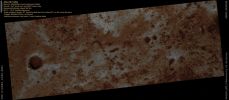
PSP_010882_2040_RED_abrowse-PCF-LXTT.jpgFeatures of Mawrth Vallis (Absolute Natural Colors; credits for the additional process. and color.: Dr Paolo C. Fienga - Lunexit Team)120 visitenessun commentoMareKromium
|
|
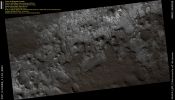
PSP_010888_1510_RED_abrowse.jpgClays and other "Hydrated Materials" in Sirenum Fossae Region (Natural Colors; credits: Lunar Explorer Italia)93 visitenessun commentoMareKromium
|
|
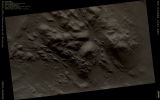
PSP_010888_2030_RED_abrowse.jpgMojave Crater's Floor and Central Uplift (Natural Colors; credits: Dr Paolo C. Fienga - Lunexit Team)74 visiteThis observation shows a portion of the Central Uplift structure in Mojave Crater.
Central Uplifts are a typical feature of large Impact Craters on Earth, Moon and Mars; craters larger than 6 or 7 Km in diameter on Mars typically form this mountain-like peak in the central portion of the crater interior.
This Peak consists of rocks originating from several kilometers beneath the pre-impact surface.
Mojave has a very prominent Central Uplift as it has a diameter of about 60 Km (apprx. 37 miles). In this image, boulders as large as about 15 meters (50 feet) across have been eroded from the massive uplifted rock and have rolled downslope. Fine-grained debris has also collected in the topographic lows, and has been shaped by the wind into Dunes and Ripples.
Notably absent from this image are the striking Drainage Channels and Alluvial Fans that are abundant on the wall-terraces and ejecta of Mojave Crater (see PSP_001415_1875). These features were likely formed by Surface Runoff of liquid water, which may have been released from the Subsurface during the impact event that formed Mojave.
Previously, it had been suggested that a brief, torrential downpour over Mojave Crater delivered the water. However, Mars Orbiter Camera's (MOC) images of Mojave's Central Uplift have previously shown no evidence for Surface Runoff, and the higher resolution of this HiRISE image confirms that this part of the Crater appears untouched by liquid water.
So the question remains: by what means was the water, in the form of Runoff, supplied to Mojave? This question, in addition to several others regarding this phenomenon, are currently being investigated by the HiRISE team and their collaborators.MareKromium
|
|
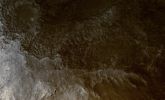
PSP_13042009_171259.jpgWhat do You see?101 visiteCari Amici,
guardando un frame come questo, che cosa potreste dire? Come potreste (provare a) commentarlo?
Domanda difficilissima. Ok, allora diciamo questo: usando molta attenzione, un pò di nozioni di Geologia, molta intuizione e - come ovvio - l'immancabile seriale NASA che identifica il quadro (e che qui su Lunar Explorer Italia trovate SEMPRE), potreste anche - e magari legittimamente - arrivare a concludere che quanto ripreso potrebbe costituire una estrapolazione (un "crop", come si dice in gergo) di un anonimo dettaglio di un altrettanto anonimo rilievo superficiale marziano avente origini in parte erosive ed in parte eoliche.
Ed avreste ragione: questo "crop", infatti, è una porzione ultramagnificata del frammento di un frame NASA-MRO Hirise, pubblicato in versione JP-2 (o JPEG-2000, se preferite).
Ma detto questo, Vi spingereste ad ipotizzare la Natura "Artificiiale" del rilievo inquadrato? Arrivereste - addirittura - a dire che si tratta di una PROVA TANGIBILE dell'esistenza di Strutture Aliene sulla Superficie del Pianeta Rosso (magari perchè la texture del dettaglio è "a maglia incrociata")?
Ovviamente no.
Solo uno stupido, o un Ricercatore totalmente sprovveduto potrebbe fare una cosa simile.
O forse no. Ci stiamo sbagliando.
Forse anche un "furbacchione" potrebbe fare una cosa simile...
Perchè diciamo questo? Perchè stamattina (ultimi nella "lista", ma presenti), abbiamo ricevuto una missiva (via e-mail) la quale, a firma di un sedicente Avvocato Italiano (!), ci dice che "un Suo Cliente - un Ricercatore che intende restare per il momento anonimo - ha individuato LE FOTOGRAFIE CHE PROVANO IN MANIERA INEQUIVOCABILE l'esistenza di Strutture Aliene (manufatti) sulla Superficie del Pianeta Rosso..." eccetera.
E' uno scherzo? L'ultima trovata di un buontempone o di uno sfaccendato? ASSOLUTAMENTE NO!
Questo messaggio è arrivato a Lunar Explorer Italia, MA NON SOLO!
Nei giorni scorsi lo hanno anche ricevuto, infatti, i Direttori di svariati Magazines che si occupano di Scienza, Scienza Alternativa, Ufologia, Eso-Archeologia etc., nonchè, sebbene in forma di messaggio da parte di un nuovo (e non meglio identificato) "Lettore", alcuni tra i più accreditati Forum di discussione di Ufologia ed Anomalìe Spaziali (su tutti citiamo il Forum USA: "Above Top Secret"; la discussione si intitola "What's going on here!!??", l'Autore è un certo "Taymour" e, se volete leggere tutta la storia, eccoVi il link: http : / / www.abovetopsecret.com / forum / thread468269/pg1).
Adesso ci chiediamo: ma quale sarà mai lo scopo di una simile (ed assurda) iniziativa? Cui prodest?
Ci abbiamo pensato a lungo...Circa un minuto...E poi la risposta è arrivata, chiara ed inequivocabile: questa è la (OVVIA) base di un lancio pubblicitario.
Una trovata commerciale "alla Hoagland", insomma.
Qualcuno (ovviamente Italiano - ahinoi...che magra figura che facciamo!...) ha avuto l'idea di preparare il terreno per una nuova pubblicazione avente ad oggetto "l'analisi" di frames orbitali (presumiamo MRO) nei quali si dovrebbero vedere dei rilievi ambigui/anomali.
Rilievi che, come il materiale "esemplificativo" inviato dal buon Avvocato dovrebbe dimostrare, costituiscono la prova provata dell'esistenza - attuale o pregressa - di una Civiltà Indigena del Pianeta Rosso.
Purtroppo però, il materiale inviato dal nostro Amico Avvocato (il cui nome e la cui provenienza geografica li potrete leggere, inter alia, sul summenzionato thread di "Above Top Secret"), ha una sola caratteristica: è, scientificamente parlando, "purissima fuffa".
Per l'esattezza, si tratta di "crops" (ecco perchè Vi abbiamo proposto questo frame e posto l'interrogativo iniziale!) i quali sono TUTTI PRIVI DI SERIAL NUMBER, PROCESSATI IN FALSI COLORI, DECONTESTUALIZZATI E, DUNQUE, ASSOLUTAMENTE INUTILI A QUALSIASI FINE DI RICERCA SERIA, SIA ESSA DI TIPO SCIENTIFICO TRADIZIONALE O BORDERLINE.
In altre parole: questa "missiva epocale" è il primo step di una campagna pubblicitaria che precederà il lancio di un "booklet" il quale, costruito sulla falsariga di tanti altri, butterà fumo e disinformazione negli occhi dei Lettori e contribuirà in maniera GRAVE e PROFONDA ad aumentare l'ignoranza sulla Materia e la ridicolizzazione di coloro i quali la praticano e coltivano quotidianamente e seriamente.
Le caratterizzazioni della missiva e la personalità di "Taymour", inoltre, ci permetterebbero anche di dire CHI SIA L'AUTORE DELLE EPOCALI (!) SCOPERTE (!!!).
Ma per ora - e per ovvi motivi - ci fermiamo qui.
In privato, se volete, potremo essere più chiari (ed anche "accettare scommesse" - bicchieri di vino e non soldi, però - sulla nostra ipotesi...).
Un solo commentino (preliminare): allo squallore non c'è mai fine.MareKromium
|
|

PSP_20_008753_1876_XN_07N211W.jpgPyramid?181 visiteSu immagini come questa potremmo speculare per anni, senza arrivare a nulla (come ci insegna la - ormai - "antica" vicenda di Cydonia Mensae). Dunque la proponiamo così com'é (dettaglio magnificato di un frame MRO).
Interessante.... O no?!?MareKromium
|
|

PSP_3647_1745_RED_browse-01.jpgCanditate Cavern Entrance (extra-detail mgnf)90 visitenessun commentoMareKromium
|
|
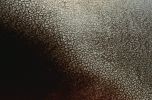
Polar_Polygons-PIA07354.jpgPolar Polygons (Natural Colors; credits: Dr Paolo C. Fienga - Lunexit Team)84 visitenessun commentoMareKromium
|
|
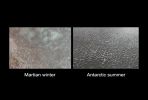
Polygons-PIA10658.jpgMartian and Earthly Polygons (comparison)82 visiteSome High-Latitude Areas on Mars (left) and Earth (right) exhibit similarly patterned ground where shallow fracturing has drawn Polygons on the surface. This patterning may result from cycles of freezing and thawing (---> disgelo).
The left image shows ground within the targeted landing area NASA's Phoenix Mars Lander before the Winter frost had entirely disappeared from the Surface. The bright ice in shallow crevices accentuates the area's polygonal fracturing pattern. The polygons are a few meters (several feet) across.
The image is a small portion of an exposure taken in March 2008 by the High Resolution Imaging Science Experiment (HiRISE) camera on NASA's Mars Reconnaissance Orbiter.
The image on the right is an aerial view of similarly patterned ground in Antarctica.MareKromium
|
|

Proctor_Crater_Dunes-Psp_001558_1325_red-PCF-LXTT.jpgThe Frozen "Pseudo-Dunes" of Proctor Crater (Enhanced Natural Colors; credits: Dr Paolo C. Fienga - Lunexit Team)111 visitenessun commentoMareKromium
|
|

Psp_001385_1985_red.jpgUnnamed Crater, Boulders and Pseudo-Pyramids76 visiteMost debris on crater walls slides straight downhill. In this HiRISE image we see examples of boulders that have bounced downhill, not necessarily vertically.
A prominent example looks like a dotted line from the top of the crater wall where the boulder took off to the crater floor where it finally came to rest.
Numerous boulders have slid partway down toward the crater floor, which is covered by sand dunes. This is actually a small crater (~1 Km wide) within an unnamed but much larger ~30 Km crater.
|
|

Psp_001401_1850_red-0.jpgPseudo-Pyramids and Rocky Bridges in Arabia Terra84 visiteAncora una volta la Regione di Arabia Terra ci mostra dei rilievi straordinari e davvero difficili da commentare.
Per quanto attiene le Pseudo-Piramidi ("buttes" o "colline a ceppo", geologicamente parlando), dobbiamo dire che la maggiore - quella più in basso - mostra una pianta quadrata semi-regolare che fa "impallidire" la tanto pubblicizzata D&M Pyramid di Cydonia mentre la minore - poco più in alto - mostra una pianta triangolare davvero molto ben delineata per non far nascere nella mente degli Osservatori qualche idea di "artificialità".
Lunar Explorer Italia ritiene che le Pseudo-Piramisi di Arabia Terra sìano bizzarre, ma assolutamente naturali; ci è sembrato comunque giusto evidenziarle poichè altri rilievi, situati in altre Regioni di Marte, i quali erano/sono MOLTO meno regolari ed intriganti di questi, sono stati segnalati come possibili "monumenti". Insomma: la geologia di Marte è così curiosa che, VOLENDO, i manufatti si possono davvero vedere ovunque.
Per quanto attiene i "Ponti", invece, riteniamo che dovrebbero essere compiute (da parte di chi ha i mezzi adeguati per poterlo fare) delle analisi molto accurate poichè questi rilievi, anch'essi - comunque - a nostro parere "naturali", potrebbero costituire delle sconcertanti evidenze oggettive di forme vitali indigene aventi una natura bio-magnetica (come sostiene il Dr Feltri). Che non si tratti di semplici dune (checchè ne dica la NASA) lo potete semplicemente constatare operando anche un minimo stretch del frame e quindi verificando la loro tendenza a "sovrapporsi", a "sollevarsi dal suolo" (alcuni "ponti", infatti, mostrano delle ombre al di sotto delle loro "campate"...) ed a posizionarsi, comunque, in maniera tale da consentirci di escludere nella maniera più categorica una loro eventuale origine eolica.
Per onor di cronaca, simili rilievi erano già stati individuati (in altre Regioni) in passato dal Dr J. Skipper il quale, tuttavia, propendeva per una loro natura "artificiale".
|
|

Psp_001401_1850_red-1.jpgThe "Bridges" of Arabia Terra (1) extra-detail mgnf89 visiteUn detail-mgnf che ci mostra con sconcertante chiarezza l'impossibilità che questi rilievi sìano il prodotto di azioni eoliche (anche complesse).
Alcuni Ricercatori suggeriscono un'origine artificiale per questi "ponti!" (o "tubi"); noi supponiamo, invece, una loro origine naturale, ma da investigarsi in un'ottica non geologica (o almeno NON SOLO geologica).
|
|
| 2236 immagini su 187 pagina(e) |
 |
|
|
|
|
165 | |
|
|
|
|








