Mars Reconnaissance Orbiter (MRO)
|
|
|
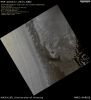
PSP_009357_2655_RED_abrowse-00.jpgSmall Cavi and Contact Relationships in the North Pole (Natural Colors; credits: Lunexit)81 visitenessun commentoMareKromium
|
|
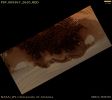
PSP_009367_2620_RED.jpgAeolian Source Layers exposed in Northwestern Abalos Scopuli (possible True Colors; credits: Lunar Explorer Italia)83 visiteMars Local Time: 14:25 (early afternoon)
Coord. (centered): 81,7° North Lat. and 282,6° East Long.
Spacecraft altitude: 320,1 Km (such as about 200,1 miles)
Original image scale range: 32 cm/pixel (with 1 x 1 binning) so objects ~96 mt across are resolved
Map projected scale: 25 cm/pixel
Map projection: EQUIRECTANGULAR
Emission Angle: 5,7°
Phase Angle: 54,5°
Solar Incidence Angle: 59° (meaning that the Sun is about 31° above the Local Horizon)
Solar Longitude: 103,9° (Northern Summer)
Credits: NASA/JPL/University of Arizona
Additional process. and coloring: Lunar Explorer ItaliaMareKromium
|
|
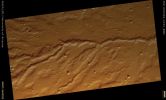
PSP_009369_2255_RED.jpgErosion on the Flank of Alba Patera (natural colors; credits: Lunar Explorer Italia)100 visiteMars Local Time: 15:15 (early afternoon)
Coord. (centered): 45,0° North Lat. and 243,2° East Long.
Spacecraft altitude: 295,0 Km (such as about 184,4 miles)
Original image scale range: 29,5 cm/pixel (with 1 x 1 binning) so objects ~89 cm across are resolved
Map projected scale: 25 cm/pixel
Map projection: EQUIRECTANGULAR
Emission Angle: 0,4°
Phase Angle: 44,3°
Solar Incidence Angle: 44° (meaning that the Sun is about 46° above the Local Horizon)
Solar Longitude: 104,0° (Northern Summer)
Credits: NASA/JPL/University of Arizona
Additional process. and coloring: Lunar Explorer ItaliaMareKromium
|
|
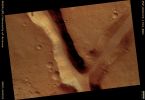
PSP_009379_1705_RED.jpgMargaritifer Chaos Valley Junction (possible True Colors; credits: Lunar Explorer Italia)75 visiteMars Local Time: 15:28 (early afternoon)
Coord. (centered): 9,4° South Lat. and 337,5° East Long.
Spacecraft altitude: 267,3 Km (such as about 167,0 miles)
Original image scale range: 26,7 cm/pixel (with 1 x 1 binning) so objects ~80 cm across are resolved
Map projected scale: 25 cm/pixel
Map projection: EQUIRECTANGULAR
Emission Angle: 0,1°
Phase Angle: 61,0°
Solar Incidence Angle: 61° (meaning that the Sun is about 29° above the Local Horizon)
Solar Longitude: 104,3° (Northern Summer)
Credits: NASA/JPL/University of Arizona
Additional process. and coloring: Lunar Explorer ItaliaMareKromium
|
|
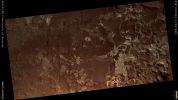
PSP_009381_1720_RED.jpgBlocky Floor Deposit in Melas Chasma (natural colors; credits: Lunar Explorer Italia)79 visiteMars Local Time: 15:27 (early afternoon)
Coord. (centered): 8,0° South Lat. and 282,7° East Long.
Spacecraft altitude: 266,7 Km (such as about 166,7 miles)
Original image scale range: 26,7 cm/pixel (with 1 x 1 binning) so objects ~80 cm across are resolved
Map projected scale: 25 cm/pixel
Map projection: EQUIRECTANGULAR
Emission Angle: 0,1°
Phase Angle: 60,2°
Solar Incidence Angle: 60° (meaning that the Sun is about 30° above the Local Horizon)
Solar Longitude: 104,4° (Northern Summer)
Credits: NASA/JPL/University of Arizona
Additional process. and coloring: Lunar Explorer ItaliaMareKromium
|
|
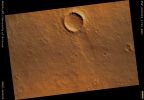
PSP_009391_1755_RED.jpgPeri-Equatorial Dusty Terrain (possible True Colors; credits: Lunar Explorer Italia)63 visiteMars Local Time: 15:30 (middle afternoon)
Coord. (centered): 4,5° South Lat. and 10,0° East Long.
Spacecraft altitude: 271,7 Km (such as about 169,8 miles)
Original image scale range: 27,2 cm/pixel (with 1 x 1 binning) so objects ~82 cm across are resolved
Map projected scale: 25 cm/pixel
Map projection: EQUIRECTANGULAR
Emission Angle: 9,5°
Phase Angle: 51,6°
Solar Incidence Angle: 59° (meaning that the Sun is about 31° above the Local Horizon)
Solar Longitude: 104,7° (Northern Summer)
Credits: NASA/JPL/University of Arizona
Additional process. and coloring: Lunar Explorer ItaliaMareKromium
|
|

PSP_009396_2590_red.jpgDefrosted Margin of the North Polar Erg (natural colors; credits: Lunexit)66 visiteThis image shows a traverse across a section of the North Polar Erg, a vast Sea of Sand that surrounds the Polar Cap.
The source of the dunes may be from the eroding North Polar Layered Deposits. Wind, acting on this mixture of sand, dust and ice, has formed several dune types on top of bright megaripples and polygons. A dark mantle of sand lies beyond the dunes.
The central part of the field contains transverse dunes with the dominant wind direction coming from the North/West-West. The outer edges of the Dunefield transition into "Star Dunes" (with multiple arms) and "Barchanoid Dunes" (crescent-like shape). The Star Dunes indicate a multidirectional wind regime or a change in wind direction over the Dunefield’s evolution.
The dunes are somewhat confined to their location and may have taken hundreds of years to form.MareKromium
|
|
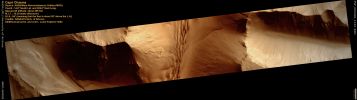
PSP_009446_1650_RED_abrowse.jpgCapri Chasma (Natural Colors; credits: Lunar Explorer Italia)73 visitenessun commentoMareKromium
|
|
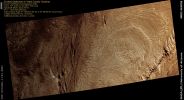
PSP_009460_1745_RED_abrowse-00.jpgCeti Mensa (ctx frame - natural colors; credits: Lunexit)65 visiteThis image shows a steep-sided depression in light-toned, layered rocks in the Valles Marineris Canyon System.
This formation, known as Ceti Mensa, is located in Western Candor Chasma in the Northern Valles.
The origin of Ceti Mensa and other Layered Deposits within the canyons is a source of much debate: proposed interpretations include lake deposits, deposits of volcanic ash, deposits of windblown sand and dust and glacial deposits. Recent spectral observations by the Mars Express and Mars Reconnaissance Orbiter Spacecraft have identified crystalline Iron Oxides and Hydrated Magnesium Sulfate minerals on Ceti Mensa.
These minerals are regarded as indicators of the presence of liquid water during their formation.
The Hydrated Sulfate mineral "Kieserite", in particular, most commonly forms on Earth by evaporation of brines.MareKromium
|
|

PSP_009470_1965_RED_abrowse.jpgBeautiful Gullies (Natural Colors; credits: Lunexit)65 visitenessun commentoMareKromium
|
|
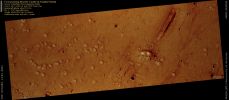
PSP_009485_2185_red.jpgClusters of Mounds at Acidalia Planitia (Extremely Enhanced and Saturated Natural Colors; credits for the additional process. and color.: Dr Paolo C. Fienga - Lunexit Team)63 visiteThis HiRISE image shows clusters of light-colored Mounds poking through the Dark Plains of Acidalia. These Mounds are similar in shape and color to mounds identified elsewhere in the Northern Lowlands.
The mounds imaged here are approximately 250 meters (270 yards) across, and most of them have one or more central crater-like depressed areas, looking like terrestrial cinder cones. Terrestrial cinder cones are formed by loose volcanic fragments, mostly gravel- and boulder-size. In contrast, the surface of these Martian Mounds looks cemented rather than bouldery.
There are several hypothesis to explain the origin of these Martian Mounds; all of them require the presence of fluids near or at the surface.
One hypothesis is that these mounds are Hydrothermal Spring edifices like those at Yellowstone. Terrestrial Hydrothermal Spring Mounds form when hot subsurface fluids, loaded with minerals, reach the surface and deposit their load.
Another possible explanation is that these Mounds are "Mud Volcanoes", similar to those found at Trinidad and Tobago. Mud Volcanism occurs when buried wet sediments are subject to high pressures and squeeze out though weak points at the surface.
Some terrestrial "Pseudocraters" are also similar to these Martian Mounds. Pseudocraters form when lava flows over wet terrains or over water bodies. The lava’s heat vaporizes the fluids, which then burst through the lava, producing small explosions and building conical landforms.MareKromium
|
|
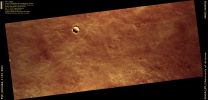
PSP_009488_1745_RED_abrowse-00.jpgMartian Caves (ctx frame - possible natural colors; credits: Lunexit)77 visitePit Craters exist in Volcanic Regions across Mars, and form when surface materials collapse into large underground cavities. Such pits are generally bowl-shaped, filled with sediment, and are relatively shallow when compared with their diameters.
Recently, a small number of anomalous Pit Craters were identified with strikingly different visible and thermal characteristics such as: sheer cliff walls; deep interiors that can extend out-of-sight beneath the surface and temperature fluctuations that behave unlike any known feature on Mars.MareKromium
|
|
| 2236 immagini su 187 pagina(e) |
 |
|
|
|
|
150 | |
|
|
|
|








