Mars Reconnaissance Orbiter (MRO)
|
|
|

PSP_004988_1085_RED_abrowse-00.jpgSouth Presso-Polar Pit Gullies (CTX Frame - Absolute Natural Colors; credits for the additional process. and color.: Dr Paolo C. Fienga - Lunexit Team)99 visiteThis observation shows partial views of two high latitude Pits. These Polar Pits contain Gullies, small-scale Slope Features that are proposed to require some amount of liquid water to form.
Several of the Gullies have multiple Channels and Debris-Aprons from numerous Flows that occurred throughout time. Many of the Gullies are seen to originate at a Boulder-Layer at the Pit Edges. This layer is deteriorating and releasing Boulders that can be seen rolling down the Pit Walls. The bright material near the Pit Edges is probably Seasonal Frost. MareKromium
|
|

PSP_004988_1085_RED_abrowse-01.jpgSouth Presso-Polar Pit Gullies (EDM - Absolute Natural Colors; credits for the additional process. and color.: Dr Paolo C. Fienga - Lunexit Team)92 visiteWhat is particularly interesting about these Gullies is that some might be forming (see this EDM, approx. 800 meters across, of the South-facing Gullies in the bottom Pit). The Gullies on this Wall have incised Alcoves, but only a few have well-developed Channels.
This could be a Region of current Gully formation. Aiding this hypothesis is the fact that there are a couple of depressions between the visible Gullies, suggestive of a developing Gully where water and/or material removed from under the Surface caused the overlying ground to collapse. It is also possible that water originating on the Surface is carving out these depressions, although it is difficult to melt water ice at the temperatures found in this particular location.MareKromium
|
|

PSP_004989_0945_RED_browse.jpgSwiss Cheese Terrain in the South Polar Region72 visiteSince Mars is colder than Earth, there is not just water ice at the Poles, but also a concentration of Carbon Dioxide (CO2) ice. Some of the Carbon Dioxide ice at the South Pole is there all year long and called the "Residual Cap".
This image was taken near the South Pole of Mars and shows a characteristic "Swiss cheese" pattern.
This pattern is created when there is relatively high, smooth material that is broken up into these circular-shaped depressions forming the "Swiss cheese" terrain.
The depressions are thought to be caused by sublimation, which is when a material goes directly from a solid to a gas phase.
Repeated images are taken of areas like this so the changes in depression size and where they form can be monitored through the seasons.MareKromium
|
|

PSP_005011_0885-PCF-LXTT-00.jpgThe "Terra Incognita" (CTX Frame "A" - Absolute Natural Colors; credits for the additional process. and color.: Dr Paolo C. Fienga - Lunexit Team)154 visiteMars Local Time: 21:11 (early evening hours)
Coord. (centered): 88,4° South Lat. and 191,1° East Long.
Spacecraft altitude: 256,6 Km (such as about 160,4 miles)
Original image scale range: 25,7 cm/pixel (with 1 x 1 binning) so objects ~ 77 cm across are resolved
Map projected scale: 25 cm/pixel
Map projection: POLAR STEREOGRAPHIC
Emission Angle: 17,3°
Sun - Mars - MRO (or "Phase") Angle: 80,2°
Solar Incidence Angle: 69° (meaning that the Sun is about 21° above the Local Horizon)
Solar Longitude: 299,8° (Northern Winter)
Credits: NASA/JPL/University of Arizona
Additional process. and coloring: Lunar Explorer ItaliaMareKromium
|
|

PSP_005011_0885-PCF-LXTT-01.jpgThe "Terra Incognita" (CTX Frame "B" - Absolute Natural Colors; credits for the additional process. and color.: Dr Paolo C. Fienga - Lunexit Team)155 visiteMars Local Time: 21:11 (early evening hours)
Coord. (centered): 88,4° South Lat. and 191,1° East Long.
Spacecraft altitude: 256,6 Km (such as about 160,4 miles)
Original image scale range: 25,7 cm/pixel (with 1 x 1 binning) so objects ~ 77 cm across are resolved
Map projected scale: 25 cm/pixel
Map projection: POLAR STEREOGRAPHIC
Emission Angle: 17,3°
Sun - Mars - MRO (or "Phase") Angle: 80,2°
Solar Incidence Angle: 69° (meaning that the Sun is about 21° above the Local Horizon)
Solar Longitude: 299,8° (Northern Winter)
Credits: NASA/JPL/University of Arizona
Additional process. and coloring: Lunar Explorer ItaliaMareKromium
|
|

PSP_005011_0885-PCF-LXTT-02.jpgThe "Terra Incognita" (Saturated Natural Colors; credits for the additional process. and color.: Dr Paolo C. Fienga - Lunexit Team)190 visiteMars Local Time: 21:11 (early evening hours)
Coord. (centered): 88,4° South Lat. and 191,1° East Long.
Spacecraft altitude: 256,6 Km (such as about 160,4 miles)
Original image scale range: 25,7 cm/pixel (with 1 x 1 binning) so objects ~ 77 cm across are resolved
Map projected scale: 25 cm/pixel
Map projection: POLAR STEREOGRAPHIC
Emission Angle: 17,3°
Sun - Mars - MRO (or "Phase") Angle: 80,2°
Solar Incidence Angle: 69° (meaning that the Sun is about 21° above the Local Horizon)
Solar Longitude: 299,8° (Northern Winter)
Credits: NASA/JPL/University of Arizona
Additional process. and coloring: Lunar Explorer ItaliaMareKromium
|
|

PSP_005069_1670_RED_abrowse-00.jpgExposed Faults and Gravity Wasting Evidence in Coprates Chasma (CTX Frame - Absolute Natural Colors; credits for the additional process. and color.: Dr Paolo C. Fienga - Lunexit Team)126 visitenessun commentoMareKromium
|
|

PSP_005069_1670_RED_abrowse-01.jpgExposed Faults and Gravity Wasting Evidence in Coprates Chasma (EDM - Absolute Natural Colors; credits for the additional process. and color.: Dr Paolo C. Fienga - Lunexit Team)112 visitenessun commentoMareKromium
|
|

PSP_005071_2150_RED_abrowse-PCF-LXTT.jpgPit Craters in Alba Patera (Absolute Natural Colors; credits for the additional process. and color.: Dr Paolo C. Fienga - Lunexit Team)144 visitenessun commentoMareKromium
|
|
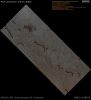
PSP_005095_0935_RED_abrowse.jpgSouth Polar Residual Cap (Absolute Natural Colors; credits for the additional process. and color.: Dr Paolo C. Fienga - Lunexit Team)80 visitenessun commentoMareKromium
|
|
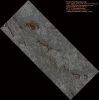
PSP_005095_0935_RED_browse~0.jpgSouth Pole Residual Cap (Swiss-Cheese Terrain Monitoring) - (Natural Colors; credits: Lunar Explorer Italia)67 visitenessun commentoMareKromium
|
|
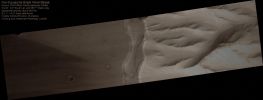
PSP_005109_1770_RED_browse-PCF-LXTT.jpgPeri-Equatorial Canyon and Winstreak (Absolute Natural Colors; credits for the additional process. and color.: Dr Paolo C. Fienga - Lunexit Team) 106 visitenessun commentoMareKromium
|
|
| 2236 immagini su 187 pagina(e) |
 |
|
|
|
|
120 | |
|
|
|
|








