Mars Reconnaissance Orbiter (MRO)
|
|
|

PSP_002932_1445_RED_abrowse-01.jpgSection of the Outer Rim of Hale Crater (EDM - Absolute Natural Colors; credits for the additional process. and color.: Dr Paolo C. Fienga - Lunexit Team)97 visitenessun commentoMareKromium
|
|

PSP_002946_1765_RED_abrowse-00.jpgInterior Layered Deposits (ILD) in Juventae Chasma (CTX Frame - Natural Colors; credits for the additonal process. and color.: Dr Paolo C. Fienga - Lunexit Team)64 visiteThis observation shows a portion of some Interior Layered Deposits (ILD) in Juventae Chasma.
Juventae Chasma is a large depression near the Equatorial Canyon System known as Valles Marineris. The scene is along the top of a Mound of Layered Deposits on the Floor of Juventae Chasma.
Dunes are seen in the low-lying, darker regions. Very fine Layers are also visible. Understanding what kinds of materials formed the Layers, how they were set in place, and how they have evolved will provide insight into Martian Geologic History.
Many of the Martian Chasmata (----> plural of Chasma) contain ILD like these. The ILD were deposited a long time ago, but the actual method is unknown. It has been suggested that sedimentary layers in standing bodies of water or volcanic ash deposits comprise the ILD. The alternating layers could indicate regular, repeating cycles of deposition. It is also possible that these layers once covered the entire chasma floor.
The IDL shown here have been modified by wind erosion.
The Yardangs visible near the top right of the full image are evidence for wind sculpting of the Deposits. It is interesting to note that there are very few craters in this scene, especially in the areas with visible Layers.
One crater can be found about half-way down the left side of the image amidst Layers and several craters are seen in the dark material on the right side of the image. This suggests that the ILD are eroding here fast enough to erase small craters before large numbers of them can accumulate.MareKromium
|
|

PSP_002946_1765_RED_abrowse-01.jpgInterior Layered Deposits (ILD) in Juventae Chasma (EDM - Natural Colors; credits for the additonal process. and color.: Dr Paolo C. Fienga - Lunexit Team)74 visitenessun commentoMareKromium
|
|

PSP_003063_2050_red.jpgProposed MSL Landing Site in Mawrth Vallis (Natural Colors; credits for the additional process. and color.: Dr Paolo C. Fienga - Lunexit Team) 156 visitenessun commentoMareKromium
|
|

PSP_003077_1530_RED_abrowse-1.jpgThe "White Cliffs" of Holden Crater (Absolute Natural Colors; credits for the additional process. and color.: Dr Paolo C. Fienga - Lunexit Team)108 visitenessun commentoMareKromium
|
|

PSP_003086_2015_RED_abrowse.jpgFeatures of Nili Fossae (Absolute Natural Colors; credits for the additional process. and color.: Dr Paolo C. Fienga - Lunexit Team:)121 visitenessun commentoMareKromium
|
|

PSP_003086_2015_red-PCF-LXTT.jpgProposed MSL Landing Site in Nili Fossae (Natural Colors; credits for the additional process. and color.: Dr Paolo C. Fienga - Lunexit Team) 147 visitenessun commentoMareKromium
|
|
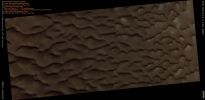
PSP_003141_1330_RED_abrowse-00-PCF-LXTT.jpgThe Dunes of Kaiser Crater (CTX Frame - Natural Colors; credits for the additional process. and color.: Dr Paolo C. Fienga - Lunexit Team)125 visiteCaption NASA:"Image PSP_003141_1330 shows a Sand Dunefield in Kaiser Crater, a 210 Km (such as about 130 miles) wide Impact Basin in the Hellespontus Region of Mars.Winds have trapped massive quantities of Sand on the Floors of broad Craters in this Region.
The steepest slopes on each Dune, such as the Slip-Faces, point to the East indicating that the dominant wind direction in this part of the Dunefield is from West to East. Patches of seasonal frost can be seen in the low areas between the Dunes".
Nota Lunexit: noi non crediamo che che le aree ad albedo più elevata (e che appaiono di un bel color bianco/argento nel frame colorizzato) le quali sono chiaramente individuabili fra le dune sìano, come dice la NASA, "chiazze di brine ghiacciate".
O meglio: può darsi che esse lo sìano, così come è pure plausibile che si tratti di sabbie cristalline (ne abbiamo già incontrate nei Campi di Dune) o di porzioni di suolo libere dalle sabbie (e che magari evidenziano il "Martian Paving"...) MareKromium
|
|

PSP_003141_1330_RED_abrowse-01-PCF-LXTT.jpgThe Dunes of Kaiser Crater (EDM - Natural Colors; credits for the additional process. and color.: Dr Paolo C. Fienga - Lunexit Team)118 visiteThis EDM reveals smaller Secondary Dunes superimposed on the Surface of the large Dunes and even smaller Ripples that appear between and perpendicular to the Secondary Dunes. Avalanching or mass movement of sand has left deep scars on the Slip-face of the large dune in the upper left portion of the frame. This may indicate that the sand is not loose but is weakly cemented. MareKromium
|
|
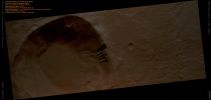
PSP_003162_1445_RED_abrowse-00-PCF-LXTT.jpgUnnamed Southern Crater with deep Gullies and Fill (Absolute Natural Colors; credits for the additional process. and color.: Dr Paolo C. Fienga - Lunexit Team)102 visitenessun commentoMareKromium
|
|
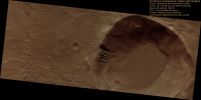
PSP_003162_1445_RED_browse-00-PCF-LXTT.jpgUnnamed Southern Crater with deep Gullies and Fill (Natural Colors; credits for the additional process. and color.: Dr Paolo C. Fienga - Lunexit Team)158 visitenessun commentoMareKromium
|
|
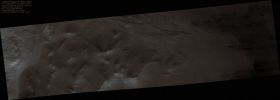
PSP_003176_1745_RED_browse-00~0.jpgLayered Region in Gale Crater (CTX Frame - Natural Colors; credits: Lunexit)74 visiteThis observation shows a portion of the Gale Crater Floor. Gale Crater is approx. 150 Km in diameter and it located in the Elysium Planitia, near the so-called "Dichotomy Boundary" - such as the Martian Region separating the Southern Highlands from the Northern Lowlands.
The paucity of Impact Craters indicates that the Layered Deposits are either very young or that erosion has removed evidence of past cratering.
Wind erosion, in particular, might have modified the Layers by creating relatively sharp edges and rounded depressions. In general, the fact that Layers are found on isolated mounds indicates that some process has eroded an originally more extensive Layered Deposit.
Large Dunes are also visible in the lower portion of the EDM. MareKromium
|
|
| 2236 immagini su 187 pagina(e) |
 |
|
|
|
|
106 | |
|
|
|
|








