Mars Reconnaissance Orbiter (MRO)
|
|
|
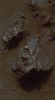
PSP_002101_1875_red-01.jpgMojave Crater Floor and Central Uplift (EDM - Natural Colors; credits: Lunexit)66 visiteThis HiRISE sub-image shows a portion of the Central Uplift structure in Mojave Crater.
Central Uplifts are a typical feature of large impact craters on the Earth, the Moon and Mars; craters larger than 6 or 7 Km in diameter on Mars typically form this mountain-like peak in the central portion of the crater interior.
This peak consists of rocks originating from several kilometers beneath the pre-impact surface. Mojave has a very prominent Central Uplift as it has a diameter of approx. 60 Km (about 37 miles).
In this image, Boulders as large as 15 mt (50 feet) across have been eroded from the massive uplifted rock and have rolled downslope.
Fine-grained Debris has also collected in the topographic lows and has been shaped by the wind into Dunes and Ripples. Notably absent from this image are the striking Drainage Channels and Alluvial Fans that are abundant on the Wall-Terraces and Ejecta of Mojave Crater (see PSP_001415_1875).
These features were likely formed by Surface Runoff of liquid water, which may have been released from the Subsurface during the impact event that formed Mojave.
Previously, it had been suggested that a brief, torrential downpour over Mojave Crater delivered the water. However, Mars Orbiter Camera's (MOC) images of Mojave's Central Uplift have previously shown no evidence for Surface Runoff, and the higher resolution of this HiRISE image (2.4 MB) confirms that this part of the Crater appears untouched by liquid water.
So the question remains: by what means was the water, in the form of Runoff, supplied to Mojave? This question, in addition to several others regarding this phenomenon, are currently being investigated by the HiRISE team and their collaborators.MareKromium
|
|

PSP_002136_1920_cut_b.jpgPhotoartifacts?76 visiteThe image shows two portions of the Isidis Planitia image (PSP_002136_1920) with bright noise at top, and 6 examples of bright noise seen in the cruise images; all are from the original, unprocessed images.MareKromium
|
|

PSP_002157_1715_red-PCF-LXTT-02.jpgRecent Impact near Arsia Mons' Summit (CTX and EDM in Absolute Natural Colors; credits for the additional process. and color.: Dr Paolo C. Fienga - Lunexit Team)321 visitenessun commentoMareKromium
|
|

PSP_002162_2260_RED_abrowse-PCF-LXTT_(2).jpgScalloped Terrain with Layering (CTX and EDM - Absolute Natural Colors; credits for the additional process. and color.: Dr Paolo C. Fienga - Lunexit Team)236 visitenessun commentoMareKromium
|
|
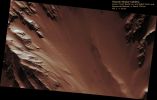
PSP_002169_1940_red-PCF-LXTT.jpgTharsis Tholus Caldera (Enhanced Natural Colors; credits for the additional process. and color.: Dr Paolo C. Fienga - Lunexit Team)312 visitenessun commentoMareKromium
|
|
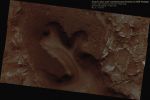
PSP_002176_2025_red-PCF-LXTT.jpgPossible Paleo-Lake and "Luminescent" Dunes in Nili Fossae (Absolute Natural Colors; credits for the additional process. and color.: Dr Paolo C. Fienga - Lunexit Team)247 visitenessun commentoMareKromium
|
|
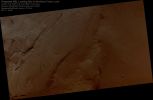
PSP_002179_1855_RED_browse.jpgProposed MSL Landing Site in Meridiani Planum (Natural Colors; credits for the additional process. and color.: Dr Paolo C. Fienga - Lunexit Team)81 visitenessun commentoMareKromium
|
|

PSP_002184_2005_RED_browse-1.jpgOn the Edge of Olympus (Natural Colors; credits: Lunexit)78 visiteOlympus Mons, the largest volcano in the Solar System, has a mysterious halo (or "Aureole") of material on its Western and Northern Sides. There have been many ideas about how this feature may have formed over the years, but the hypothesis that this is a giant landslide deposit has gained favor.
Many large volcanoes on the Earth collapse under their own weight, so it seems reasonable that Olympus Mons would do the same. The edge of the Aureole is seen on the left (North) part of the image.
It is interesting that the main part of the Aureole seems sunk down compared to the edge. It is possible that the ridge along the outer margin of the Aureole formed as the flow turned around after pushing uphill for a ways. Imagine a giant wave of rock pushing up onto the "beach" and then receding. It might leave a deposit like this.
Alternatively, glaciers push up a ramp of rock at their fronts.
After they retreat, the ridge of rock is left at the furthest extent of the glacier. These are called "Terminal Moraines" by geologists.MareKromium
|
|
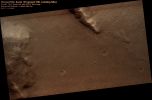
PSP_002193_1670_red-PCF-LXTT.jpgFeatures of Margaritifer Terra (Natural Colors; credits for the additional process. and color.: Dr Paolo C. Fienga - Lunexit Team)324 visitenessun commentoMareKromium
|
|
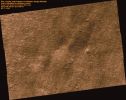
PSP_002202_2250_RED_browse-00.jpgPits, Cracks, and Polygons in Western Utopia Planitia (context image) - Elab. Lunexit63 visiteUtopia Planitia is part of the Great Northern Lowlands of Mars, where there may have been an ancient ocean.
The pits, cracks and polygons in Utopia have been interpreted as due to some combination of temperature variations in ice-rich ground, sublimation of ground ice, and collapse into subsurface voids.
This HiRISE image reveals many new details, including an abundance of boulders about 1 mt in diameter over the entire region (see the extr-detail mgnf).
The infrared color of HiRISE reveals two types of materials: the brighter and yellowish areas are probably dusty and the darker and bluer areas are probably coarser particles--sand and rocks.MareKromium
|
|
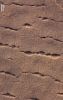
PSP_002202_2250_RED_browse-01.jpgPits, Cracks, and Polygons in Western Utopia Planitia (extra-detail mgnf) - elab. NASA65 visitenessun commentoMareKromium
|
|
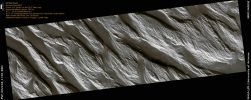
PSP_002244_1720_RED_abrowse.jpgWhite Rock (Saturated Natural Colors; credits for the additional process. and color.: Dr Paolo C. Fienga - Lunexit Team)76 visiteThis image shows a portion of a relatively bright landform named "White Rock" on the Floor of Pollack Crater, in the Sinus Sabaeus Region of Mars.
Data from the Mars Global Surveyor Thermal Emission Spectrometer (TES) indicates that this landform is not anomalously bright, relative to other bright Martian Regions. Further, the apparent brightness seen here is due to contrast with other materials on the Crater Floor.
Dunes and Ripples are visible in the dark material between the bright ridges. Their orientations appear to be influenced by wind directionally channeled by the ridges.
Material appears to have been shed from the white landform and deposited on the darker bedforms indicating that the light-toned outcrops break down into fine materials.
Its high albedo and location in a topographic basin have led to suggestions that White Rock is an erosional remnant of an ancient lacustrine evaporate deposit. Other interpretations include an eroded accumulation of compacted or weakly cemented aeolian sediment.MareKromium
|
|
| 2236 immagini su 187 pagina(e) |
 |
|
|
|
|
101 | |
|
|
|
|








