| |

|
|

Venus_Jupiter.jpgVenus and Her Father, in the Morning Skies...77 visite"...Ut desint vires, tamen laudanda Voluntas est..."
(Ovidio)
"...Sebbene gli sforzi (per arrivare a conseguire qualcosa) possano non bastare, la Volontà (di raggiungere l'obbiettivo) va comunque apprezzata..."MareKromium
|
|

Venus_Moon.jpgNight Lovers83 visitenessun commentoMareKromium
|
|

Venus_Moon_2026_06_17.jpgCosmic Kiss (Image Credit & Copyright: Debra Ceravolo)161 visiteVenus is now appearing on the celestial stage as Earth's brilliant evening star, performing with the Moon, other wandering planets, and bright stars in western skies.
For evening sky gazers on June 17, 2026, the celestial beacon rose after sunset close by a young, slender, crescent Moon.
But from some locations the Moon could be seen to occult or pass in front of Venus.
And from a backyard observatory in southern British Columbia, Canada, the lunar occultation was played out in daylight.
This stunning telescopic snapshot captured a scene in dramatically cloudy skies, following Venus' hour long disappearance, as the evening star emerged beyond the bright lunar limb.MareKromium
|
|

Venus___Jupiter.jpgChilean Skyscape74 visitenessun commentoMareKromium
|
|

Venus_and_the_Moon.jpgNight Lovers'...86 visitenessun commentoMareKromium
|
|

Venus~0.jpgNight-flight to Venus (by Roberto Tremolada)83 visitenessun commentoMareKromium
|
|

Vision.jpgGalactic Vision79 visitenessun commentoMareKromium
|
|

Vortex.jpgInside the Vortex...75 visiteFix your camera to a tripod, lock the shutter open, and you can make an image of star trails - graceful concentric arcs traced by the stars as planet Earth rotates on its axis. Of course, the length of the star trails will depend on the exposure time. While exposures lasting just five minutes produce a significant arc, in about 12 hours a given star would trace out half a circle. But in any long exposure, the background glow from light-polluted skies can build up to wash out the trails. Still, astronomer Josch Hambsch produced this stunning composite of star trails around the South Celestial Pole with an effective "all night" exposure time of almost 11 hours. To do it, he combined 128 consecutive five minute long digital exposures recorded in very dark night skies above Namibia. In his final image, the background glow on the right is due in part to the faint, arcing Milky Way.
|
|

Voyager_1.jpgVoyager 1, today...101 visiteLa Sonda Voyager One è stata lanciata nell'AD 1977 verso il Sistema Solare Esterno. Ormai è in viaggio da 45 anni e fino a non molto tempo fa ha continuato a inviarci dati. Poi c'è stato un problema. La NASA sapeva che il problema era da qualche parte nel sistema di articolazione e controllo dell'assetto del veicolo spaziale, o AACS (Attitude and Articulation Control Subsystem), che mantiene l'antenna della Voyager One puntata verso la Terra.
Il problema è che non è semplice fare manutenzione su un oggetto che si trova a circa 23,5 miliardi di Km dai nostri recettori.
"L'AACS aveva iniziato a inviare i dati di telemetria attraverso un computer di bordo noto per aver smesso di funzionare anni fa e il computer ha corrotto le informazioni", hanno scritto i funzionari della NASA in un aggiornamento. Una volta che i Tecnici hanno iniziato a sospettare che la Voyager One stesse utilizzando un computer guasto (nota: fra “freddo” da quelle parti…), hanno semplicemente inviato un comando in modo che il suo sistema AACS utilizzasse il computer giusto per "telefonare a casa". Era una soluzione a basso rischio, ma richiedeva molto tempo. Un segnale radio impiega più o meno 23 ore per raggiungere la Voyager One.
Ma non è finita: gli ingegneri sospettano che la Voyager One abbia iniziato a instradare la sua telemetria di stato e stato attraverso il computer morto dopo aver ricevuto un comando errato da un altro computer di bordo. Ciò suggerirebbe qualche altro problema in agguato all'interno del cervello dei computer. La NASA terrà gli occhi aperti anche su questo (si, certo, come no…).MareKromium
|
|
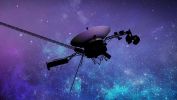
Voyager_1A.jpgFarewell...130 visiteOn April 17, 2'26, engineers at NASA’s Jet Propulsion Laboratory (JPL) in Southern California sent commands to shut down an instrument aboard Voyager 1 called the Low-energy Charged Particles experiment, or LECP. The nuclear-powered spacecraft is running low on power, and turning off the LECP is considered the best way to keep humanity’s first interstellar explorer going.
The LECP has been operating almost without interruption since Voyager 1 launched in 1977 — almost 49 years. It measures low-energy charged particles, including ions, electrons, and cosmic rays originating from our solar system and galaxy. The instrument has provided critical data about the structure of the interstellar medium, detecting pressure fronts and regions of varying particle density in the space beyond our heliosphere. The twin Voyagers are the only spacecraft that are far enough from Earth to provide this information.
Like Voyager 2, Voyager 1 relies on a radioisotope thermoelectric generator, a device that converts heat from decaying plutonium into electricity. Both probes lose about 4 watts of power each year. After almost a half-century in space, power margins have grown razor thin, requiring the team to conserve energy by shutting off heaters and instruments while making sure the spacecraft don’t get so cold that their fuel lines freeze.
During a routine, planned roll maneuver on Feb. 27, Voyager 1’s power levels fell unexpectedly. Mission engineers knew any additional drop in power could trigger the spacecraft’s undervoltage fault protection system, which would shut down components on its own to safeguard the probe, requiring recovery by the flight team — a lengthy process that carries its own risks.
The Voyager team needed to act first.
“While shutting down a science instrument is not anybody’s preference, it is the best option available,” said Kareem Badaruddin, Voyager mission manager at JPL. “Voyager 1 still has two remaining operating science instruments — one that listens to plasma waves and one that measures magnetic fields. They are still working great, sending back data from a region of space no other human-made craft has ever explored. The team remains focused on keeping both Voyagers going for as long as possible.”
Far-out plan
The choice of which instrument to turn off next wasn’t made in the heat of the moment. Years ago, the Voyager science and engineering teams sat down together and agreed on the order in which they would shut off parts of the spacecraft while ensuring the mission can continue to conduct its unique science. Of the 10 identical sets of instruments that each spacecraft carries, seven have been shut off so far. For Voyager 1, the LECP was next on that list. The team shut off the LECP on Voyager 2 in March 2025.
Because Voyager 1 is more than 15 billion miles (25 billion kilometers) from Earth, the sequence of commands to shut down the instrument will take 23 or so hours to reach the spacecraft, and the shutdown process itself will take about three hours and 15 minutes to complete. One part of the LECP — a small motor that spins the sensor in a circle to scan in all directions — will remain on. It uses little power (0.5 watts), and keeping it running gives the team the best chance of being able to turn the instrument back on someday if they find extra power.
What comes next
Engineers are confident that shutting down the LECP will give Voyager 1 about a year of breathing room. They are using the time to finalize a more ambitious energy-saving fix for both Voyagers they call “the Big Bang,” which is designed to further extend Voyager operations. The idea is to swap out a group of powered devices all at once — hence the nickname — turning some things off and replacing them with lower-power alternatives to keep the spacecraft warm enough to continue gathering science data.
The team will implement the Big Bang on Voyager 2 first, which has a little more power to spare and is closer to Earth, making it the safer test subject. Tests are planned for May and June 2026. If they go well, the team will attempt the same fix on Voyager 1 no sooner than July. If it works, there is even a chance that Voyager 1’s LECP could be switched back on.MareKromium
|
|

Voyager_2.jpgVoyager 2: Citizen of the Universe198 visiteLanciata 42 anni fa la Sonda Voyager 2 è diventata il secondo oggetto costruito dall’uomo (dopo la sonda Voyager 1) a lasciare il sistema solare (o meglio l’Eliosfera ossia la zona influenzata dai venti solari) e sta viaggiando nello spazio interstellare. A certificarlo, sulle pagine di Nature Astronomy, sono stati i ricercatori dell’università dell’Iowa, che hanno registrato il debole ma preciso segnale trasmesso “dall’altra parte” ossia da oltre il confine invisibile che segna la fine del sistema solare. Il fatto che Voyager abbia attraversato il sistema solare ci fornisce dati preziosi sulla formazione dell’eliosfera e, si presume, ci fornirà dati ancor più importanti in merito a quel che c’è oltre il sistema solare, nello spazio inesplorato, visto che si stima che, senza incidenti, le sonde Voyager e Voyager 2 potranno continuare il loro viaggio potenzialemente per altri 5 miliardi di anni, ossia, potenzialmente per sempre.MareKromium
|
|

Voyagers-00.gifTowards the "Terra Incognita" (1)86 visiteInterstellar Mission - Mission Objective
The mission objective of the Voyager Interstellar Mission (VIM) is to extend the NASA exploration of the Solar System beyond the neighborhood of the outer planets to the outer limits of the Sun's sphere of influence, and possibly beyond. This extended mission is continuing to characterize the outer Solar System environment and search for the heliopause boundary, the outer limits of the Sun's magnetic field and outward flow of the solar wind. Penetration of the heliopause boundary between the solar wind and the interstellar medium will allow measurements to be made of the interstellar fields, particles and waves unaffected by the solar wind.
The VIM is an extension of the Voyager primary mission that was completed in 1989 with the close flyby of Neptune by the Voyager 2 spacecraft. Neptune was the final outer planet visited by a Voyager spacecraft. Voyager 1 completed its planned close flybys of the Jupiter and Saturn planetary systems while Voyager 2, in addition to its own close flybys of Jupiter and Saturn, completed close flybys of the remaining two gas giants, Uranus and Neptune.
At the start of the VIM, the two Voyager spacecraft had been in flight for over 12 years having been launched in August (Voyager 2) and September (Voyager 1), 1977. Voyager 1 was at a distance of approximately 40 AU (Astronomical Unit - mean distance of Earth from the Sun, 150 million kilometers) from the Sun, and Voyager 2 was at a distance of approximately 31 AU.
As of July 2007, Voyager 1 was at a distance of 15.4 Billion Kilometers (103 AU) from the sun and Voyager 2 at a distance of 12.4 Billion kilometers (83 AU).
Voyager 1 is escaping the solar system at a speed of about 3.6 AU per year, 35 degrees out of the ecliptic plane to the north, in the general direction of the Solar Apex (the direction of the Sun's motion relative to nearby stars). Voyager 2 is also escaping the solar system at a speed of about 3.3 AU per year, 48 degrees out of the ecliptic plane to the south.
Both Voyagers are headed towards the outer boundary of the solar system in search of the heliopause, the region where the Sun's influence wanes and the beginning of interstellar space can be sensed. The heliopause has never been reached by any spacecraft; the Voyagers may be the first to pass through this region, which is thought to exist somewhere from 8 to 14 billion miles from the Sun. In December 2004 Voyager 1 crossed an area known as the termination shock. This is where the million-mile-per-hour solar winds slows to about 250,000 miles per hour—the first indication that the wind is nearing the heliopause. Voyager 2 is currently observing preshock phenomena, indicating that it is close to the termination shock. The Voyagers should cross the heliopause 10 to 20 years after reaching the termination shock. The Voyagers have enough electrical power and thruster fuel to operate at least until 2020. By that time, Voyager 1 will be 12.4 billion miles (19.9 billion KM) from the Sun and Voyager 2 will be 10.5 billion miles (16.9 billion KM) away. Eventually, the Voyagers will pass other stars. In about 40,000 years, Voyager 1 will drift within 1.6 light years (9.3 trillion miles) of AC+79 3888, a star in the constellation of Ophiucius. In some 296,000 years, Voyager 2 will pass 4.3 light years (25 trillion miles) from Sirius, the brightest star in the sky . The Voyagers are destined—perhaps eternally—to wander the Milky Way. For current distances, check: Mission Weekly Reports
MareKromium
|
|
| 495 immagini su 42 pagina(e) |
|
|
|
|
|
37 | |
|
|
|
|
|
|








