Walking on Mars with Spirit and Opportunity
|
|
|
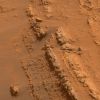
SOL749-PIA08064.jpgLayers at Home Plate (1 - approximate true colors; credits: NASA) - Sol 74963 visiteCaption NASA originale:"This image shows coarse-grained layers from around the edge of a low plateau called Home Plate inside Mars' Gusev Crater. One possible origin is material falling to the ground after being thrown aloft by an explosion such as a volcanic eruption or meteorite impact.
The PanCam on NASA's MER Spirit acquired the exposures for this image on Spirit's 749th Sol (Feb. 10, 2006). This view is an approximately true-color rendering mathematically generated from separate images taken through all of the left Pancam's 432- to 753-nnmt filters".
|
|
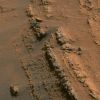
SOL749-PIA08064.jpgLayers at Home Plate (2 - MULTISPECTRUM; credits: Lunexit) - Sol 74972 visitenessun commentoMareKromium
|
|

SOL750-1_copia2.jpgMosaic-like Rock - Sol 750 (natural colors; credits: Dr G. Barca)63 visitenessun commentoMareKromium
|
|
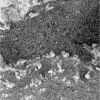
SOL750-2M192956077EFFAO55P2936M2M1.jpgThe texture of Home Plate - Sol 75062 visitenessun commento
|
|
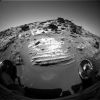
SOL751-2F193033678EFFAO56P1206R0M1.jpgHome Plate: Front View - Sol 75163 visiteCaption originale:"Right Front HazCam Non-linearized Full frame EDR acquired on Sol 751 of Spirit's mission to Gusev Crater at approximately 11:45:15 MLT".
|
|

SOL753-1_copia-2.jpgMosaic-like Rock - Sol 753 (natural colors; credits: Dr G. Barca)63 visitenessun commentoMareKromium
|
|
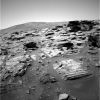
SOL754-2N193300071EFFAOA0P1950L0M1.jpgHome Plate - Sol 75464 visitenessun commento
|
|
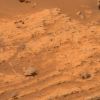
SOL754-PIA08063.jpgMore Layers at Home Plate - Sol 754 (approximate true colors; credits: NASA)63 visiteCaption originale:"This view of layers around the edge of a low plateau called Home Plate, inside Mars' Gusev Crater includes a feature that may be what geologists call a "bomb sag" and interpret as evidence of an explosive event, such as a volcanic eruption.
The layers seen here are generally straight and parallel except in the lower right, where they dip around a greyish rock that is about 4 cm (such as about 1,5") in diameter. When layered deposits are struck by a falling rock while the layers are still soft, this type of pattern can be created. The rock might have been lofted by a volcanic burst or as part of the material ejected by the crater-forming impact of a meteorite.
The PanCam on NASA's MER Spirit acquired the exposures for this image on Spirit's 754th Sol (Feb. 15, 2006). This view is an approximately true-color rendering mathematically generated from separate images taken through all of the left Pancam's 432- to 753-nnmt filters".
|
|
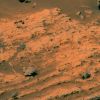
SOL754-PIA08063.jpgMore Layers at Home Plate - Sol 754 (MULTISPECTRUM; credits: Lunexit)72 visitenessun commentoMareKromium
|
|
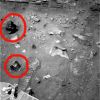
SOL755-2N193389710EFFAOA4P1950L0M1.jpgStones or fossils? - Sol 755109 visiteUn frame intrigante, segnalatoci dall'Amico Enzo Lojacono (ottimo il colpo d'occhio: questi frames sono spesso ingannevoli) che ci mostra... Già, che cosa ci mostra?
Questo è quello che pensiamo:
a) se si tratta di rocce, diremmo che sono rocce ignee (e non sedimentarie, come quasi tutte le altre che circondano Spirit). Gusev, in un tempo remoto, forse poteva anche essere esso stesso un vulcano (anzichè un bacino d'impatto), ma a parte questa ipotesi limite, a noi non risulta l'esistenza di fornaci vulcaniche nei pressi di Gusev e quindi escluderemmo l'idea per cui si possa trattare di frammenti di antica lava;
b) se si tratta di rocce ignee (magari con altissimo contenuto di Fe, Mg e Mn) e non di residui vulcanici, allora esse potrebbero essere frammenti di una meteora oppure degli ejecta (ma se fossero degli ejecta, allora dovremmo supporre che essi non arrivano da decine o centinaia di metri di distanza, ma addirittura da Km e Km più lontano rispetto all'area su cui Spirit si trova adesso);
c) se invece non si tratta di rocce, allora opteremmo per una matrice organica (che dire? Le ipotesi che suppongono possa trattarsi di frammenti di tronchi ormai fossilizzati o di residui fossili di creature acquatiche sono quelle che prediligiamo). E poi, in fondo, è stata la NASA stessa a dire che Gusev Crater, un tempo, doveva essere un grande lago...
|
|
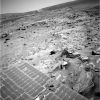
SOL755-2N193397970EFFAOC6P0705L0M1.jpgTime to rest...and recharge! - Sol 75562 visiteSol 750 (Feb. 11, 2006): Spirit examined a rock target dubbed Pitcher with the MI, then completed an overnight study of a rock target dubbed Fastball with the Alpha Particle X-Ray Spectrometer;
Sol 751: Spirit stowed the RA and executed a commanded 5,3-meter (17-foot) drive to Posey using visual odometry. The drive went exactly as planned and ended with the Rover in place to immediately begin scientific studies with the RA without further adjustment of the Rover's position;
Sol 752: Spirit conducted light remote sensing and recharged the Rover's batteries.
|
|
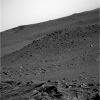
SOL755-2P193399231EFFAOC6P2365R1M1.jpgHome Plate and surroundings, just before Winter (1) - Sol 75573 visitenessun commento
|
|
| 5458 immagini su 455 pagina(e) |
 |
|
|
|
|
418 | |
|
|
|
|








