Walking on Mars with Spirit and Opportunity
|
|
|
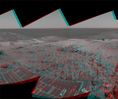
SOL627-4-3D-PIA03058.jpgPanorama (4) - Sol 62770 visitenessun commento
|
|
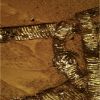
SOL628-GB.jpgCriss-Crossed Rover Tracks - Sol 628 (Natural Colors; credits: Dr G. Barca)74 visitenessun commentoMareKromium
|
|
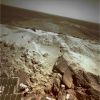
SOL630-2N182290583EFFAEVOP1590R0M1.jpgEarth-like Panorama - Sol 630 (Natural Colors; credits: Lunar Explorer Italia)69 visiteCaption NASA"Left Navigation Camera Non-linearized Full frame EDR acquired on Sol 630 of Spirit's mission to Gusev Crater at approximately 11:16:05 MLT".
Nota Lunexit: questi frames, anche nella loro versione RAW (ergo prima del nostro additional process. and coloring), erano di una qualità straordinaria, se comparati a quello che riceviamo oggi. Certo, i Rover (soprattutto Spirit) sono "invecchiati ed usurati", ma la nostra sensazione è che la qualità dei frames pubblici sia stata deliberatamente abbassata - da moltissimo tempo. MareKromium
|
|
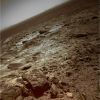
SOL630-2N182290625EFFAEVOP1590L0M1.jpgEarth-like Panorama - Sol 630 (Natural Colors; credits: Lunar Explorer Italia)63 visiteCaption NASA:"Left Navigation Camera Non-linearized Full frame EDR acquired on Sol 630 of Spirit's mission to Gusev Crater at approximately 11:16:05 MLT".MareKromium
|
|
SOL630-2N182313238EFFAEVOP1590R0M1.jpgSetting Sun... - Sol 63063 visitenessun commento
|
|
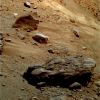
SOL631-1.jpgLight Slope with Rocks and Boulders - Sol 631 (natural colors + MULTISPECTRUM; credits: Dr G. Barca & Lunexit)72 visitenessun commentoMareKromium
|
|
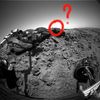
SOL631-2F182380354EFFAEVOP1214R0M1.jpgA "needle" of rock? - Sol 63188 visiteIn questa immagine, dentro la cerchiatura rossa, un dettaglio importante il quale però, come le policies NASA insegnano, verrà sempre ignorato (o, se preferite, "non visto" o, magari, "visto, ma ritenuto NON importante" e così via...). Noi abbiamo intitolato il frame onorando questo particolare che, in fondo, assomiglia proprio - almeno dall'angolo visuale della Front Haz-Cam di Spirit - ad un "ago di roccia". Una scheggia appuntita (o forse una "lamina", come dice il Dr Feltri) che si staglia contro il cielo di Marte e che trova origine dalla porzione superiore dell'outcrop ripreso.
Attenzione: noi parliamo di "origine" nel solo senso di "provenienza". Quale processo geologico (o NON geologico...) possa aver "creato" un simile rilievo, infatti, non ci è dato (ancora) saperlo...
|
|

SOL631-2N182372617EFFAEVOP1590R0M1.jpgMartian Landscape from atop (1) - Sol 63162 visitenessun commento
|
|
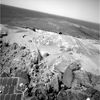
SOL631-2N182394683EFFAEVOP1590R0M1.jpgMartian Landscape from atop (2) - Sol 63162 visitenessun commento
|
|

SOL632-1-A_Orion_Composite-A640R1_br2~0.jpgOrion...through the eyes of Spirit! (1) - Sol 63262 visiteOriginal caption:"NASA's MER Spirit continues to take advantage of extra solar energy by occasionally turning its cameras upward for night sky observations. Most recently, Spirit made a series of observations of bright star fields from the summit of "Husband Hill" in Gusev Crater on Mars. Scientists use the images to assess the cameras' sensitivity and to search for evidence of nighttime clouds or haze. The image on the left is a computer simulation of the stars in the constellation Orion. The next three images are actual views of Orion captured with Spirit's PanCam during exposures of 10, 30, and 60 seconds".
|
|

SOL632-2-A_Orion_Composite-A640R1_br2.jpgOrion...through the eyes of Spirit! (2) - Sol 63262 visiteOriginal caption:"Because Spirit is in the Southern Hemisphere of Mars, Orion appears upside down compared to how it would appear to viewers in the Northern Hemisphere of Earth. "Star trails" in the longer exposures are a result of the Mars' rotation. The faintest stars visible in the 60" exposure are about as bright as the faintest stars visible with the naked eye from Earth (about magnitude 6 in astronomical terms). The Orion Nebula, famous as a nursery of newly forming stars, is also visible in these images. Bright streaks in some parts of the images aren't stars or meteors or unidentified flying objects, but are caused by solar and galactic cosmic rays striking the camera's detector.
Spirit acquired these images with the PanCam on Sol 632 (Oct. 13, 2005) at around 45 minutes past midnight MLT, using the camera's broadband filter (wavelengths of 739 nnmts plus or minus 338 nnmts)".
|
|

SOL632-2N182429299EFFAEVOP2748R0M1.jpgMartian Night (1) - Sol 63262 visiteOriginal caption:"Right Nav-Cam Non-linearized Full frame EDR acquired on Sol 632 of Spirit's mission to Gusev Crater at approximately 00:44:55 MLT".
Portate il frame sino al full-size e poi osservate i piccoli tratti chiari - noi ne contiamo 8 - che caratterizzano la sezione centrale del frame. Si tratta di raggi cosmici? O forse di stelle che sono diventate "tratti luminosi" a causa della lunghezza dell'esposizione? Sono photo-artifacts?
Ma soprattutto: gli Amici del Centro Controllo Missione che cosa stavano cercando di fotografare?...
|
|
| 5458 immagini su 455 pagina(e) |
 |
|
|
|
|
370 | |
|
|
|
|








