Walking on Mars with Spirit and Opportunity
|
|
|

SOL489-2P169794457EFFAAE0P2690L7M1.jpgSunset on Gusev Crater (4)63 visitenessun commento
|
|

SOL489-MF-LXT.jpgHearts of Stone... - Sol 489 (possible True Colors; credits: Dr M. Faccin & Lunar Explorer Italia)180 visitenessun commentoMareKromium
|
|
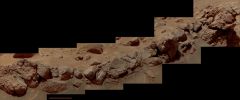
SOL489-MF-LXTT2.jpgNear Husband's Top - Sol 489 (an Image-Mosaic in Natural Colors; credits: Dr Marco Faccin - Lunexit Team)113 visitenessun commentoMareKromium
|
|

SOL489-MF.jpgSunset - Sol 489 (True Colors; credits: Dr M. Faccin)80 visite...Capolavoro!...MareKromium
|
|
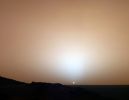
SOL489-PIA07997.JPGSunset on Mars... - Sol 489 (strongly enhanced Natural Colors; credits: NASA/JPL/Texas A&M/Cornell)75 visiteCaption NASA:"On May 19th, 2005, NASA's Mars Exploration Rover Spirit captured this stunning view as the Sun sank below the Rim of Gusev Crater on Mars.
This Panoramic Camera (PanCam) mosaic was taken around 18:07 in the evening of the Rover's 489th Sol. Spirit was commanded to stay awake briefly after sending that Sol's data to the Mars Odyssey Orbiter just before Sunset. This small panorama of the western sky was obtained using PanCam's 750-nanometer, 530-nanometer and 430-nanometer color filters. This filter combination allows false color images to be generated that are similar to what a human would see, but with the colors slightly exaggerated.
In this image, the bluish glow in the sky above the Sun would be visible to us if we were there, but an artifact of the PanCam's infrared imaging capabilities is that with this filter combination the redness of the sky farther from the Sunset is exaggerated compared to the daytime colors of the Martian Sky.
Because Mars is farther from the Sun than the Earth is, the Sun appears only about two-thirds the size that it appears in a Sunset seen from the Earth. The terrain in the foreground is the rock outcrop "Jibsheet", a feature that Spirit has been investigating for several weeks (Rover Tracks are dimly visible leading up to "Jibsheet").
The floor of Gusev Crater is visible in the distance, and the Sun is setting behind the wall of Gusev some 80 Km (about 50 miles) in the distance.
This mosaic is yet another example from MER of a beautiful, sublime martian scene that also captures some important scientific information. Specifically, sunset and twilight images are occasionally acquired by the science team to determine how high into the Atmosphere the Martian Dust extends, and to look for dust or ice clouds.
Other images have shown that the twilight glow remains visible, but increasingly fainter, for up to two hours before Sunrise or after Sunset. The long Martian Twilight (compared to Earth's) is caused by Sunlight scattered around to the night side of the Planet by abundant high altitude dust.
Similar long twilights or extra-colorful sunrises and sunsets sometimes occur on Earth when tiny dust grains that are erupted from powerful volcanoes scatter light high in the Atmosphere".
Note Lunexit: la NASA, in questa caption, ci dice che il Sole, dalla Superficie di Marte, dovrebbe apparire con un diametro apparente pari a circa i 2/3 del diametro apparente che esso ci mostra dalla Terra.
Curioso: sino a poco tempo fa, l'informazione NASA ufficiale era che il diametro apparente del Sole, dalla Superficie Marziana, era di 2/3 più piccolo rispetto al suo diametro apparente percepibile da Terra e quindi doveva essere pari ad 1/3 di quest'ultimo.
La differenza, come ovvio, non è piccola e le implicazioni - particolarmente quelle connesse alla luminosità dell'ambiente marziano - sono piuttosto importanti.
Lo ammettiamo: siamo un pò confusi a questo punto ma, forse, possiamo risolvere il dubbio noi stessi: abbiate solo un pizzico di pazienza...MareKromium
|
|

SOL489-PIA07997.jpgSunset on Mars - Sol 48992 visiteOn May 19th, 2005, NASA's MER Spirit captured this stunning view as the Sun sank below the rim of Gusev Crater on Mars. This PanCam mosaic was taken around 18:07 MLT of the Rover's 489th Sol. Spirit was commanded to stay awake briefly after sending that Sol's data to the Mars Odyssey orbiter just before sunset. This small panorama of the western sky was obtained using PanCam's 750, 530 and 430-nnmts color filters. This filter combination allows false color images to be generated that are similar to what a human would see, but with the colors slightly exaggerated. In this image, the bluish glow in the sky above the Sun would be visible to us if we were there, but an artifact of the Pancam's infrared imaging capabilities is that with this filter combination the redness of the sky farther from the sunset is exaggerated compared to the daytime colors of the martian sky. Because Mars is farther from the Sun than the Earth is, the Sun appears only about two-thirds the size that it appears in a sunset seen from the Earth. The terrain in the foreground is the rock outcrop "Jibsheet", a feature that Spirit has been investigating for several weeks (rover tracks are dimly visible leading up to "Jibsheet"). The floor of Gusev crater is visible in the distance, and the Sun is setting behind the wall of Gusev some 80 km (50 miles) in the distance.
|
|
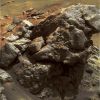
SOL490-1-GB-LXT.jpgSome Colourful Outcrop! - Sol 490 (possible True Colors; credits: Dr G. Barca & Lunar Explorer Italia)110 visitenessun commentoMareKromium
|
|

SOL490-2-GB-LXT.jpgMartian "Dusty" Wall - Sol 490 (possible True Colors; credits: Dr G. Barca & Lunar Explorer Italia)135 visitenessun commentoMareKromium
|
|
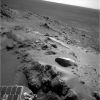
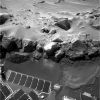
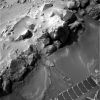
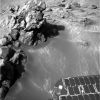
SOL490-2N169866019EFFAAEEP1907R0M1.jpgThe Most Spectacular Outcrop, so far: Sol 490 (1)67 visiteUna serie di frames che riprendono, con grande abbondanza di dettagli (che Vi suggeriamo di analizzare con attenzione!) questo spettacolare Outcrop che abbiamo definito "Balcone di Roccia", dato che si sporge, dall'alto di Husband Hill, verso la distesa dalla quale è arrivato Spirit.
Molto belli ed interessanti (anche per il loro indubbio valore scientifico) i dettagli che riguardano il piccolo "cedimento" di terreno che avevamo già evidenziato in altri frames relativi ai Soles trascorsi.
Visto in queste riprese, il cedimento potrebbe anche essere imputato ad un processo analogo al "gravity wasting", ma noi restiamo dell'idea che la sua causa possa e debba essere ricercata nelle operazioni ravvicinate svolte dal Rover.
|
|
SOL490-2N169866071EFFAAEEP1907L0M1.jpgThe Most Spectacular Outcrop, so far: Sol 490 (2)62 visitenessun commento
|
|
SOL490-2N169866124EFFAAEEP1907L0M1.jpgThe Most Spectacular Outcrop, so far: Sol 490 (3)73 visitenessun commento
|
|
SOL490-2N169866175EFFAAEEP1907L0M1.jpgThe Most Spectacular Outcrop, so far: Sol 490 (4)63 visitenessun commento
|
|
| 5458 immagini su 455 pagina(e) |
 |
|
|
|
|
314 | |
|
|
|
|








