Walking on Mars with Spirit and Opportunity
|
|
|
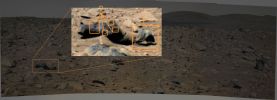
SOL074-GB-LXT-Panoramic_enzo.jpgUnusual "Holes" and an "Empty Shell" - Sol 74122 visiteDal nostro Amico e Partner, Enzo Mancuso, una interessantissima puntualizzazione su due rilievi - ormai - piuttosto "familiari", ma ancora immersi nelle nebbie del mistero: abbiamo una roccia piena di "forellini" ed una "roccia guscio".
I "forellini", nonostante la loro innocua apparenza, costituiscono ancora oggi un mistero poichè, se li osservate con attenzione, non si tratta assolutamente di "vescicole", ma di qualcosa d'altro.
In effetti, i "buchetti" che caratterizzano il cosiddetto "basalto vescicolare" sono qualcosa di ben diverso da quello che vediamo in questo frame (come in tanti altri similari); su tutto, si tratta di forellini con bordi estroversi lacerati e non introversi e lisci.
E scusateci, ma questa differenza non ci sembra trascurabile...Peccato ch la NASA, su questo tipo di feature, non si è mai - ufficialmente - pronunciata. Ma noi la aspettiamo...
Per quanto attiene la "roccia guscio", l'unica cosa che possiamo dire è che, probabilmente, quello che essa conteneva...è già uscito da tempo!
Se osservate il dettaglio con attenzione, infatti, esso non potrà non ricordarVi un guscio d'uovo così come appare DOPO che il pulcino che conteneva decise di uscire...
Che altro aggiungere? Un "Bravo", di Cuore, ad Enzo Mancuso, che accogliamo con piacere nella nostra Famiglia di Anomaly Hunters!MareKromium
|
|
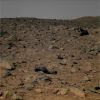
SOL074-GB-LXT.jpgRockland! - Sol 74 (Natural Colors; credits: Dr G. Barca & Lunar Explorer Italia)75 visitenessun commentoMareKromium
|
|
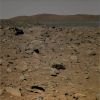
SOL074-GB-LXT1.jpgThe "Columbia Hills" in the distance - Sol 74 (Natural Colors; credits: Dr G. Barca & Lunar Explorer Italia)78 visitenessun commentoMareKromium
|
|

SOL074-GB-LXT2.jpgThe "Columbia Hills" in the distance - Sol 74 (Natural Colors; credits: Dr G. Barca & Lunar Explorer Italia)77 visitenessun commentoMareKromium
|
|

SOL074-GB-LXT3.jpgThe "Columbia Hills" in the distance - Sol 74 (Natural Colors; credits: Dr G. Barca & Lunar Explorer Italia)65 visitenessun commentoMareKromium
|
|

SOL075-1.jpgOn the Edge of Bonneville: the Heat-Shield - Sol 75 (True Colors; credits: Dr G. Barca)77 visitenessun commentoMareKromium
|
|

SOL075-2F133027365EFF21CEP1201R0M1.jpgBoulders on sight! - Sol 75 (natural colors; credits: Lunexit)70 visitenessun commentoMareKromium
|
|

SOL076-2.jpgVERY UNUSUAL Rocks and Boulders near Bonneville - Sol 76 (natural colors + MULTISPECTRUM; credits: Dr G. Barca & Lunexit)67 visitenessun commentoMareKromium
|
|
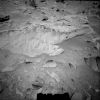
SOL076-x_pubeng_mazatzal_nav-A078R1.jpgMazatzal: the rock of sugar... - Sol 7665 visiteCaption NASA originale:"Spirit took this NavCam image of the 2-mt-wide (6,6-foot-wide) rock called "Mazatzal" on sol 76, March 21, 2004. Scientists intend to aggressively analyze this target with Spirit's MI, Mössbauer Spectrometer and APXS before brushing and digging in with the RAT. Mazatzal stood out to scientists because of its large size, light tone and sugary surface texture. It is the largest rock the Team has seen at the rim of Bonneville. It is lighter-toned than previous rock targets Adirondack and Humphrey. Its scalloped pattern may be a result of wind sculpting - that is a very slow process in which wind-transported silt (---->fango/melma) and sand abrade the rock’s surface, thus creating depressions.
This leads scientists to believe that Mazatzal may have been exposed to the wind in this location for an extremely long time. The name "Mazatzal" comes from a mountain range and rock formation that was deposited around 1,2 billion years ago in the Four Peaks Area of Arizona".
|
|
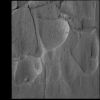
SOL077-x_pubeng_MazTargets-A080R1.jpg"Peeling" Mazatzal - Sol 7765 visiteCaption NASA originale:"Mazatzal, like most rocks on Earth and Mars, has layers of material near its surface that provide clues about the history of the rock. Scientists believe that the top layer of Mazatzal is actually a coating of dust and possibly even salts. Under this light coating may be a more solid portion of the rock that has been chemically altered by weathering. Past this layer is the unaltered rock, which may give scientists the best information about how Mazatzal was formed. Because each layer reveals information about the formation and subsequent history of Mazatzal, it is important that scientists get a look at each of them. For this reason, they have developed a multi-part strategy to use the RAT to systematically peel back Mazatzal's layers and analyze what's underneath with the Rover's MI, and its Moessbauer and APXS. The strategy began on sol 77 when scientists used the microscopic imager to get a closer look at targets on Mazatzal named "New York," "Illinois" and "Arizona." These rock areas were targeted because they posed the best opportunity for successfully using the rock abrasion tool; Arizona also allowed for a close-up look at a range of tones. On sol 78, Spirit's rock abrasion tool will do a light brushing on the Illinois target to preserve some of the surface layers. Then, a brushing of the New York target should remove the top coating of any dust and salts and perhaps reveal the chemically altered rock underneath. Finally, on sol 79, the rock abrasion tool will be commanded to grind into the New York target, which will give scientists the best chance of observing Mazatzal's interior".
|
|
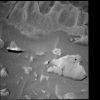
SOL077-x_pubeng_mazatzal_pan-A080R1.jpgClosing-up on Mazatzal - Sol 7763 visiteCaption NASA originale:"This b/w PanCam image of the rock called Mazatzal (at the top of the image) was taken by the MER Spirit on Sol 77 (March 2, 2004). It reveals some interesting features on this future RAT target, including variants in tone, a "sugary surface" texture and scalloped areas where parts of the rock seem to have been worn away. Mazatzal's uniqueness is made even more obvious when it is compared to the more typical, basaltic rock in the lower right of the image".
|
|
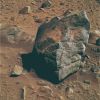
SOL078-1.jpgWhat a Boulder! - Sol 78 (True Colors + MULTISPECTRUM; credits: Dr G. Barca & Lunexit)70 visitenessun commentoMareKromium
|
|
| 5458 immagini su 455 pagina(e) |
 |
|
|
|
|
217 | |
|
|
|
|








