Walking on Mars with Spirit and Opportunity
|
|
|

OPP-SOL141-1N140710333EFF3190P1992R0M1.jpgThe Inner Rim of Endurance Crater - Sol 141 (Natural Colors; credits: Lunar Explorer Italia)65 visitenessun commentoMareKromium
|
|

OPP-SOL143-GIF.gifExploring "Endurance" - Sol 143 (GIF-Movie; credits: Dr Marco Faccin)63 visiteAttenzione: anche in questo caso, la leggera (ma evidente) "coloritura" dei frames che formano il filmato NON l'abbiamo aggiunta noi... MareKromium
|
|
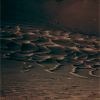
OPP-SOL147.jpgEndurance Dunes - Sol 147 (natural colors and MULTISPECTRUM; credits: Dr Gianluigi Barca & Lunexit)68 visitenessun commentoMareKromium
|
|
OPP-SOL148-1N141319506EFF3190P1557L0M1.jpgA clear Martian Sky - Sol 148113 visitenessun commento
|
|

OPP-SOL150-1N141511155EFF3200P1990R0M1.jpgThe Inner Rim of Endurance Crater - Sol 150 (Natural Colors; credits: Lunar Explorer Italia)68 visitenessun commentoMareKromium
|
|

OPP-SOL150-B_P2575_L257_DCS-B156R1_br2.jpg"Decorrelation Stretch": layers inside Endurance (stretched colors) - Sol 14369 visiteCaption NASA originale:"This PanCam image from Opportunity has been processed using a technique known as "Decorrelation Stretch" (DS) to exaggerate the colors. The area in the image includes 3 holes created inside Endurance Crater by Opportunity's RAT between Sol 143 and Sol 148 (June 18 and June 23, 2004). Because color variations are so subtle in the pictured area, stretched images are useful for discriminating color differences that can alert scientists to compositional and textural variations. For example: without the exaggeration, no color difference would be discernable among the tailings left behind after the grinding of these holes, but in this stretched image, the tailings around 'London' (top) appear more red than those of the other holes (Virginia', middle, and 'Cobble Hill,' bottom). Scientists believe that is because the RAT sliced through 2 "blueberries" or spherules (visible on the upper left and upper right sides of the circle). When the blades break up these spherules, composed of mostly gray hematite, the result is a bright red powder. In this image, you can see the rock layers that made the team want to grind holes in each identified layer. The top layer is yellowish red, the middle is yellowish green and the lower layer is green. Another advantage to viewing this stretched image is the clear detail of the distribution of the rock abrasion tool tailings (heading down-slope) and the differences in rock texture".
|
|

OPP-SOL150-B_P2575_L257enh-B156R1_br2.jpgLayers inside Endurance (enhanced colors) - Sol 14364 visiteCaption NASA originale:"This enhanced-color PanCam image from the Rover Opportunity features 3 holes created by the RAT between Sol 143 and Sol 148 (June 18 and June 23, 2004) inside Endurance Crater.
The enhanced image makes the red colors a little redder and blue colors a little bluer, allowing viewers to see differences too subtle to be seen without the exaggeration. When compared with an approximately true color image, the tailings from the RAT and the interior of the abraded holes are more prominent in this view. Being able to discriminate color variations helps scientists determine rocks' compositional differences and texture variations".
|
|

OPP-SOL150-B_P2575_L456-B156R1_br2.jpgLayers inside Endurance (approximately true colors) - Sol 14377 visiteCaption NASA originale:"This image, from the Rover's PanCam, is an approximately true color rendering of the slope of Endurance Crater, which NASA's MER Opportunity is currently exploring. Between Sol 143 and Sol 148 (June 18 to June 23, 2004), the Rover's RAT ground into 3 targets: "London" in the "D" layer (top) is 4,5 mm (0,18") deep; "Virginia" in the "C" layer (middle) is 4,3 mm (0,17") deep and "Cobble Hill" in the "B" layer (bottom) is 3 mm (0,12") deep.
The shadow from the Rover's camera mast is visible in the lower right corner of the image".
Una splendida veduta ravvicinata dei "mattoni" che sembrano rivestire l'interno di Endurance Crater.
Anche le "sferule" (che abbondano nella zona di Meridiani Planum) sono perfettamente visibili, al pari delle tre tracce lasciate dalla Sonda nel suo tentativo (riuscito) di scalfire le rocce.
E' una bella immagine ed i colori sono credibili; d'altra parte la perdita di "realismo cromatico" avviene, di regola, nelle vedute più ad ampio respiro (i panorami, ad esempio) e nelle istantanee del cielo di Marte.
|
|

OPP-SOL1523-1P263386256EFF89AHP2585R1M1.jpgSand-Trap on the edge of Victoria - SOl 1523 (MULTISPECTRUM; credits: Lunexit)63 visitenessun commentoMareKromium
|
|

OPP-SOL1523-1P263388371EFF89AHP2586L7M1.jpgPartially Disturbed Soil - Sol 1523 (MULTISPECTRUM; credits: Lunexit)63 visitenessun commentoMareKromium
|
|

OPP-SOL153-CLOUDS-1N141754902EFF3200P1554L0M1.jpgClouds over Meridiani Planum (1) - Sol 153186 visiteNuvole stratiformi che passano, leggere e silenziose, sulla testa di Opportunity: non è uno spettacolo rarissimo, certo, ma è sempre affascinante da guardare...
|
|
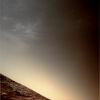
OPP-SOL153-CLOUDS-1N141754902EFF3200P1554L0M1.jpgClouds over Meridiani Planum - Sol 153 (1 - Possible True Colors; credits: Lunexit)81 visitenessun commentoMareKromium
|
|
| 5458 immagini su 455 pagina(e) |
 |
|
|
|
|
21 | |
|
|
|
|








