Walking on Mars with Spirit and Opportunity
|
|
|
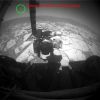
OPP-SOL817-1F200714505EFF70VMP1151L0M1.jpgThat is NOT a photographic artifact! - Sol 81782 visiteCaption NASA originale:"Left Front HazCam Non-linearized Full frame EDR acquired on Sol 817 of Opportunity's mission to Meridiani Planum at approximately 12:40:58 MLT".
E' lo stesso UFO che cambia rapidamente posizione nel Cielo di Marte, ma che continua a seguire Opportunity, oppure è qualcosa d'altro, di nuovo e di diverso (ma sempre di alieno)?!?...
|
|

OPP-SOL817-1N200714639EFF70VMP0675R0M1.jpgThe Beautiful "Martian Paving"! (1) - Sol 81763 visitenessun commento
|
|

OPP-SOL817-1N200714690EFF70VMP0675L0M1.jpgThe Beautiful "Martian Paving"! (2) - Sol 81773 visitenessun commento
|
|

OPP-SOL817-1N200714726EFF70VMP0675R0M1.jpgThe Beautiful "Martian Paving"! (3) - Sol 81763 visitenessun commento
|
|
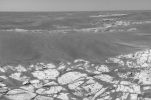
OPP-SOL817-PIA08480-1.jpgLooking towards Victoria Crater (1) - Sol 817172 visiteCaption NASA originale:"This composite of 3 images from the NavCam shows the view from NASA's MER Opportunity toward the South-East, in the direction of Victoria Crater, on the Rover's 817th Martian day, or Sol (such as May 12, 2006). To reach Victoria Crater, still about 1100 meters (2/3ds of a mile) from this location, the Rover must navigate among the large ripples visible on the left and ahead in the distance.
On this Sol, Opportunity was preparing to deploy its RA instrument suite to analyze a rock on the outcrop pavement. At upper right (frame 2) is a small depression that was the target of further imaging on Soles 825 and 826 (May 20 and 21, 2006)".
|
|

OPP-SOL817-PIA08480-2.jpgLooking towards Victoria Crater (2) - Sol 81763 visitenessun commento
|
|

OPP-SOL818-1P200803304EFF70VMP2410L2M1.jpgBad tampering... - Sol 81877 visiteCerchiatura Blu: un rilievo bizzarro...ma credibile.
Cerchiatura Verde: un rilievo assurdo...ed impossibile.
|
|

OPP-SOL819-1M200889076EFF70VMP2936M2M1.jpgThe texture of the surface (1) - Sol 81963 visiteCaption NASA originale:"Microscopic Imager Non-linearized Full frame EDR acquired on Sol 819 of Opportunity's mission to Meridiani Planum at approximately 11:53:14 MLT. Microscopic Imager dust cover commanded to be OPEN".
|
|

OPP-SOL819-1M200889346EFF70VMP2936M2M1.jpgThe texture of the surface (2) - Sol 81963 visiteCaption NASA originale:"Microscopic Imager Non-linearized Full frame EDR acquired on Sol 819 of Opportunity's mission to Meridiani Planum at approximately 11:57:37 MLT. Microscopic Imager dust cover commanded to be OPEN".
|
|

OPP-SOL819-1M200889616EFF70VMP2936M2M1.jpgThe texture of the surface (3) - Sol 81963 visiteCaption NASA originale:"Microscopic Imager Non-linearized Full frame EDR acquired on Sol 819 of Opportunity's mission to Meridiani Planum at approximately 12:02:00 MLT. Microscopic Imager dust cover commanded to be OPEN".
|
|

OPP-SOL819-1M200889911EFF70VMP2936M2M1.jpgThe texture of the surface (4) - Sol 81965 visiteCaption NASA originale:"Microscopic Imager Non-linearized Full frame EDR acquired on Sol 819 of Opportunity's mission to Meridiani Planum at approximately 12:06:47 MLT. Microscopic Imager dust cover commanded to be OPEN".
|
|
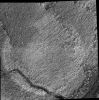
OPP-SOL819-PIA08499.jpgCheyenne - Sol 81977 visiteCaption originale:"As NASA's MER Opportunity is traversing southward toward Victoria Crater, it is periodically stopping to characterize exposed bedrock, using the contact instrument suite on the RA.
Between Soles 818 and 821 of the mission (such as from May 13 up to May 16), one such characterization was carried out on a rock target called Cheyenne. The target was brushed by the RAT, analyzed by the Alpha Particle X-ray Spectrometer and Moessbauer Spectrometer and photographed by the MI.
This image is a mosaic of 4 frames taken by the MI after the brush had removed dust and sand grains from most of the area shown, exposing the underlying bedrock. The resolution is 30 microns per pixel and the entire mosaic is 6 cm (about 2,4") square. Opportunity acquired the images on Sol 819 (May 14, 2006) while the target was fully shadowed.
This rock surface exhibits relatively small spherical concretions compared to those observed in the vicinity of "Eagle Crater" and "Endurance Crater." Such small concretions, and in places apparent absence of concretions, have characterized the outcrops south of "Vostok Crater." Also visible in this image are small pits and grooves in the rock surface, including narrow, elongated void spaces different from any previously observed by Opportunity. Crystal-shaped and elongated void spaces that were seen in the vicinity of Eagle and Endurance Craters are interpreted as spaces left by dissolving of soluble salts. However, these features at Cheyenne have a significantly different appearance and the science team is considering a number of alternative hypotheses for their origin.
|
|
| 5458 immagini su 455 pagina(e) |
 |
|
|
|
|
150 | |
|
|
|
|








