Walking on Mars with Spirit and Opportunity
|
|
|
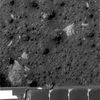
OPP-SOL642-1P185171134EFF6444P2563R5M1.jpgLooking down... - Sol 64263 visiteOriginal caption:"Right Pan-Cam Non-linearized Full frame EDR acquired on Sol 642 of Opportunity's mission to Meridiani Planum at approximately 09:49:29 MLT. Camera commanded to use Filter 5 (904 nm)".
|
|
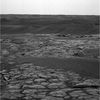
OPP-SOL642-1P185180415EFF6444P2416R1M1.jpgThe horizon of Opportunity (6) - Sol 64263 visitenessun commento
|
|
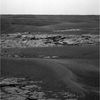
OPP-SOL642-1P185180567EFF6444P2416R1M1.jpgThe horizon of Opportunity (7) - Sol 64262 visitenessun commento
|
|
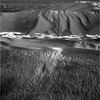
OPP-SOL644-1P185353757EFF6444P2567L3M1.jpgThe incredible "Dunes" around Erebus Crater (1) - Sol 64473 visiteE' stato analizzando questa immagine che, semmai ce ne fosse stato ancora bisogno, ci siamo convinti che la natura delle "dune" di Meridiani è completamente diversa dalla natura delle dune dei deserti terrestri. Osservate i dettagli di questo frame e poi andate a guardare il prossimo, dove abbiamo cerchiato alcune configurazioni che la semplice sabbia, a nostro parere (a meno che non venga "compressa", in qualche modo), non riuscirebbe MAI a produrre naturalmente.
Dunque le sabbie di Meridiani sono intrise di ghiaccio d'acqua? E se fosse così - come la logica ed il buon senso suggeriscono a gran voce - perchè la NASA si ostina a parlare di "arido deserto di sabbia e polveri"?
Cosa c'è "sotto" le sabbie di Meridiani?...
|
|
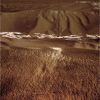
OPP-SOL644-1P185353757EFF6444P2567L3M1.jpgThe incredible "Dunes" around Erebus Crater (possible True Colors) - Sol 64463 visitenessun commentoMareKromium
|
|
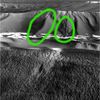
OPP-SOL644-1P185354383EFF6444P2567R7M1.jpgThe incredible "Dunes" around Erebus Crater (2) - Sol 64473 visiteOriginal caption:"Right Pan-Cam Non-linearized Full frame EDR acquired on Sol 644 of Opportunity's mission to Meridiani Planum at approximately 11:21:46 MLT. Camera commanded to use Filter 7 (1009 nm)".
|
|

OPP-SOL644-Scylla_Pcam_Ncam_comp-B644R1_br2.jpgScylla - Sol 64462 visiteThese images were acquired by NASA's MER Opportunity using its Pan Cam on Sol 644 (Nov. 15, 2005) and its NavCam on Sol 645 (Nov. 16, 2005- color image). The view looks towards the East, covering a large wind-blown ripple called "Scylla" other nearby ripples and patches of brighter rock strewn with dark cobbles. PanCam bands L4 (601-nnmts wavelength), L5 (535 nnmts) and L6 (482 nnmts) correspond to red, green and blue bands in the false-color image shown in the upper left. The blue-tinted colors associated with the scours and ripple crests are probably due to the presence of basaltic sands mixed with hematite-rich spherules. Color patterns on the larger ripple flanks are caused by different amounts of reddish dust. The larger ripple flanks have an intricate mixture of erosional scours and secondary ripples extending downward from the main ripple crests, suggesting that these ripples have most recently encountered a period of wind erosion and transport of their outer layers.
|
|
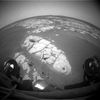
OPP-SOL645-1F185446822EFF64BNP1214L0M1.jpgFront view - Sol 64594 visitenessun commento
|
|
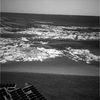
OPP-SOL645-1N185447262EFF64BNP0705R0M1.jpgErebus Crater (1) - Sol 64562 visiteOriginal caption:"Right Nav-Cam Non-linearized Full frame EDR acquired on Sol 645 of Opportunity's mission to Meridiani Planum at approximately 12:28:17 MLT":
|
|

OPP-SOL645-1N185447414EFF64BNP0705L0M1.jpgErebus Crater (2) - Sol 64562 visiteOriginal caption:"Left Nav-Cam Non-linearized Full frame EDR acquired on Sol 645 of Opportunity's mission to Meridiani Planum at approximately 12:30:45 MLT".
|
|
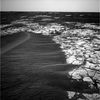
OPP-SOL645-1N185447584EFF64BNP0705R0M1.jpgErebus Crater (3) - Sol 64563 visiteOriginal caption:"Right Nav-Cam Non-linearized Full frame EDR acquired on Sol 645 of Opportunity's mission to Meridiani Planum at approximately 12:33:30 MLT".
|
|
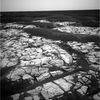
OPP-SOL645-1N185447762EFF64BNP0705L0M1.jpgErebus Crater (4) - Sol 64563 visiteOriginal caption:"Left Nav-Cam Non-linearized Full frame EDR acquired on Sol 645 of Opportunity's mission to Meridiani Planum at approximately 12:36:23 MLT".
|
|
| 5458 immagini su 455 pagina(e) |
 |
|
|
|
|
113 | |
|
|
|
|








