Saturn: the "Ringed Beauty" and His Moons
|
|
|

Mimas-PIA12570.jpgWho are YOU looking at???64 visiteCaption NASA:"This view of Mimas is centered on Terrain located at about 11° South Latitude and 158° West Longitude. North is up.
This view was obtained at a distance of approx. 50.000 Km (approx. 31.000 miles) from Mimas and at a Sun-Mimas-Spacecraft, or Phase, Angle of 17°.
Image scale is roughly 240 meters (790 feet) per pixel".MareKromium
|
|

Mimas-PIA12571.jpgA "hint" of color for Mimas (possible Natural Colors; credits: Dr Paolo C. Fienga - Lunexit Team)75 visitenessun commentoMareKromium
|
|

Mimas-PIA12572-PCF-LXTT-IPF.jpgIn and around the Magnificent Herschel Crater (Absolute Natural Colors; credits for the additional process. and color.: Dr Paolo C. Fienga - Lunar Explorer Italia/Italian Planetary Foundation)97 visiteRemarkable color differences on the Saturnian moon Mimas are apparent in this (enhanced) Absolute Natural Color view of Herschel Crater that was captured by the NASA - Cassini Spacecraft during its closest (so far) Fly-By of that Celestial Body which occurred on February 13, 2010. The image shows Terrain-dependent color variations and, in particular, the contrast between the light-gray (with slightly pale blue nuances) Surface Materials which are found in and around Herschel Crater and the brownish cast that, on the other hand, is found on older and more heavily Cratered Terrain elsewhere.
The origin of the color differences between these two types of Terrain is not yet understood, but it is quite logical to assume that it should be caused by the existence of some considerable differences in the Surface Elements which form the Terrains themselves (and a few false color images which were obtained from Cassini's previous closest encounter with Mimas, during the AD 2005, also showed such variations, which are, therefore, something real and NOT a simple optical effect caused, for instance, by the Illumination Geometry existing at the time whan the different pictures were taken). The huge Herschel Crater (approx. 130 Km, or a little more than 80 miles, wide) covers most of the bottom of the image.
To create the original false-color view of Mimas, UltraViolet, Green and InfraRed images were combined into a single picture that was fit to exaggerate the color differences of the photographed Terrains; these data were then combined with a High-Resolution image taken in Visible Light so to obtain a mix between the High-Resolution information coming from the Clear-Filter image and the color information coming from the UltraViolet, Green and InfraRed filter images.
During the Fly-By, the NASA - Cassini Spacecraft came within about 9500 Km (such as about 5900 miles) of Mimas and this view looks toward the Northern part of the Hemisphere that leads the moon in its orbit around Saturn (---> Leading Hemisphere, in contrast with the Trailing Hemisphere). The images were obtained with Cassini's Narrow-Angle Camera at a distance of approximately 16.000 Km (such as 9936 miles) from Mimas. Afterwards, the images were re-projected into an Orthographic Map Projection. Furthermore, a black and white image, taken in Visible Light with the Wide-Angle Camera, was also used to fill in parts of the mosaic. The global scale of the mosaic is 90 meters (295 feet) per pixel.
This frame (which is an Original NASA - Cassini Spacecraft false color image mosaic published on the NASA - Planetary Photojournal with the ID n. PIA 12572) has been additionally processed, contrast enhanced, and then re-colorized in (slightly enhanced) Absolute Natural Colors (such as the colors that a human eye would actually perceive if someone were onboard the NASA - Cassini Spacecraft and then looked outside, towards the Surface and Limb of the Saturnian moon Mimas), by using an original technique created - and, in time, dramatically improved - by the Lunar Explorer Italia Team. Different colors, as well as different shades of the same color, mean, among others, the existence of different Elements present on the Surface of Mimas, each having a different Albedo (---> Reflectivity) and Chemical Composition.MareKromium
|
|
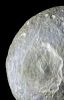
Mimas-PIA12572.jpgHerschel Basin (False Colors; credits: NASA/JPL/SSI)64 visitenessun commentoMareKromium
|
|

Mimas-PIA12739.jpgThe "Eye in the Sky"...100 visiteCaption NASA:"The Cassini Spacecraft turns the eye of its camera toward Saturn's moon Mimas and spies the large Herschel Crater which itself looks like the iris of an eye peering out into space.
Herschel Crater is about 130 Km (approx. 81 miles) wide and covers most of the right of this image. Scientists continue to study this Impact Basin and its surrounding Terrain (see also PIA12568). Lit Terrain seen here is on the Leading Hemisphere of Mimas. North on Mimas is up and rotated 1° to the left.
The image was taken in Visible Light with the Cassini Spacecraft narrow-angle camera on Oct. 16, 2010. The view was obtained at a distance of approx. 103.000 Km (such as about 64.000 miles) from Mimas and at a Sun-Mimas-Spacecraft, or Phase, Angle of 113°.
Image scale is roughly 613 meters (2011 feet) per pixel".MareKromium
|
|

Mimas-PIA12867.jpgUneven Warmth on Mimas64 visiteThe image shows NASA's Cassini Spacecraft imaging science subsystem Visible-Light mosaic of Mimas from previous flybys on the left. The right-hand image shows the new CIRS temperature data mapped on top of the Visible-Light image.
It has to be underlined the unexpected and bizarre pattern of daytime temperatures found on Saturn's small inner moon Mimas (about 396 Km, or approx. 246 miles, in diameter). The data were obtained by the composite infrared spectrometer (CIRS) on the Cassini Spacecraft during the Spacecraft's closest-ever look at Mimas on Feb. 13, 2010.
The warm part has typical temperatures near 92 Kelvin (minus 294 Fahrenheit), while typical temperatures on the cold part are about 77 Kelvin (minus 320 Fahrenheit). The cold part is probably colder because surface materials there have a greater thermal conductivity, so the Sun's energy soaks into the Sub-surface instead of warming the Surface itself. But why conductivity should vary so dramatically across the Surface of Mimas is a mystery.
The map used to create this image is a mosaic of images taken by Cassini's imaging science subsystem cameras on previous flybys of Mimas. The cold side includes the giant Herschel Crater, which is a few degrees warmer than its surroundings. It's not yet known whether Herschel is responsible in some way for the larger region of cold temperatures that surrounds it.
Cassini took 85 minutes to make the temperature map, as the Spacecraft receded from Mimas. During that time, the distance to Mimas increased from 38.000 to 67.000 Km (such as about 24.000 to 42.000 miles) and the longitude of the center of Mimas' disk increased from 128° West to 161° West, due to the moon's rotation.
Because of this changing geometry, the alignment of the temperatures relative to specific features or coordinates on Mimas is shown only approximately. The temperatures were calculated from the brightness of the moon's infrared heat radiation, measured by CIRS at a wavelength of 12 to 16 microns".MareKromium
|
|

Mimas-Thunderbolts.jpgThese "Holes" are way too big for such a small Moon...69 visite"The impact theory of crater formation may not survive the discovery of gigantic craters on relatively small moons or rocks. A good case in point is Saturn’s moon Mimas. Electric Universe proponents say that only electric discharge could produce the observed depression without shattering the moon". Il che significa, in altre e più semplici parole, che la Teoria Shoemakeriana che vuole il 99,99% dei crateri che vediamo sui vari corpi celesti quali mere conseguenze di impatti, alla fine, NON REGGE!
Dopo le teorizzazioni del Dr Feltri e le speculazioni di Lunar Explorer, ora ci accorgiamo che anche ALTRI Ricercatori hanno iniziato a valutare nuovi dati ed elementi per la costruzione di una Teoria Alternativa a quella del (comunque) insigne Shoemaker.
E' possibile che tutti questi "Studi Alternativi" stiano concretando, in una certa misura, l'alba di un periodo di transizione scientifica la cui portata e durata, tuttavia, non sono ancora - ad oggi - stimabili.
|
|
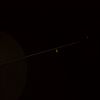
Mimas-Titan-Rhea-W00062956-58-EB-LXTT.jpgBrothers in the Night... (Natural Colors; credits: Elisabetta Bonora - Lunexit Team)72 visitenessun commentoMareKromium
|
|
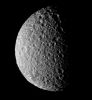
Mimas-V1.jpgMimas, from Voyager 163 visitenessun commentoMareKromium
|
|

Mimas-W00011156.jpgMimas in the night61 visiteOriginal caption:"W00011156.jpg was taken on October 13, 2005 and received on Earth October 14, 2005. The camera was pointing toward MIMAS - at approximately 710.418 Km away - and the image was taken using the CB2 and IRP90 filters. This image has not been validated or calibrated".
|
|
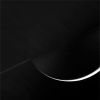
Mimas-W00014998.jpgA bright "slice" of Mimas...72 visitenessun commento
|
|

Mimas-intransit-N00119952-N00119954.gifQuick Transit! (GIF-Movie; credits: Dr G. Barca)66 visite...Sembra un UFO...Ma non lo è! Si tratta, a nostro avviso, della luna Saturniana Mimas, ben riconoscibile a causa della sua forma oblunga e del suo "occhio" (!) che appare - relativamente chiaro - a ridosso del Terminatore.
Un intrigante - e MOLTO ISTRUTTIVO! - GIF-Movie, del sempre puntualissimo Dr Barca!MareKromium
|
|
| 2245 immagini su 188 pagina(e) |
 |
|
|
|
|
85 | |
|
|
|
|





