Saturn: the "Ringed Beauty" and His Moons
|
|
|

Methone-N00111933.jpgStar-Trails and Methone54 visitenessun commentoMareKromium
|
|
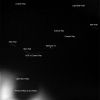
Methone-N00111976-1.jpgLook and Learn!57 visiteUn frame dedicato a tanti personaggi i quali, come è di recente accaduto su due diversi Forum Italiani (ahinoi!...), pensano che qui, su Lunar Explorer Italia, si "speculi sulla Credulità Popolare" e sulla "voglia di impressionare e di far scalpore".
NO. Qui non si specula su nulla. Qui si fa Divulgazione, nel senso più puro del termine.
Gli "speculatori" li trovate in altri Siti (USA e non) e, se volete, anche in edicole e librerie.
Ma NON qui.
Se poi quelli che blaterano a vanvera sono incapaci di riconoscere ciò che i "Frames from Space" mostrano, la colpa non è nostra. La colpa è loro, che parlano solo per fare i saccenti e per disfare e screditare il Lavoro altrui, pur avendo zero cultura e zero credenziali (anche perchè, se le avessero, non si nasconderebbero dietro patetici e tristissimi nick-names...).
In questo frame, un piccolo "a,b,c" (e non è il primo che pubblichiamo...) di Analisi dell'Immagine, in cui si vedono alcuni artefatti fotografici, un pò di raggi cosmici, svariate star-trails, un qualcosa di non identificabile ed una minuscola Luna Saturniana.
E per concludere, una nota: quando noi "sparliamo" della Scienza Convenzionale, lo facciamo - e scusate il gioco di parole - "ex informata scientia". Lo sappiamo benissimo che è la Scienza, oggi, ad aiutarci a vivere di più e meglio (si, certo, ma fino ad un certo punto...) e sappiamo benissimo che quello che abbiamo noi, oggi, è il Top-del-Top (si, certo, idem c.s. ... due volte), se ragguagliato a ciò che avevano i nostri Nonni (e forse anche i nostri Padri).
Ma noi sappiamo (in parte abbiamo imparato, diciamo così...) anche a distinguere fra una "Scienza che Insegna" ed una "(Pseudo)Scienza che Sforma e Disinforma".
Ed una parte essenziale del nostro Lavoro è proprio qui: nel tentativo di far vedere dove finisce l'una e dove comincia l'altra. Peccato che solo pochi (ma BUONI!) se ne sìano resi conto...MareKromium
|
|

Mimas - PIA06509_modest.jpgMimas: the "Ring Master"54 visiteCaption NASA originale, tratta dal Planetary Photojournal:"Mimas, seen here beyond Saturn's rings, is a major sculptor of Saturn's rings. The 398-Km-wide moon not only maintains the Cassini Division (not seen here), a gap wide enough to be visible from Earth through a small telescope, but it is also responsible for two of the thin, bright bands visible in this image near the rings' center, interior to the dark Encke Gap.
Knots in the thin, twisted F-Ring also are easily visible here.
The image was taken in visible light with the Cassini spacecraft narrow angle camera on Sept. 7, 2004, at a distance of 8.8 MKMs from Mimas and at a Sun-Mimas-spacecraft - or phase - angle of 84 degrees. The image scale is 53 Km per pixel".
|
|

Mimas Map-PIA06255.jpgMimas' Map54 visiteOriginal caption:"This map of the surface of Saturn's moon Mimas illustrates the Regions that were imaged by Cassini during the spacecraft's flyby of the moon on Aug. 2, 2005. At closest approach, the spacecraft passed within approx. 62.900 Km above the Moon's surface. The colored lines delineate the Regions that were imaged at differing resolutions. The closest images were obtained near closest approach. Mimas has never been imaged this closely before. The flyby provided the best views yet of the South Pole of Mimas and some of its northern latitudes, as well as distant views of the giant crater Herschel, near the terminator.
The highest resolution images show the trailing hemisphere of Mimas, opposite Herschel. Several fracture systems have been seen in the region in NASA Voyager images, like Pelion Chasma and Tintagil Chasma. Images obtained from this Cassini encounter may help test whether these canyons and others on Mimas' surface, are related to the formation of Herschel (...)".
|
|

Mimas and Janus.jpgMimas (from 1,8 MKM) and Janus (from 1,9 MKM)63 visiteCaption NASA originale:"Saturn's icy, impact-riddled moon Mimas slips briefly in front of Saturn's moon Janus in this movie from Cassini. The movie was created from 37 original images taken over the course of 20 minutes as the spacecraft's narrow-angle camera remained pointed toward Janus. Although Mimas moves a greater distance across the field of view, Janus also moved perceptibly during this time. The images were aligned to keep Janus close to the center of the scene. Additional frames were inserted between the 37 Cassini images in order to smooth the appearance of Mimas' movement - a scheme called interpolation. Close-up images from the few minutes surrounding the occultation are arranged into a strip along the bottom of the movie. Contrast on Janus was mildly enhanced to aid the visibility of its surface. The right side of Mimas appears bright because the moon was partly overexposed in this image sequence".
|
|

Mimas and Saturn-PIA06574.jpgMimas and Saturn55 visiteCaption NASA originale:"In a dazzling and dramatic portrait painted by the Sun, the long thin shadows of Saturn's rings sweep across the planet's northern latitudes. Within the shadows, bright bands represent areas where the ring material is less dense, while dark strips and wave patterns reveal areas of denser material. The shadow darkens sharply near upper right, corresponding to the boundary of the thin C-Ring with the denser B-Ring. A wide-field, natural color view of these shadows can be seen in PIA06164.
The globe of Saturn's moon Mimas (398 Km or 247 miles across) has wandered into view near the bottom of the frame. A few of the large craters on this small moon are visible. The image was taken with the Cassini spacecraft narrow angle camera on Jan. 18, 2005, at a distance of 1,4 MKM (889.000 miles) from Saturn using a filter sensitive to wavelengths of infrared light centered at 752 nanometers. The image scale is 9 Km (approx 5,5 miles) per pixel".
|
|

Mimas from 1.700.000 Km.jpgMimas from Cassini-Huygens - approx. 1.700.000 Km away53 visiteSin dalle prime immagini che giunsero - qualche anno fa - in nostro possesso (grazie alla Sonda Voyager 1), Mimas ci apparve immediatamente un Corpo Celeste decisamente interessante. Il perchè è istintivamente comprensibile: questa Luna di Saturno, infatti, presenta una caratteristica superficiale decisamente eclatante e che in questo frame potete già vedere molto bene (meglio è comunque la ripresa effettuata dal Voyager 1 che Vi proponiamo più avanti.
Ci stiamo riferendo al cosiddetto "Occhio di Mimas": una depressione quasi perfettamente circolare e con all'interno (esattamente al suo centro) un qualcosa che sembra essere un rilievo (forse una collina a forma conica). Insomma: un occhio, con tanto di pupilla!
|
|

Mimas from Voyager 1.jpgMimas from Voyager 159 visiteEd eccoVi una splendida immagine di Mimas che "guarda" verso di noi. I colori di questo frame, a quanto ne sappiamo e per quanto riusciamo a capire, non sono reali (si tratta di colori impiegati per esaltare ancora di più - anche se, forse, non ce n'era bisogno...) le caratteristiche superficiali di questo mondo che giace immerso nel buio perenne. In ogni caso non possiamo non sottolineare e rimarcare la più che eccellente qualità dell'immagine di Mimas la quale è stata ottenuta con mezzi e tecnologie di gran lunga inferiori a quelle oggi messe a disposizione di Cassini-Huygens (ma la differenza, a dire il vero, non si vede!).
|
|

Mimas from approx. 8.800.000 Km.jpgMimas from approx. 8.800.000 Km53 visiteMimas data and Statistics
Discovered by = William Herschel
Date of discovery = 1789
Mass (kg) = 3.80e+19
Mass (Earth = 1) = 6.3588e-06
Equatorial radius = 196 Km
Equatorial radius (Earth = 1) = 3.0731e-02
Mean density (gm/cm^3) = 1.17
Mean distance from Saturn = 185.520 Km
Rotational period (days) = 0,942422
Orbital period (days) = 0,942422
Mean orbital velocity (km/sec) = 14,32
Orbital inclination = 1.53°
Escape velocity (km/sec) = 0,161
Visual geometric albedo = 0,5
Magnitude (Vo) = 12,9
Mean surface temperature = -200°C
|
|

Mimas from appx. 5.100.000 Km.jpgMimas from approx. 5.100.000 Km53 visitenessun commento
|
|

Mimas&Saturn-PIA08122.jpgThe King and I...53 visiteA small and battered reminder of the Solar System's violent youth, the ice moon Mimas hurtles around its gas giant parent, Saturn.
With its "poor dimensions" (Mimas is only about 397 Km across), this little moon is dwarfed by the immensity of Saturn (the Ringed Gas Planet is more than 150 times as wide as Mimas).
Mimas is seen here against the night side of Saturn and Saturn itself is faintly lit by sunlight reflecting off its Rings.
The image was taken in visible light with the Cassini spacecraft narrow-angle camera on Jan. 20, 2006, at a distance of approx. 1,4 MKM (such as about 900,000 miles) from Mimas and at a Sun-Mimas-spacecraft, or phase, angle of 145°. Image scale is about 9 Km (approx. 5 miles) per pixel.
|
|

Mimas&Titan-PIA07666.jpgBig Brother, Little Brother...54 visiteOriginal caption:"Titan, the Saturn's largest moon and Mimas - in the foreground - are seen together in this view from Cassini.
Titan's gravity is weaker than Earth's, so the moon's atmosphere is quite extended - a "quality" that is very well hinted at in this view.
Part of Mimas' dark side is illuminated by reflected light from nearby Saturn.
The image was taken in visible light with the Cassini spacecraft narrow-angle camera on Dec. 3, 2005, at a distance of approx. 3,6 MKM (about 2,2 MMs) from Titan and 2,5 MKM (1,6 MMs) from Mimas.
Both moons are seen at a phase angle of 110°.
The image scale is 22 Km (roughly 14 miles) per pixel on Titan and 15 Km (about 9 miles) per pixel on Mimas".
|
|
| 2245 immagini su 188 pagina(e) |
 |
|
|
|
|
77 | |
|
|
|
|





