| |

Saturn: the "Ringed Beauty" and His Moons
|
|
|

Japetus-PIA08378.jpgSo close, and yet so far...54 visiteThis mosaic of Cassini images shows the smallest details ever observed on Saturn's moon Japetus.
Visible here are small craters as well as the base of a large mountain ridge located just South of the mosaic. At several places, bright spots about 20 to 50 meters (66 to 164 feet) across are visible. At these locations, more recent impactors have punched through the overlying blanket of dark material to reveal brighter, cleaner ice beneath.
Since the bright craters are relatively small and very shallow, it is likely that the dark blanket is rather thin in this area; it is assumed that its actual average thickness might be on the order of a foot.
The small crater at the upper left edge of the mosaic has a diameter of about 50 meters (164 feet) and shows a distinct ray pattern from excavated ice. This feature is so bright in comparison to the dark surrounding terrain that it had to be darkened manually so as not to look overexposed in this mosaic.
The mosaic consists of 8 image footprints across the surface of Japetus, presented here in simple cylindrical projection. The view is centered on terrain near 0° North Latitude, 164,9° West Longitude, within the dark Leading Hemisphere of Japetus. Image scale is approx. 10 meters (33 feet) per pixel.
The clear spectral filter images in this mosaic were obtained with the Cassini spacecraft narrow-angle camera on Sept. 10, 2007, at distances ranging from 1.627 to 2.040 Km (such as from about 1.011 to 1.268 miles) from Japetus.MareKromium
|
|
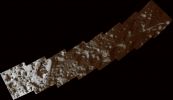
Japetus-PIA08380.jpgThe "Transition Region of Japetus" (possible natural colors - elab. Lunexit)53 visiteSoaring above the alien, icy wastelands of Saturn's moon Japetus, NASA's Cassini spacecraft captured a series of HR images of the Transition Region from dark to bright terrain at Southern Middle Latitudes that have been mosaicked together in this view.
An important characteristic of the terrain in the boundary region is that the isolated bright patches are mainly found on slopes facing toward the bright Trailing Hemisphere or toward the South Pole. The same polarity is found within the bright terrain, where the dark material can be seen at the bottom of craters and on Equator-facing slopes. These indicate that thermal effects are at play in painting the surface of Japetus.
The mosaic consists of 8 image footprints across the surface of Japetus. The view is centered on terrain near 38,6° South Latitude, 171,3° West Longitude. Image scale is approx. 52 meters (171 feet) per pixel.
The clear spectral filter images in this mosaic were obtained with the Cassini spacecraft narrow- angle camera on Sept. 10, 2007, at a distance of approx. 5,000 Km (about 3.100 miles) from Japetus.
MareKromium
|
|

Japetus-PIA08381.jpgThe "Transition Region of Japetus" (possible natural colors - elab. Lunexit)54 visiteThe Transition Region from Saturn's moon Japetus' dark Leading Hemisphere to its bright Trailing Hemisphere is a complicated patchwork of craters and highlands, with low elevations filled in by dark material.
An explanation of the pattern visible here might be key to a full understanding of the bright/dark dichotomy on Japetus (about 1468 Km across).
The view is centered on the Equator and covers an area 711 Km wide by 417 Km tall (such as about 442 x 259 miles).
The giant Equatorial Ridge visible on the dark Leading Hemisphere is not present anymore in this Region. Instead, large, isolated mountains more than 10 Km tall are spread along the Equator. These mountains show bright western flanks, while the surrounding lowlands are generally dark.
This mosaic is an orthographic projection consisting of 21 image footprints across the surface of Japetus. The view is centered on terrain near 0,1° North Latitude and 199° West Longitude, in the quadrant of Japetus that faces away from Saturn. Image scale is approx. 83 meters (272 feet) per pixel. An orthographic view is most like the view seen by a distant observer looking through a telescope.
The clear spectral filter images in this mosaic were obtained with the Cassini spacecraft narrow- angle camera on Sept. 10, 2007, at distances ranging from 13.857 to 21.846 Km (such as about 8.610 to 13.574 miles) from Japetus.
MareKromium
|
|

Japetus-PIA08382.jpgJapetus' Spots (HR - possible natural colors; elab. Lunexit)54 visiteAt high resolution, terrain in the Transition Region between bright and dark Hemispheres on Saturn's moon Japetus reveals a spotty appearance reminiscent of a Dalmatian. The bright material on the frozen surface of Iapetus is water ice, and the dark material is likely carbonaceous in composition.
The dark material is preferentially found at the bottoms of craters. Bright water ice forms the "bed rock" on Japetus, while the dark, presumably loose material apparently lies on top of the ice (the terrain seen here is also visible in PIA08383, but it is viewed here at higher resolution).
The mosaic consists of 2 image footprints across the surface of Japetus. The view is centered on terrain near 42° South Latitude and 209,3° West Longitude, on the anti-Saturn facing Hemisphere. Image scale is approx. 32 meters (105 feet) per pixel.
The clear spectral filter images in this mosaic were obtained with the Cassini spacecraft narrow-angle camera on Sept. 10, 2007, at distances ranging from 5.363 to 5.884 Km from Japetus.MareKromium
|
|

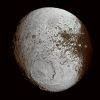
Japetus-PIA08384-1.jpgThe Other Side of Japetus (false colors - elab. NASA)53 visiteCassini captures the first high-resolution glimpse of the bright trailing hemisphere of Saturn's moon Iapetus.
This false-color mosaic shows the entire hemisphere of Iapetus (1,468 kilometers, or 912 miles across) visible from Cassini on the outbound leg of its encounter with the two-toned moon in Sept. 2007. The central longitude of the trailing hemisphere is 24 degrees to the left of the mosaic's center.
Also shown here is the complicated transition region between the dark leading and bright trailing hemispheres. This region, visible along the right side of the image, was observed in many of the images acquired by Cassini near closest approach during the encounter.
Revealed here for the first time in detail are the geologic structures that mark the trailing hemisphere. The region appears heavily cratered, particularly in the north and south polar regions. Near the top of the mosaic, numerous impact features visible in NASA Voyager 2 spacecraft images (acquired in 1981) are visible, including the craters Ogier and Charlemagne.
The most prominent topographic feature in this view, in the bottom half of the mosaic, is a 450-kilometer (280-mile) wide impact basin, one of at least nine such large basins on Iapetus. In fact, the basin overlaps an older, similar-sized impact basin to its southeast.
In many places, the dark material -- thought to be composed of nitrogen-bearing organic compounds called cyanides, hydrated minerals and other carbonaceous minerals -- appears to coat equator-facing slopes and crater floors. The distribution of this material and variations in the color of the bright material across the trailing hemisphere will be crucial clues to understanding the origin of Iapetus' peculiar bright-dark dual personality.
The view was acquired with the Cassini spacecraft narrow-angle camera on Sept. 10, 2007, at a distance of about 73,000 kilometers (45,000 miles) from Iapetus.
The color seen in this view represents an expansion of the wavelengths of the electromagnetic spectrum visible to human eyes. The intense reddish-brown hue of the dark material is far less pronounced in true color images. The use of enhanced color makes the reddish character of the dark material more visible than it would be to the naked eye.
This mosaic consists of 60 images covering 15 footprints across the surface of Iapetus. The view is an orthographic projection centered on 10.8 degrees south latitude, 246.5 degrees west longitude and has a resolution of 426 meters (0.26 miles) per pixel. An orthographic view is most like the view seen by a distant observer looking through a telescope.
At each footprint, a full resolution clear filter image was combined with half-resolution images taken with infrared, green and ultraviolet spectral filters (centered at 752, 568 and 338 nanometers, respectively) to create this full-resolution false color mosaic.
MareKromium
|
|
Japetus-PIA08384-2.jpgThe Other Side of Japetus (possible natural colors; elab. Lunexit)54 visitenessun commentoMareKromium
|
|

Japetus-PIA08384-PCF-LXTT-IPF.jpgEngelier Crater (CTX Frame and EDM in Absolute Natural Colors; credits for the additional process. and color.: Dr Paolo C. Fienga/Lunar Explorer Italia/Italian Planetary Foundation)104 visiteThe NASA - Cassini Spacecraft captured, in the month of September of the AD 2007, the first High-Resolution glimpse of the bright Trailing Hemisphere of Saturn's moon Japetus. This Absolute Natural Color image-mosaic shows the entire Hemisphere of Japetus that was visible from the NASA - Cassini Spacecraft on the outbound leg of its encounter with the two-toned moon. Also shown here is the complicated Transition Region of Japetus (meaning the Region which is located in-between its Dark Leading Hemisphere and the Bright Trailing one). This Region, visible along the right side of the image, was observed in many of the images acquired by Cassini near the closest approach of the encounter.
Revealed here for the first time in detail are the Geologic Structures that mark the Trailing Hemisphere of Japetus. The Region appears to be Heavily Cratered, particularly in the North and South Polar Regions of the moon. Near the top of the mosaic, numerous Impact Features that hade been already caught in several frames obtained by the NASA - Voyager 2 Spacecraft during the Fly-By of Japetus that took place in the AD 1981, are well visible, including the Impact Craters Ogier and Charlemagne. However, the most prominent Topographic Feature in this view, in the bottom half of the mosaic, is the approx. 450-Km (such as about 280-miles) wide Engelier Impact Basin: one of at least 9 (nine) huge Impact Basins found on Japetus. In fact, the Engelier Impact Basin overlaps an older, similar-sized Impact Basin located to its South/East.
In many places of Japetus, the Dark Material (that is thought to be composed of Nitrogen-bearing Organic Compounds - called "Cyanides" -, as well as by Hydrated Minerals and other Carbonaceous Minerals) seems to "coat" the Equator-facing Slopes as well as the Floor of the Impact Basin. The distribution of this Dark Material as well as the variations in the color of the Bright Material that is spread all across the Trailing Hemisphere, will be crucial clues to solve (or, at least, ro clarify) if we really want to get a better understanding of the origin of Japetus' extremely peculiar bright-dark dual personality.
The view was acquired with the NASA - Cassini Spacecraft Narrow-Angle Camera on September 10, 2007, at a distance of about 73.000 Km (such as approx. 45.333 miles) from Japetus. This mosaic consists of 60 images covering 15 footprints across the Surface of Japetus. The view is an Orthographic Projection of the Saturnian moon that has been centered at 10,8° South Latitude, 246,5° West Longitude and which has a resolution of 426 meters (0,26 miles) per pixel. An Orthographic Projection (like this one) is something like the view that a distant observer would get by looking at a given Celestial Object through a telescope.
This frame (which is an Original NASA - Cassini Spacecraft false-color image mosaic published on the NASA - Planetary Photojournal with the ID n. PIA 08384) has been additionally processed, contrast enhanced, and then re-colorized in Absolute Natural Colors (such as the colors that a human eye would actually perceive if someone were onboard the NASA - Cassini Spacecraft and then looked outside, towards the bright Trailing Hemisphere of the Saturnian moon Japetus), by using an original technique created - and, in time, dramatically improved - by the Lunar Explorer Italia Team. Different colors, as well as different shades of the same color, mean, among others, the existence of different Elements present on the Surface of Japetus, each having a different Albedo (---> Reflectivity) and Chemical Composition.
Note: in the EDM (upper Right Side of the image-mosaic), a view of the Terrain located in the Transition Zone of Japetus. The Bright Material visible on the frozen Surface of Japetus is, most likely, Water Ice, while the Dark Material is, probably, a Carbonaceous Mineral.MareKromium
|
|
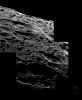
Japetus-PIA08403.jpgMiddle Northern Latitudes of Japetus53 visiteCassini soars above the many pits and basins in the rolling landscape of Saturn's moon Japetus. This mosaic view looks out onto an area close to the Northern bright/dark boundary, but still within the Dark Region, Cassini Regio.
Near upper left is a large crater with terraced walls, a mostly flat floor and a prominent group of peaks in its center. The sharp features make this likely one of the youngest craters in this area of Japetus. Cassini imaged another similarly flat-floored and relatively fresh crater during its Dec. 2004 Japetus flyby.
The mosaic consists of 3 image footprints across the surface of Japetus. The view is centered on terrain near 43,3° North Latitude, 138° West Longitude. Image scale is approx. 75 meters (246 feet) per pixel.
The clear spectral filter images in this mosaic were obtained with the Cassini spacecraft narrow-angle camera on Sept. 10, 2007, at a distance of approx. 13.500 Km (about 8.400 miles) from Japetus and at a Sun-Japetus-Spacecraft, or phase, angle of 139°.MareKromium
|
|
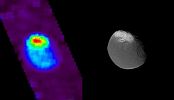
Japetus-PIA09970.jpgJapetus53 visiteCaption NASA:"Images taken with Cassini's Ultraviolet Imaging Spectrograph shed some light on the dark side of Saturn's moon Iapetus. Scientists are trying to figure out what painted Iapetus' Dark Side. This is one of the biggest mysteries scientists are trying to answer during the upcoming Sept. 10, 2007, flyby.
The ultraviolet image on the left indicates water ice abundance across the surface: the bright North Polar Terrain (shown in red) is the iciest region in this view. Away from the Pole, as the color shifts to blue, less water ice is present in the surface.
The darkest terrain, which includes very little water ice, is shown in light blue.
The dark sky background viewed during the observation is shown as purple in this color scheme.
The ultraviolet-light image was taken during a flyby in December 2004. A visible light image taken on the same date is shown on the right for reference".MareKromium
|
|
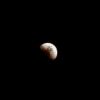
Japetus-PIA11460.jpgJapetus, from far away (Natural Colors; credits: Lunar Explorer Italia)55 visiteCaption NASA:"The Cassini Spacecraft casts its gaze across 4 MKM space for this snapshot of Japetus, Saturn's most distant Major Moon. Japetus — about 1471 Km (914 miles) across — is the 3rd largest moon, but its inclined orbit is much farther out from the other Major Moons, where Cassini spends most of its time. Nonetheless, the moon's distinctive two-tone surface is obvious.
This view looks toward the Leading Hemisphere of Japetus. North on Japetus is up and rotated 2° to the right. The image was taken in visible light with the Cassini Spacecraft narrow-angle camera on March 3, 2008.
The view was acquired at a distance of approx. 4 MKM (such as about 2,5 MMs) from Japetus and at a Sun-Japetus-Spacecraft, or Phase, Angle of 69°.
Image scale is roughly 24 Km (about 15 miles) per pixel".MareKromium
|
|

Japetus-PIA11474.jpgCrescent Japetus (Natural Colors; credits: Lunar Explorer Italia)56 visiteCaption NASA:"Only a slice of Japetus is illuminated in this image, but still the Cassini Spacecraft spies the distinctive two-tone surface of this distant Saturnian moon.
Lit terrain seen here is on the Leading Hemisphere of Japetus (about 1471 Km, or about 914 miles across). North on Japetus is up and rotated 13° to the left.
The view was acquired at a distance of approx. 2,7 MKM (about 1,7 MMs) from Japetus and at a Sun-Iapetus-Spacecraft, or Phase, angle of 111°. The image was taken in Visible Light with the Cassini Spacecraft narrow-angle camera on March 3, 2009.
Image scale is roughly 16 Km (about 10 miles) per pixel".MareKromium
|
|
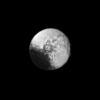
Japetus-PIA11608.jpgJapetus, from far away...60 visiteCaption NASA:"The Cassini spacecraft captures a far-off view of the two-toned surface of Saturn's moon Japetus. Scientists continue to investigate the nature of this moon's Surface. See also PIA08384 to learn more.
This view looks toward the Saturn-facing side of Japetus. North on Japetus is up and rotated 45° to the left. Scale in the original image was about 22 Km (approx. 14 miles) per pixel. The image has been magnified by a factor of three and contrast-enhanced to aid visibility.
The image was taken in visible light with the Cassini Spacecraft narrow-angle camera on Sept. 24, 2009. The view was obtained at a distance of approx. 3,7 MKM (such as about 2,3 MMs) from Japetus and at a Sun-Japetus-Spacecraft, or Phase, Angle of 12°".MareKromium
|
|
| 2245 immagini su 188 pagina(e) |
|
|
|
|
|
74 | |
|
|
|
|
|
|





