Saturn: the "Ringed Beauty" and His Moons
|
|
|

Enceladus-PIA12765-PCF-LXTT-NASA.jpgThe Surface of Enceladus (Left Side: Absolute Natural Colors; credits for the additional process. and color.: Dr Paolo C. Fienga - Lunexit Team; Right Side: RAW Frame; credits: NASA/JPL Space Science Institute)345 visiteCaption NASA:"The Cassini Spacecraft surveys the surface of Saturn's moon Enceladus in this image, which shows newly Created Terrain in the upper right meeting older, Cratered Terrain in the lower left.
This view is centered on terrain at about 5° South Latitude and 200° West Longitude.
The image was taken in Visible Light with the Cassini Spacecraft narrow-angle camera on Dec. 21, 2010. The view was acquired at a distance of approx. 25.000 Km (such as 15.525 miles) from Enceladus and at a Sun-Enceladus-Spacecraft, or Phase, Angle of 14°. Image scale is roughly 148 meters (486 feet) per pixel".MareKromium
|
|

Enceladus-PIA14578-PCF-LXTT.jpgEnceladus' Southern Regions (Absolute Natural Colors; credits for the additonal process. and color.: Dr Paolo C. Fienga - Lunar Explorer Italia)203 visiteCaption NASA:"This image was taken in Visible Light with the Cassini Spacecraft narrow-angle camera on Sept. 13, 2011. The view was acquired at a distance of approx. 26.000 miles (such as about 41.842,84 Km) from Enceladus and at a Phase Angle of 52°. Image scale is roughly 830 feet (253 meters) per pixel".
MareKromium
|
|

Enceladus-PIA14588-PCF-LXTT.jpgCrescent Enceladus (Absolute Natural Colors; credits for the additional process. and color.: Dr Paolo C. Fienga - Lunexit Team)236 visiteCaption NASA:"The Cassini Spacecraft looks at a brightly illuminated Enceladus and examines the Surface of its Leading Hemisphere. North on Enceladus is up and rotated 21° to the right.
The image was taken in Visible Light with the Cassini Spacecraft narrow-angle camera on Nov. 6, 2011. The view was obtained at a distance of approx. 67.700 miles (such as about 109.000 Km) from Enceladus and at a Phase Angle of 21°. Image scale is 2130 feet (649 meters) per pixel".MareKromium
|
|

Enceladus-PIA14599-PCF-LXTT-IPF.jpgEnceladian Night (Absolute Natural Colors; credits for the additional process. and color.: Dr Paolo C. Fienga/Lunar Explorer Italia/Italian Planetary Foundation)79 visiteBelow an almost completely darkened Enceladus, huge Plumes of Water Ice, coming from at least 4 (four) different Sulci (---> cracks of the Surface) located its South Polar Regions, are backlit in this view of one of Saturn's most dramatic moons. The lit Terrain seen here is on the Leading Hemisphere of Enceladus (whose diameter is approx. 313 miles - such as about 504 Km). North is up.
The picture was taken in Visible Light with the NASA - Cassini Spacecraft Narrow-Angle Camera, on February 20, 2012. The view was acquired at a distance of approximately 83.000 miles (such as approx. 134.000 Kilometers) from Enceladus, and at a Sun-Enceladus-CASSINI Spacecraft (also known as "Phase"), Angle of 165°. Image scale is 2628 feet (801 meters) per pixel.
This picture (which is an Original NASA - CASSINI Spacecraft b/w frame published on the NASA - Planetary Photojournal with the ID n. PIA 14599) has been additionally processed and then colorized, according to an informed speculation carried out by Dr Paolo C. Fienga (LXXT/IPF), in Absolute Natural Colors (such as the colors that a human eye would actually perceive if someone were onboard the NASA - CASSINI Spacecraft and then looked outside, towards the Saturnian moon, Enceladus), by using an original technique created - and, in time, dramatically improved - by the Lunar Explorer Italia Team. Different colors, as well as different shades of the same color, mean, among other things, the existence of different Elements (Minerals) present on the Surface of Enceladus, each having a different Albedo (---> Reflectivity) and Chemical Composition.MareKromium
|
|

Enceladus-PIA14858-PCF-LXTT.jpgFountains of Light (Absolute Natural Colors; credits for the additional process. and color.: Dr Paolo C. Fienga - Lunexit Team) 172 visiteCaption NASA:"NASA's Cassini Spacecraft successfully completed its Oct. 1st Fly-By of Saturn's moon Enceladus and its Jets of Water Vapor and Ice. At its closest approach, the Spacecraft flew approx. 62 miles (about 100 Km) above the moon's Surface. The close approach was designed to give some of Cassini's instruments, including the Ion and Neutral Mass Spectrometer, the chance to "taste" the Jets themselves.
At a higher vantage point during the encounter, Cassini's high-resolution camera captured pictures of the jets emanating from the moon's South Polar Region. The latest raw images of Enceladus are online at:
http://saturn.jpl.nasa.gov/photos/raw/.
The images of the Surface include previously seen Leading-Hemisphere Terrain. However, during this encounter, multi-spectral imaging of these Terrains extended farther into the UV Region of the Spectrum than had previously been achieved at this resolution.
By looking at the Surface at UV wavelengths, scientists can better detect the difference between surface materials and shadows than they can at visible wavelengths, where icy materials are highly reflective and shadows are washed out. With both UV and Visible Light images of the same Terrain available to them, scientists will better understand how the Surface coverage of icy particles coming from the Vents and Plumes changes with Terrain type and age. Cassini's next pass of this fascinating moon will be Oct. 19, 2011, when the Spacecraft shall fly-by at an altitude of approximately 765 miles (such as about 1231 Km)".MareKromium
|
|
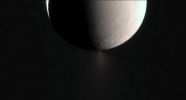
Enceladus-PIA18328-PCF-LXTT-IPF.jpgIn the Saturnshine... (Absolute Natural Colors; credits for the additional process. and color.: Dr Paolo C. Fienga/Lunar Explorer Italia/Italian Planetary Foundation)145 visiteThe Saturnian moon Enceladus looks as if it is half lit by Sunlight in this view from the NASA - Cassini Spacecraft; but looks, as you know, can be (as they often are) deceiving.
In fact, the kind of pinkish area of Enceladus visible on the right (Dx) of the frame, where MANY Surface Features can be made out (---> seen/identified), is actually illuminated by the light reflected off of Saturn (such as the so-called "Saturnshine"). On the other hand, a sliver of the Enceladian Surface that is actually illuminated by direct Sunlight is visible - and also highly overexposed! - on the left (Sx) of the picture. Images like this one are designed to capture the extended Plumes of Icy Materials spraying from huge cracks located the moon's South Polar Region. Such images need to be taken with the NASA - Cassini Spacecraft looking toward the Icy moon's Night Side, since the small particles that form the Plumes (however, just barely visible in this picture) are most easily seen when backlit by the Sun.
This view looks toward the Leading Hemisphere of Enceladus; North is up. The image was taken in Visible Light with the NASA - Cassini Spacecraft's Narrow-Angle Camera on May 10, 2015. Enceladus is roughly 313 miles (such as about 503,72 Km) across. The view was acquired at a distance of approximately 226.000 miles (such as approx. 363.7210,84 Km) from Enceladus and at a Sun-Enceladus-Cassini Spacecraft, or Phase, Angle of 152°. Image scale is roughly 1,4 miles (about 2,2530 Km) per pixel.
This frame (which is an Original NASA - CASSINI Spacecraft's b/w and NON Map-Projected image published on the NASA - Planetary Photojournal with the ID n. PIA 18328) has been additionally processed, contrast enhanced, magnified, in order to allow the vision of the slightest details of the Surface, Gamma corrected and then re-colorized - according to an educated guess (or, if you wish, an informed speculation) carried out by Dr Paolo C. Fienga - in Absolute Natural Colors (such as the colors that a human eye would actually perceive if someone were onboard the NASA - Cassini Spacecraft and then looked outside, toward the Saturnian moon "Enceladus"), by using an original technique created - and, in time, dramatically improved - by the Lunar Explorer Italia Team. Different colors, as well as different shades of the same color, mean, among other things, the existence of different Elements (Minerals) present on the Surface of Enceladus, each having a different Albedo (---> Reflectivity) and Chemical Composition.
Note: it is possible (but we, as IPF, have no way to be one-hundred-percent sure of such a circumstance), that the actual luminosity of Enceladus - as it is in this frame - would appear, to an average human eye, a little bit lower than it has been shown (or, better yet: interpreted) here.MareKromium
|
|

Enceladus-PIA20522enceladusC.jpgCrescent Enceladus (Credits: NASA/JPL/Cassini Imaging Team)135 visitePeering from the shadows, the Saturn-facing hemisphere of tantalizing inner moon Enceladus poses in this Cassini spacecraft image. North is up in the dramatic scene captured during November 2016 as Cassini's camera was pointed in a nearly sunward direction about 130,000 kilometers from the moon's bright crescent. In fact, the distant world reflects over 90 percent of the sunlight it receives, giving its surface about the same reflectivity as fresh snow. A mere 500 kilometers in diameter, Enceladus is a surprisingly active moon. Data and images collected during Cassini's flybys have revealed water vapor and ice grains spewing from south polar geysers and evidence of an ocean of liquid water hidden beneath the moon's icy crust.MareKromium
|
|
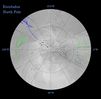
Enceladus-S-NP-PIA07721_modest.jpgEnceladus: Global Patterns of Fracture (Northern Polar Projection)73 visiteTerrain near the North Pole is among the most heavily cratered and oldest on the surface of Enceladus. The conspicuously fractured Southern Polar Region is nearly devoid of impact craters, making this terrain among the youngest on the Moon's surface.
A unique feature of the South Polar terrains is that broad networks of folded or kinked fractures can be found throughout the Region. A prominent "chain" of these fractures (marked in red in the South Polar Map) abruptly separates the youthful South Polar terrains from the older terrains that lie closer to the Equator and appears to encircle the South Pole near about 55° South Latitude.
The wavy boundary of the South Polar terrain is interrupted in numerous places by Y-shaped, or funnel-shaped, discontinuities that curve and taper northward. Well-developed examples of the funnel-shaped discontinuities appear to transition to systems of North-South trending surface cracks (marked in blue).
These north-south trending cracks are best explained as if they formed in response to tension stresses that are parallel to lines of latitude. Such extensional "hoop stresses" would be expected to develop if the equator became wider, perhaps in response to a change in the moon¿s spin rate.
Globally systematic patterns of fracture on Enceladus occur in ancient, cratered terrain as well as youthful terrain. Shown in green on the maps -- and particularly apparent in the northern hemisphere projection -- are roughly orthogonal (or perpendicular) systems of north-south and east-west trending fractures that formed quite close to the tidal axis of Enceladus. The moon¿s tidal axis is a line extending from 0-degrees longitude to 180-degrees longitude. Such orthogonal fractures might have formed in response to tidal stresses exerted on Enceladus by Saturn.
|
|
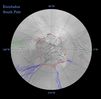
Enceladus-SP-PIA07722_modest.jpgEnceladus: Global Patterns of Fracture (Southern Polar Projection)61 visiteFractures on the surface of Enceladus record a long and complex history of tectonic activity. Many of the geologically youngest fractures define remarkably systematic patterns relative to Enceladus' axis of rotation, as well as to its tidal orientation (that is, the longitudes that point toward and away from Saturn). These fracture patterns offer clues to global changes of shape that the satellite has undergone over time, possibly in response to tidal forces exerted by Saturn or as a result of changes in the internal structure of the icy moon. Some of the most prominent global patterns of fracture are delineated in color in the Southern Hemisphere map shown here.
This map is a polar stereographic projection that was mosaicked from the best-available Cassini and Voyager clear-filter images.
The map is centered on the South Pole and coverage extends to the Equator. Gridlines show latitude and longitude in 30° increments.
|
|
Enceladus-W00048456.jpgJust like a "Star"!60 visiteUno strabiliante "effetto goccia" (da over-saturation) per l'oggetto celeste la cui albedo è la più alta nell'intero Sistema Solare: Encelado, la "Luna di Neve".
Caption NASA:"W00048456.jpg was taken on August 11, 2008 and received on Earth August 11, 2008. The camera was pointing toward ENCELADUS that, at the time, was approx. 444.673 Km away.
The image was taken using the CL1 and CL2 filters and it has not been validated or calibrated".MareKromium
|
|

Enceladus-W00048467.jpgThe Unbelievable Surface of Enceladus, from ONLY 545 Km: the bright (and icy) walls of a Canyon63 visiteCaption NASA:"W00048467.jpg was taken on August 11, 2008 and received on Earth August 12, 2008. The camera was pointing toward ENCELADUS that, at the time, was approximately 545 kilometers away.
The image was taken using the CL1 and CL2 filters and it has not been validated or calibrated". MareKromium
|
|
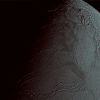
Enceladus-W00048468.jpgApproaching Enceladus (natural colors; credits: Lunexit)65 visiteCaption NASA:"W00048468.jpg was taken on August 11, 2008 and received on Earth August 12, 2008. The camera was pointing toward ENCELADUS that, at the time, was approximately 4748 kilometers away.
The image was taken using the CL1 and CL2 filters and it has not been validated or calibrated".MareKromium
|
|
| 2245 immagini su 188 pagina(e) |
 |
|
|
|
|
45 | |
|
|
|
|





