| |

Saturn: the "Ringed Beauty" and His Moons
|
|
|
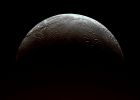
Enceladus-PIA10573.jpgCrescent Enceladus (Natural Colors; credits: Lunar Explorer Italia)56 visiteCaption NASA:"Sunrise uncovers both old and new Enceladus in this image from the Cassini Spacecraft. The lit side of the moon faces Saturn in this view of the Trailing Hemisphere. Old craters still pockmark the Northern Hemisphere while more recent geologic activity has swept them away in the South. North is on the right (Dx) in this image.
Mountain Ranges, a.k.a. "Dorsae", undulate across the moon's surface near the Equator.
From this high northern viewing angle, the South Pole's fascinating "Tiger Stripe Area" lies just out of view. Sulci, a.k.a. "furrows", in that area, are the sources of icy plumes being studied by Cassini scientists.
(See also PIA07800 and PIA09761).
Also near the Tiger Stripes are rift segments that resemble the zigzag patterns seen on Earth of sea-floor spreading from upwelling magma. See PIA11138 for a comparison of the phenomena.
Like outstretched fingers, the Samarkand Sulci reach from the West toward the North Pole, clearing their path of craters and slicing some in half.
This Natural Colors mosaic combines narrow-angle camera images obtained through UltraViolet, Green, and near-InfraRed camera filters. The images were acquired on Dec. 2, 2008 at a distance of approx. 124.000 Km (such as about 77.000 miles) from Enceladus and at a Sun-Enceladus-Spacecraft, or Phase, Angle of 116°.
Image scale is roughly 742 meters (2430 feet) per pixel".MareKromium
|
|
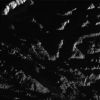
Enceladus-PIA11105.jpgSouth Polar Terrain near Cairo Sulcus60 visiteCaption NASA:"This image is the 1st skeet-shoot image taken during Cassini's very close flyby of Enceladus on Aug. 11, 2008. It captures a Region near the Cairo Sulcus on Enceladus' South Polar Terrain - that is littered with blocks of ice.
The image was taken with the Cassini spacecraft narrow-angle camera on Aug. 11, 2008, a distance of approx. 1288 Km (about 800 miles) above the surface of Enceladus.
Image scale is approximately 10 meters (33 feet) per pixel. MareKromium
|
|
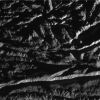
Enceladus-PIA11106.jpgCairo Sulcus57 visiteCaption NASA:"This image is the 3rd skeet-shoot image taken during Cassini's very close flyby of Enceladus on Aug. 11, 2008.
Cairo Sulcus is crossing the southern part of the image. The terrain is littered with blocks of ice.
The image was taken with the Cassini Spacecraft narrow-angle camera on Aug. 11, 2008, a distance of approx. 2446 Km (such as about 1396 miles) above the surface of Enceladus.
Image scale is approximately 18 meters (59 feet) per pixel". MareKromium
|
|

Enceladus-PIA11107.jpgDamascus Sulcus56 visiteCaption NASA:"This image is the 7th skeet-shoot image taken during Cassini's very close flyby of Enceladus on Aug. 11, 2008. Damascus Sulcus is crossing the upper part of the image.
The image was taken with the Cassini Spacecraft narrow-angle camera on Aug. 11, 2008, a distance of approx. 4742 Km (such as about 2947 miles) above the surface of Enceladus.
Image scale is approximately 30 meters (98 feet) per pixel". MareKromium
|
|

Enceladus-PIA11108.jpgBaghdad Sulcus83 visiteCaption NASA:"This Cassini image was the 4th 'skeet shoot' narrow-angle image captured during the Oct. 31, 2008, flyby of Saturn's moon Enceladus.
The source region for jet VI (see PIA08385) has been identified. The image was taken with the Cassini Spacecraft narrow-angle camera on Oct. 31, 2008, at a distance of approximately 3417 Km (about 2135 miles) from Enceladus and at a Sun-Enceladus-Spacecraft, or Phase, Angle of 75°.
Image scale is roughly 38 meters (125 feet) per pixel".MareKromium
|
|
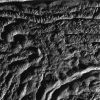
Enceladus-PIA11109.jpgCairo Sulcus54 visiteCaption NASA:"This image is the 4th skeet-shoot footprint taken during Cassini's very close flyby of Enceladus on Aug. 11, 2008. Cairo Sulcus is shown crossing the upper left portion of the image. An unnamed fracture curves around the lower right corner.
The image was taken with the Cassini Spacecraft narrow-angle camera on Aug. 11, 2008, a distance of approx. 3027 Km (such as about 1881 miles) above the surface of Enceladus.
Image scale is approximately 20 meters (66 feet) per pixel". MareKromium
|
|

Enceladus-PIA11112.jpgThe (possible) True Colors of Enceladus (credits: Lunexit)56 visiteQuesta colorizzazione in possibili Colori Veri è la risposta ad un quesito postoci dal nostro Amico "Alby56", il quale ci domanda - appunto - quali sìano (possano essere) i colori di Encelado.
Come ovvio, una risposta che abbia valore assoluto non possiamo darla, però possiamo provare a ragionarci sopra e vedere che cosa si riesce a stabilire...Dunque:
1) Encelado, a quanto pare, è completamente ricoperto da uno (spesso) strato di ghiaccio d'acqua ed esso - per motivi ancora non noti, ma che potremmo rinvenire, ad esempio, in un "riscaldamento periodico" dell'intero globo causato da "frizionamento mareale" con Saturno, si rinnova, nel tempo, rimuovendo i segni classici che dimostrano l'invecchiamento di un Corpo Celeste (su tutti: i crateri da impatto, i quali vengono - letteralmente - "cancellati", se sono piccoli, oppure "riempiti e parzialmente nascosti", se di medio-grandi dimensioni);
2) il ghiaccio d'acqua, allorchè illuminato dal Sole, risplende di color bianco, con riflessi azzurri;
3) il Sole, visto da Encelado, dovrebbe apparire non molto più grande di una qualsiasi delle altre stelle visibili dalla sua superficie e questo ci spinge a ritenere che la sua capacità di illuminare questo piccolo mondo sia trascurabile;
4) su Encelado, non esistendo un'atmosfera e dunque non sussistendo le condizioni per la diffusione della luce solare (anche se ci è possibile ipotizzare una diffusione minima e meramente stagionale - grazie alle particelle di ghiaccio e di vapore acqueo che restano, per un certo tempo, in sospensione nello spazio circum-Enceladiano), riteniamo che il panorama visibile ad occhi umani risulti, globalmente, piuttosto buio.
Ma attenzione: potrebbe essere ragionevole ipotizzare una dominante bianca (provocata dal Sole e dal ghiaccio) durante il "Giorno" di Encelado - ed a cielo sgombro - oppure, allorchè Saturno splende nel cielo di Encelado in tutta la sua pienezza, si potrebbe ipotizzare, sempre per una visione "umana", un paesaggio illuminato da una colorazione dominante giallo-arancio, la quale - al suolo - potrebbe tradursi in un colorito giallo pallido dei rilievi maggiori, con riflessi bianchi, azzurri e, forse - in alcune zone - anche verdastri.
Conclusioni: da una certa distanza (supponiamo tra i 500 ed i 25000 Km), Encelado - ad occhi umani - dovrebbe apparire, allorchè illuminato congiuntamente dal Sole e da Saturno (come in questo frame), di color giallo pallido, con riflessi bianchi ed azzurri (e quindi, in alcune regioni ed in determinate ore del giorno, non è assurdo ipotizzare la visione/percezione di delicate sfumature di color grigio e rosa).
Oltre i 25000/30000 Km di distanza, infine, Encelado dovrebbe apparire, ad un Osservatore che lo scrutasse "ad occhio nudo", di color bianco brillante, con debolissime (diremmo quasi impercettibili) sfumature di colore giallo e rosa.MareKromium
|
|

Enceladus-PIA11113.jpgDamascus Sulcus (possible True Colors; credits: Lunexit)54 visiteCaption NASA:"The yellow circles on this mosaic, showing the fracture known as Damascus Sulcus, indicate the Jets' Source Locations II and III, as identified in PIA08385.
This mosaic consists of two images obtained with the clear spectral filters on Cassini's narrow-angle camera. The view is an orthographic projection with an image scale of 24 meters (79 feet) per pixel. The area shown here is centered on 81,2° South Latitude and 309,9° West Longitude. The original images ranged in resolution from 27 to 30 meters (89 to 98 feet) per pixel and were taken at distances ranging from 4200 to 4742 Km (such as from about 2610 to approx. 2947 miles) from Enceladus".MareKromium
|
|

Enceladus-PIA11114.jpgBaghdad and Cairo Sulci on Enceladus (possible True Colors; credits: Lunexit)58 visiteCaption NASA:"Cassini shot past the surface of Saturn's moon Enceladus on Aug. 11, 2008, acquiring a set of 7 HR images targeting known hot spot locations on the moon's "Tiger Stripe" fractures, or Sulci.
Five of those images are presented in this mosaic.
Features on Enceladus are named for characters and places from "The Arabian Nights", and the four most prominent Sulci are named Alexandria, Cairo, Baghdad and Damascus. Here, Baghdad Sulcus runs across the top mosaic tile, from lower left to upper right. Cairo Sulcus runs from left to right just beneath the center tile.
One highly anticipated result of this flyby was to pinpoint previously identified source locations for the jets that blast icy particles, water vapor and trace organics into space.
The yellow circles indicate the Jets' Source Locations I and V, as identified in PIA08385" .
Scientists are using these new images to study geologic activity associated with the sulci, and effects on the surrounding terrain. This information, coupled with observations by Cassini's other instruments, may answer the question of whether reservoirs of liquid water exist beneath the surface.
The mosaic consists of five images taken with the clear spectral filters on Cassini's narrow-angle camera. The view is an orthographic projection with an image scale of 14,5 meters (47,5 feet) per pixel. The area shown here is centered on 81,6° South Latitude and 56,5° West Longitude. The original images ranged in resolution from 10 to 24 meters (33 to 79 feet) per pixel and were taken at distances ranging from 1288 to 3600 Km (such as from about 800 to approx. 2237 miles) from Enceladus".MareKromium
|
|

Enceladus-PIA11119.jpgEnceladus Oct. 9, 2008 Flyby55 visiteCaption NASA:"This image was taken during Cassini's extremely close encounter with Enceladus on Oct. 9, 2008.
The image was taken with the Cassini Spacecraft narrow-angle camera on Oct. 9, 2008, a distance of approx. 40.000 Km (such as about 25.000 miles) from Enceladus.
Image scale is approx. 477 meters (1566 feet) per pixel". MareKromium
|
|

Enceladus-PIA11120.jpgEnceladus Oct. 9, 2008 Flyby55 visiteCaption NASA:"This image was taken with the Cassini Spacecraft narrow-angle camera on Oct. 9, 2008, from a distance of approx. 26.000 Km (16,000 miles) from Enceladus. Image scale is 312 meters (1024 feet) per pixel".MareKromium
|
|

Enceladus-PIA11121.jpgEnceladus Oct. 9, 2008 Flyby57 visiteCaption NASA:"The image was taken with the Cassini Spacecraft narrow-angle camera on Oct. 9, 2008, a distance of approx. 42.000 Km (about 26.000 miles) from Enceladus.
Image scale is 503 meters (1650 feet) per pixel".MareKromium
|
|
| 2245 immagini su 188 pagina(e) |
|
|
|
|
|
42 | |
|
|
|
|
|
|





