Saturn: the "Ringed Beauty" and His Moons
|
|
|

Tethys-PIA09915-1.jpgShall Odysseus ever find Ithaca? (Stretched Absolute Natural Colors; credits for the add. process.: Dr Paolo C. Fienga-LXTT-IPF)160 visiteCaption NASA:"From a highly inclined orbit, the Cassini Spacecraft looks toward far Northern Latitudes on Tethys.
Here, the spacecraft was above a position about 45° North of the moon's Equator.
This vantage point afforded a view of the moon's three most recognizable features: the Ithaca Chasma Canyon System (at lower right), Odysseus Crater (at upper left) and the Equatorial Band of Darker Terrain (at lower left).
Lit terrain seen here is on the Leading Hemisphere of Tethys (1062 Km, or approx. 660 miles across). North is up.
The image was taken in Visible Light with the NASA - Cassini Spacecraft narrow-angle camera on April 29, 2008.
The view was obtained at a distance of approx. 991.000 Km (such as about 616.000 miles) from Tethys and at Phase Angle of 73°.
Image scale is roughly 6 Km (about 4 miles) per pixel".MareKromium
|
|
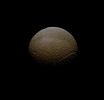
Tethys-PIA10400.jpgTethys (MULTISPECTRUM-2; credits: Lunexit)64 visiteCaption NASA:"The Cassini Spacecraft took a Southern view of the scarred face of icy Tethys. The moon's South Pole is at bottom center, just above the Terminator. To the left of the Pole, is Crater Melanthius, with its complex of central peaks poking upward into sunlight. On the limb at right, Ithaca Chasma extends Northward. The smoothness of the limb is interrupted at the 11 o'clock position by the rim of Crater Odysseus. A belt of darker terrain girdles the moon's Equator. (...)
Lit terrain seen here is on the Leading Hemisphere of Tethys (about 1062 Km or approx. 660 miles across). North is up, and rotated 9° to the right.
The image was taken in visible green light with the Cassini Spacecraft narrow-angle camera on May 10, 2008. The view was acquired at a distance of approx. 477.000 Km (such as about 296.000 miles) from Tethys and at a Sun-Tethys-Spacecraft angle of 44°.
Image scale is roughly 3 Km per pixel".MareKromium
|
|

Tethys-PIA10462.jpgTethys, in full light (natural colors; credits: Lunexit)65 visiteCaption NASA:"Five hours after acquiring PIA10460, the Cassini Spacecraft turned its cameras back to Tethys for a more southerly view. The southern reaches of Ithaca Chasma are seen here, along with the large crater Telemus, just right of center.
Lit terrain seen here is on the Saturn-Facing Side of Tethys (approx. 1062 Km, or 660 miles across).
This view looks toward the Southern Hemisphere from a perspective 43° South of the moon's Equator. North is toward the top and rotated 30° to the right.
The image was taken in visible green light with the Cassini Spacecraft narrow-angle camera on July 28, 2008. The view was obtained at a distance of approx. 313.000 Km (such as about 194.000 miles) from Tethys and at a Sun-Tethys-Spacecraft, or Phase, Angle of 42°.
Image scale is roughly 2 Km (a little more than 1 mile) per pixel".MareKromium
|
|

Tethys-PIA10506.jpgIthaca Chasma (natural colors - MULTISPECTRUM; credits: Lunexit)63 visiteCaption NASA:"The prominent crater Telemachus sits within the northern reaches of Ithaca Chasma on Saturn's moon Tethys.
Ithaca Chasma is an enormous rift that stretches more than 1000 Km (approx. 620 miles) from North to South across Tethys.
This view looks toward the Saturn-facing Side of Tethys from a position 55° North of the moon's Equator. The image was taken in visible light with the Cassini Spacecraft narrow-angle camera on Sept. 24, 2008.
The view was acquired at a distance of approx. 151.000 Km (such as about 94.000 miles) from Tethys and at a Sun-Tethy-Spacecraft, or Phase, Angle of 61°.
Image scale is 903 meters (2962 feet) per pixel".MareKromium
|
|

Tethys-PIA10527.jpgThe Odyssey on Tethys...74 visiteCaption NASA:"This Cassini Spacecraft image provides a view of the southern portion of Tethys' Trailing Hemisphere.
Prominent features include the huge canyon, Ithaca Chasma, approximately centered in this view, as well as Demodocus and Telemus, large basins just to the right of the rift.
Features on Tethys are named for characters in Homer's Odyssey.
The image was taken in visible green light with the Cassini Spacecraft narrow-angle camera on Oct. 10, 2008 at a distance of approx. 417.000 Km (about 259.000 miles) from Tethys and at a Sun-Tethys-Spacecraft, or Phase, angle of 55°.
Image scale is roughly 2 Km (a little more than 1 mile) per pixel".MareKromium
|
|

Tethys-PIA10547.jpgPenelope's still waiting... (possible True Colors; credits: Lunar Explorer Italia)63 visiteCaption NASA:"The Terminator encroaches upon Penelope, one of the largest craters on Saturn's moon Tethys. Two other large craters, Polyphemus and Phemius, are visible near the Limb in this view of the southern portions of Tethys' Trailing Hemisphere.
The far Rim of Phemius disrupts the smooth profile of the icy moon's limb. (Features on Tethys are named from characters and places mentioned in "The Odyssey")
The image was taken in Visible Light with the Cassini Spacecraft narrow-angle camera on Nov. 24, 2008 at a distance of approximately 62,000 kilometers (38,000 miles) from Tethys and at a Sun-Tethys-Spacecraft, or Phase, Angle of 94°. Image scale is 366 meters (about 1200 feet) per pixel".MareKromium
|
|

Tethys-PIA10582.jpgGibbous Tethys64 visiteCaption NASA:"Like the lengthy story of its Greek king namesake, the humongous Odysseus Impact Basin stretches on and on across Tethys.
The approx. 450-Km (about 280-mile) wide Odysseus Crater is a well-preserved example of an ancient multi-ringed Impact Basin. The Outer Ring's steep, cliff-like walls descend to broad internal terraces. The Inner Ring consists of a circular band of icy mountains creating a crown shape with a diameter of about 140 Km (approx. 87-miles).
This view looks toward the leading hemisphere of Tethys (1062 kilometers, or 660 miles across). North on Tethys is up and rotated 2 degrees to the right.
The image was taken in visible light with the Cassini Spacecraft narrow-angle camera on Jan. 2, 2009. The view was obtained at a distance of approx. 816.000 Km (about 507.000 miles) from Tethys and at a Sun-Tethys-Spacecraft, or Phase, Angle of 58°.
Image scale is roughly 5 Km (about 3 miles) per pixel".MareKromium
|
|

Tethys-PIA10597.jpgBetween Sunshine and Saturnshine (Natural Colors; credits: Lunar Explorer Italia)75 visiteCaption NASA:"The huge Odysseus Crater is clearly illuminated by the Sun on the Western Limb (Sx) of Tethys, but Saturn - shining from the right - makes the smaller craters on the Eastern part of the moon also visible.
The ancient Odysseus Crater is 450 Km, or about 280 miles, across and covers a sizable chunk of the moon. North on Tethys is up and rotated 31° to the left.
This view looks toward the Saturn-facing side of the moon.
The image was taken in visible light with the Cassini Spacecraft narrow-angle camera on Jan. 22, 2009. The view was acquired at a distance of approx. 793.000 Km (such as about 493.000 miles) from Tethys and at a Sun-Tethys-Spacecraft, or Phase, Angle of 112°.
Image scale is roughly 5 Km (a little more than 3 miles) per pixel".MareKromium
|
|

Tethys-PIA11476.jpgTethys (Natural Colors; credits: Lunar Explorer Italia)64 visiteCaption NASA:"The Terminator between shadow and light cuts across a large crater in the high Southern Latitudes of the moon Tethys.
Also visible near the Terminator on the left of the image is a portion of the Ithaca Chasma, a chasm that runs North-South for more than a 1000 Km (about 620 miles). This view looks toward the South Pole of Tethys, and the Pole lies on the Terminator between the crater and the chasm.
Lit Terrain seen here is mostly on the Trailing Hemisphere of Tethys.
The image was taken in Visible Light with the Cassini Spacecraft narrow-angle camera on Feb. 16, 2009. The view was acquired at a distance of approx. 873.000 Km (such as about 542.000 miles) from Tethys and at a Sun-Tethys-Spacecraft, or Phase, Angle of 96°.
Image scale is roughly 5 Km (a little more than 3 miles) per pixel".MareKromium
|
|

Tethys-PIA11495.jpgOdysseus and Penelope69 visiteCaption NASA:"Two large craters named after characters in Homer's Odyssey take the stage in this scene on Saturn's moon Tethys.
The crater on the right is the Odysseus Crater (approx. 450 Km, or about 280 miles across). The one on the left is Penelope, named after the wife of Odysseus.
This view looks toward the anti-Saturn side of Tethys (approx. 1062 Km, or about 660 miles across). North on Tethys is up and rotated 44° to the right.
The image was taken in Visible Light with the Cassini Spacecraft narrow-angle camera on April 12, 2009. The view was acquired at a distance of approx. 931.000 Km (about 578.000 miles) from Tethys and at a Sun-Tethys-Spacecraft, or Phase, Angle of 33°.
Image scale is roughly 6 Km (a little less than 4 miles) per pixel".MareKromium
|
|
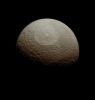
Tethys-PIA11572.jpgOdysseus Crater (Natural Colors; credits: Lunexit)63 visiteCaption NASA:"The Odysseus Crater sprawls across the Mid-Latitudes of the Northern Hemisphere of the moon Tethys.
The Odysseus Crater is about 450 Km across. Lit Terrain seen here is on the anti-Saturn side of Tethys (about 1062 Km, or approx. 660 miles across). This view looks down on the moon's North Pole, which lies on the Terminator about a quarter of the way inward from the top edge of the moon in the image.
The image was taken in Visible Light with the Cassini Spacecraft narrow-angle camera on July 11, 2009.
The view was acquired at a distance of approx. 577.000 Km (about 359.000 miles) from Tethys and at a Sun-Tethys-Spacecraft, or Phase, Angle of 65°.
Image scale is roughly 3 Km (a little less than 2 miles) per pixel".MareKromium
|
|
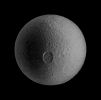
Tethys-PIA11624.jpgPenelope (additional process. by Lunexit)66 visiteCaption NASA:"The Cassini Spacecraft spies the large Penelope Crater on Tethys.
This view looks toward the Trailing Hemisphere of Tethys (approx. 1062 Km - or about 660 miles across). North on Tethys is up.
The image was taken with the Cassini Spacecraft narrow-angle camera on Oct. 14, 2009 using a spectral filter sensitive to wavelengths of UltraViolet Light centered at 338 nanometers.
The view was obtained at a distance of approx. 256.000 Km (about 159.000 miles) from Tethys and at a Sun-Tethys-Spacecraft, or Phase, Angle of 1°.
Image scale is roughly 2 Km (about 1,25 mile) per pixel".MareKromium
|
|
| 2243 immagini su 187 pagina(e) |
 |
|
|
|
|
165 | |
|
|
|
|








