Saturn: the "Ringed Beauty" and His Moons
|
|
|

Saturn-V2-PIA00030_modest.jpgSaturn from approx. 33.900.000 Km - Voyager 276 visiteCaption NASA originale:"NASA's Voyager 2 took this 'true color' photograph of Saturn on July 21, 1981, when the spacecraft was 33.900.000 Km from the planet. Two bright, presumably convective cloud patterns are visible in the mid-northern hemisphere and several dark spoke-like features can be seen in the broad B-ring (left of planet). The moons Rhea and Dione appear as blue dots to the south and southeast of Saturn, respectively. Voyager 2 made its closest approach to Saturn on Aug. 25, 1981".
|
|

Saturn-Vortex-EB-MF-LXTT-IPF-1.jpgNorth Polar Vortex (CTX Frame: Calibrated Natural Colors; credits for the additional process. and color.: Elisabetta Bonora and Marco Faccin/Lunar Explorer Italia/Italian Planetary Foundation; EDM: Absolute Natural Colors; credits: Dr Paolo C. Fienga)108 visiteThe NASA - Cassini Spacecraft has recently been travelling the Saturnian System in a set of inclined (or "tilted"), orbits that were fit to give to the Mission Scientists a vertigo-inducing view of Saturn's North Polar Regions. This (kind of "new") perspective has brought to light quite a few images of roiling Storm Clouds and a swirling Vortex, located at the center of Saturn's famed North Polar "Hexagon" (being tha latter an Atmospherical Feature whose origin and visual configuration are still a mistery).
These North Polar Phenomena, however, basically mimic what Cassini found at Saturn's South Pole, a number of years ago. As a matter of fact, the NASA - Cassini Spacecraft had also seen several Storms circling the North Polar Regions of Saturn in the past, but the vision had come only in InfraRed Wavelengths, since the North Pole of the Ringed Gas-Giant Planet was in complete darkness. Now, with the change of the Saturnian Season, the Sun has once again begun to creep over the North Pole of Saturn, and this frame (that was obtained in Visible Light) shows us what Cassini has actually seen...
This picture (which is an Original NASA - Cassini Spacecraft b/w frame) was taken on November, 27th, 2012, with the Cassini's Wide-Angle Imaging Camera. The Camera, at the time that the picture was taken, was pointing at the North Polar Regions of Saturn from approx. 233.742 miles (such as about 376.170 Km) away.
The resulting frame (in its CTX Version) has been additionally processed and then colorized in Natural Colors (such as the colors that a perfect human eye - or an Electronic Eye - would have perceived while looking at Saturn from Cassini's vantage point); the EDM Version (in the upper right corner of the image), on the other hand, has been obtained by re-processing and then re-colorizing the picture - according to an informed speculation carried out by Dr Paolo C. Fienga (LXTT-IPF) - in Absolute Natural Colors (such as the colors that a normal - meaning: in the average - human eye would have actually caught if someone would have been onboard the NASA - Cassini Spacecraft and then had looked outside, towards the North Pole of Saturn), by using an original technique created - and, in time, dramatically improved - by the Lunar Explorer Italia Team. Different colors, as well as different shades of the same color, mean, among others, the existence of different Elements present in the Atmosphere of Saturn, each having a different Albedo (---> Reflectivity) and Chemical Composition.MareKromium
|
|

Saturn-W00002414.jpgSaturn and his Rings from approx. 590.000 Km83 visitenessun commento
|
|
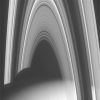
Saturn-W00002482.jpgSaturn from approx. 600.000 Km79 visitenessun commento
|
|

Saturn-W00002848.jpgSaturn, Rings, a "small Moon" and a long shadow79 visitenessun commento
|
|

Saturn-W00002926.jpgNew "Anomaly" near Saturn?77 visiteUn'altra immagine ambigua che ci arriva dallo spazio di Saturno: in basso, verso la Dx dell'Osservatore, si vede piuttosto bene una striscia luminosa e dai bordi frastagliati.
Si tratta di un oggetto in movimento o di un (ennesimo) artifact? Un suggerimento: non spendete troppo tempo nè troppe speranze contattando la NASA o l'Istituto che, di volta in volta e missione dopo missione, Vi verrà indicato come quello a cui rivolgere tutte le domande che Vi passano per la testa. Se la Vostra "domanda" sarà un "complimento" oppure una "ovvietà", avrete (forse) una risposta in 6/7 mesi; se invece Vi addentrerete in questioni più ..."delicate"... allora abbandonate ogni speranza: una risposta non la riceverete MAI.
|
|

Saturn-W00002927.jpgSaturn from approx. 1.600.000 Km76 visiteUna splendida ripresa di Saturno che ci permette di familiarizzare con il "Signore degli Anelli". Il particolare di maggiore interesse, secondo noi (ed anche se non siamo certi che si tratti di un oggetto reale), è costituito dal corpuscolo luminoso, dalla forma vagamente allungata, visibile sul margine superiore degli anelli, verso la Sn dell'Osservatore. Si tratta di una Luna minore, di un "clump", o di un difetto dell'immagine (e cioè un "artifact")?...
|
|
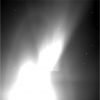
Saturn-W00002929.jpgSaturn's Rings overexposed (1)120 visiteVi offriamo 3 frames che, secondo noi, dovrebbero rappresentare Saturno sovraesposto. Qualche tempo fa - come testimoniano i frames che abbiamo inserito in questa Galleria ed i relativi commenti - non eravamo certi che si trattasse di semplice sovraesposizione di un corpo (sia pure molto luminoso) come Saturno e pensavamo che si trattasse di fotografie Up-Sun del Cielo di Saturno oppure che ci fosse un altro oggetto - brillante - nelle immediate vicinanze della Sonda. Ebbene, un pò di studio approfondito delle immagini, unito ad una razionale valutazione di alcuni indizi, ci hanno fatto cambiare idea. L'unico frame che ci ha dato ancora parecchi problemi interpretativi è stato il secondo. Il primo - questo - sembra enigmatico, ma non lo è. Il terzo è il frame decisivo per le nostre conclusioni.
Guardate bene...
|
|

Saturn-W00002930.jpgSaturn's Rings overexposed (2)65 visiteQuesto è il frame più ambiguo in quanto la sovra-esposizione è tale da cancellare ogni possibile punto di riferimento (almeno adoperando i mezzi di cui disponiamo).
Ma andate ora a guardare il terzo...
|
|
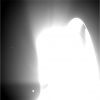
Saturn-W00003017.jpgSaturn's Rings overexposed (3)68 visiteEd ecco il frame che risolve il (presunto) "mistero": nonostante il bagno di luce, infatti, si vedono emergere - e, secondo noi, anche piuttosto distintamente - gli Anelli di Saturno, sulla Dx dell'Ossevatore.
Come spesso avviene, i questi casi, la soluzione del mistero porta con sè un pizzico di delusione ma questo fa parte dei rischi che corre chi si occupa di ricerca: per cercare la prova inconfutabile, infatti, occorre anche (talvolta) passare attraverso le immagini sovraesposte e - scusateci il gioco di parole... - superare gli "abbagli" che ne derivano...
|
|

Saturn-W00003055.jpgSaturn and his shadow (1)67 visiteUn'immagine molto bella, ma incompleta: l'abbiamo scelta fra le tante perchè simboleggia abbastanza bene quello che molti di noi, da qualche tempo, stanno pensando.
Che cosa? Che la pagina dedicata alle "istantanee di Saturno" (http://saturn.jpl.nasa.gov/multimedia/images/raw/raw-images), da qualche tempo, non venga aggiornata mediante l'inserimento di TUTTE le fotografie scattate da Cassini-Huygens, come invece accadeva durante i primi tempi della Missione. Ad ogni modo, non appena avuto questo sospetto, abbiamo iniziato a controllare - e lo abbiamo fatto per 10 giorni - i codici alfanumerici identificativi delle 2 (solo2?!?) telecamere dalle quali le foto vengono scattate e, quindi, di tutte le immagini ricevute. Risultato? Ci sono dei "buchi" colossali! EccoVi le possibili spiegazioni di questo fatto:
1) forse le immagini da inserire sono troppe ed allora viene fatta una cernita - fra quali inserire e quali non - alla "sorgente" (già, ma da chi è fatta questa cernita, ed in base a quali parametri?);
|
|

Saturn-W00003104-6-GB-LXTT.jpgThe "Lord of the Rings" (Natural Colors; credits: Dr G. Barca - Lunexit Team)70 visitenessun commentoMareKromium
|
|
| 2243 immagini su 187 pagina(e) |
 |
|
|
|
|
142 | |
|
|
|
|








