Saturn: the "Ringed Beauty" and His Moons
|
|
|

Saturn-PIA08159.jpgCrescent Moons (1)65 visiteCaption NASA originale:"The tilted crescent of Saturn displays lacy cloud bands here along with a bright Equatorial Region and threadlike ring shadows on the Northern Hemisphere. Three moons are visible here: Mimas (397 Km, or about 247 miles across) at left and faint, is aligned with the Ring-Plane. At right are Rhea (1.528 Km, or about 949 miles across, at top) and Tethys (1.071 Km, or 665 miles across, below Rhea).
The image was taken in polarized infrared light with the Cassini spacecraft wide-angle camera on March 11, 2006, at a distance of approximately 2,8 MKM (approx. 1,8 MMs) from Saturn.
The image scale is roughly 166 Km (about 103 miles) per pixel".
|
|

Saturn-PIA08161.jpgCrescent Moons (2)76 visiteCaption NASA originale:"Three of Saturn's moons are captured with the Planet in this exquisite family portrait. At top, Saturn is bedecked with the shadows of its innermost rings.
Tethys appears at lower right, closest to Cassini. Janus (181 Km, or about 113 miles across) and Mimas (397 Km, or about 247 miles across) are on the far side of the immense Ringed Planet.
Mimas is just about to slip behind Saturn.
The image was taken in visible light with the Cassini spacecraft narrow-angle camera on March 13, 2006, at a distance of approx. 2,7 MKM (such as about 1,6 MMs) from Saturn. The image scale is about 17 Km (approx. 11 miles) per pixel on Janus and Mimas, and 14 about Km (such as about 9 miles) per pixel on Tethys".
|
|

Saturn-PIA08162.jpgSaturnian (swirling) clouds65 visiteCaption NASA originale:"The bright whorls and small-scale specks of convective clouds drift through a Region just North of Saturn's bright Equatorial Band. Observers have seen major storms develop in this Region in the past 15-20 years.
The image was taken in visible red light with the Cassini spacecraft narrow-angle camera on March 13, 2006, at a distance of approximately 2,6 MKM (about 1,6 MMs) from Saturn. The image scale is approx. 15 Km (about 9 miles) per pixel".
|
|

Saturn-PIA08166.jpgRomantic inhospitality...65 visiteCaption originale:"Dreamy colors ranging from pale rose to butterscotch to sapphire give this utterly inhospitable gas planet a romantic appeal. Shadows of the rings caress the Northern Latitudes whose blue color is presumed to be a seasonal effect.
Enceladus hugs the Ring-Plane right of center.
Images taken using red, green and blue spectral filters were combined to create this color view, which approximates what the human eye would see. The image was taken with the Cassini spacecraft wide-angle camera on March 16, 2006 at a distance of approximately 2,1 MKM (such as about 1,3 MMs) from Saturn and at a Sun-Saturn-spacecraft, or phase, angle of 102°. Image scale is about 120 Km (approx. 75 miles) per pixel on Saturn".
|
|

Saturn-PIA08176.jpgThe "night-side" of Saturn (natural colors)69 visiteThis rare color view of Saturn's night side shows how the Rings dimly illuminate the Southern Hemisphere, giving it a dull golden glow. Part of the Northern dark side is just visible at top - the illumination it receives being far less than the South.
The unlit side of the Rings is shown here. The portion of the Rings closest to Cassini is within the dark shadow of Saturn; the bright distant portion is outside the Planet's shadow.
A crescent Tethys appears below the rings at left.
Images taken using red, green and blue spectral filters were combined to create this color view. The images were taken with the Cassini spacecraft narrow-angle camera on April 2, 2006, at a distance of approx. 3,8 MKM (about 2,4 MMs) from Saturn and 3,5 MKM (about 2,2 MMs) from Tethys. The image scale is about 23 Km (14 miles) per pixel on Saturn.
Cerchiatura Rossa: probabile evidenza di una "Luna Pastore" (Pandora?) o di un "clump" di notevoli dimensioni (optiamo per la "Shepherd Moon").
|
|

Saturn-PIA08190.jpgThrough the Rings...65 visiteCaption NASA originale:"The dark shadows that drape Saturn's Northern Latitudes are split by 3 familiar bright gaps. From bottom to top, Sunlight passes through the broad Cassini Division (4.800 Km - or about 2.980 miles - wide), the Encke Gap (325 Km - or about 200 miles - wide) and (barely visible) the Keeler Gap (42 Km - or about 26 miles - wide).
It is unlikely that the shadows cast by Saturn's Rings have much of an effect on the large-scale movements of the atmosphere. The dynamic clouds of this Gas Giant are driven by processes going on much deeper inside the Planet, where Sunlight does not penetrate.
The image was taken using a spectral filter sensitive to wavelengths of infrared light centered at 752 nanometers. The image was acquired with the Cassini spacecraft wide-angle camera on April 28, 2006 at a distance of approximately 377.000 Km (about 234.000 miles) from Saturn. Image scale is roughly 19 Km (such as about 12 miles) per pixel".
|
|
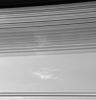
Saturn-PIA08191.jpgClouds of Saturn70 visiteCaption NASA originale:"The soft, sweeping shadows of Saturn's C-Ring cover bright patches of clouds in the Planet's Atmosphere. The shadow-throwing rings stretch across the view at bottom.
The dark inner edge of the B-Ring is visible at top.
The image was taken using a spectral filter sensitive to wavelengths of infrared light centered at 752 nanometers. The image was acquired with the Cassini spacecraft wide-angle camera on April 28, 2006 at a distance of approximately 340.000 Km (about 211,000 miles) from Saturn. Image scale is roughly 17 Km (about 10 miles) per pixel".
|
|
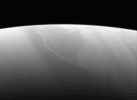
Saturn-PIA08198.jpgNightflight over Saturn74 visiteCaption NASA originale:"Saturn's atmosphere produces beautiful and sometimes perplexing features. Is the bright feature below center a rare crossing of a feature from a zone to a belt, or is it an illusion created by different cloud layers at different levels? The answer is not always easy to determine.
The image was taken using a spectral filter sensitive to wavelengths of infrared light centered at 938 nanometers.
The image was acquired with the Cassini spacecraft narrow-angle camera on May 12, 2006 at a distance of approx. 2,9 MKM (about 1,8 MMs) from Saturn and at a Sun-Saturn-spacecraft, or phase, angle of 145°. Image scale is roughly 17 Km (about 10 miles) per pixel".
|
|
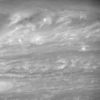
Saturn-PIA08212.jpgSaturnian Clouds74 visiteCaption NASA originale:"Cassini images of Saturn's dynamic atmosphere, like this detailed view, will be combined with data from the spacecraft's two infrared-sensing instruments (the Visible and Infrared Mapping Spectrometer - VIMS - and the Composite Infrared Spectrometer - CIS) to measure correlations among cloud features at many altitudes and infer heat flow across the Planet.
The numerous small, white blobs generally indicate disturbed and turbulent regions.
The image was taken with the Cassini spacecraft wide-angle camera on May 22, 2006 at a distance of approx. 331.000 Km (such as approx. 206.000 miles) from Saturn. The image was obtained using a spectral filter sensitive to wavelengths of infrared light centered at 752 nanometers. Image scale is roughly 16 Km (just 10 miles) per pixel".
|
|
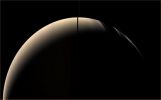
Saturn-PIA08213-br500.jpgThe "Ringed Beauty"!63 visitenessun commento
|
|
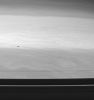
Saturn-PIA08227.jpgA shadow's over Saturn!64 visiteCaption NASA originale:"The shadow of Epimetheus, one of Saturn's co-orbital moons, races across the Planet's restless cloud tops. Epimetheus cruises along beyond the orbits of the narrow F-Ring and its shepherd moons.
Farther south on Saturn, the swirls and eddies are obscured by the shadow of the outer A-Ring and its two prominent, moon-containing gaps, Encke (bottom) and Keeler (dim, at the A-Ring edge).
The image was taken with the Cassini spacecraft wide-angle camera using a spectral filter sensitive to wavelengths of infrared light centered at 728 nnmts. The view was obtained on June 30, 2006, from a distance of approximately 335.000 Km (about 208.000 miles) from Saturn.
Image scale is approx. 16 Km (a little less than 10 miles) per pixel".
|
|
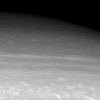
Saturn-PIA08232.jpgHigh Northern Latitudes65 visiteCaption NASA originale:"This infrared view looks toward middle to High Northern Latitudes on Saturn, revealing entrancing meanders in the clouds. The cloud patterns transition from puffier looking in the South - possibly a region of shear - to smoother oval shapes in the North.
Cassini's view of high latitudes will improve beginning in late July 2006 as the spacecraft's orbit leaves the Ring-Plane and is cranked up to higher inclinations.
The image was taken with the Cassini spacecraft wide-angle camera using a spectral filter sensitive to wavelengths of infrared light centered at 939 nanometers. The view was obtained on June 30, 2006 at a distance of approx. 336.000 Km (about 209.000 miles) from Saturn. Image scale is roughly 16 Km (about 10 miles) per pixel".
|
|
| 2243 immagini su 187 pagina(e) |
 |
|
|
|
|
128 | |
|
|
|
|








