Saturn: the "Ringed Beauty" and His Moons
|
|
|

Rhea-PIA14660-PCF-LXTT-IPF.jpgFarewell to Rhea (Absolute Natural Colors; credits for the additional process. and color.: Dr Paolo C. Fienga/Lunar Explorer Italia/Italian Planetary Foundation)74 visiteOn its fourth and final targeted Fly-By of Rhea, the NASA - Cassini Spacecraft provided, among others, this stunning view its ancient, tormented and heavily cratered Surface. Billions of years of impacts, in fact, have sculpted Rhea's Surface into the form we see today and, with a diameter of approx. 950 miles (such as about 1528,8 Km), Rhea is the second-largest moon of Saturn.
This view is centered on Terrain located at 33° North Latitude and 358° West Longitude. The image was taken in Visible Light with the NASA - Cassini Spacecraft Narrow-Angle Camera on March 9, 2013, at a distance of approximately 2.348 miles (such as about 3.778,73 Km) from the Surface of Rhea. Just out of curiosity, we, as IPF, have found (as far as this specific picture is concerned) a slight discrepancy between the data regarding the distance of the NASA - Cassini Spacecraft from the Surface of Rhea, as reported in the NASA - Planetary Photojournal (where it has been written that the distance was of approx. 2.280 miles) and in the caption attached to this frame - entitled "Rhea's Shadowy Craters" - and reported in the NASA - Cassini Solstice Mission Official WebSite (where the distance between the Spacecraft and Rhea is estimated to be 2.348 miles). Obviously, everybody - even our Friends from NASA - makes mistakes, every now and then...
This frame (which is an Original NASA - Cassini Spacecraft b/w image published on the NASA - Planetary Photojournal and identified by the serial n. PIA 14660) has been additionally processed, contrast enhanced, and then colorized in Absolute Natural Colors (such as the colors that a human eye would actually perceive if someone were onboard the NASA - Cassini Spacecraft and then looked down, towards the Surface of the Saturnian moon Rhea), by using an original technique created - and, in time, dramatically improved - by the Lunar Explorer Italia Team. Different colors, as well as different shades of the same color, mean, among others, the existence of different Elements present on the Surface of Rhea, each having a different Albedo (---> Reflectivity) and Chemical Composition.
Note: it is possible (but we, as IPF, have no way to be one-hundred-percent sure of such a circumstance), that the actual luminosity of the Surface of Rhea - as it is presented in this image - would appear, to an average human eye, way lower than it has been shown (or, better yet: interpreted) here.MareKromium
|
|

Rhea-PV-PIA07566.jpgRhea, from about 239.000 Km56 visiteOriginal caption:"Like the rest of Rhea's surface, the Southern Polar Region of this Saturn moon has been extensively re-worked by cratering over the eons. This close-up shows that most sizeable craters have smaller, younger impact sites within them. Near the left lies an intriguing gash (---> taglio lungo e profondo, ivi sinonimo di "chasm" o "cleft").
The largest well-defined crater visible here is an oval-shaped impact toward the upper right. The crater is 115 by 91 Km (such as 71 by 57 miles) in size. Cassini acquired this view during a distant flyby of Rhea on July 14, 2005.
The image was taken in visible light with the Cassini spacecraft narrow-angle camera at a distance of approx. 239.000 Km (such as 149.000 miles) from Rhea and at a Sun-Rhea-spacecraft angle of 56°. The image was obtained using a filter sensitive to wavelengths of infrared light centered at 930 nnmts. The image scale is about 1 Km per pixel".
|
|

Rhea-W00012123.jpgSlopes, Ridges, Craters and other unusual surface features55 visiteW00012123.jpg was taken on November 26, 2005 and received on Earth November 28, 2005. The camera was pointing toward Rhea that, at the time, was approximately 691 Km away.
The image was taken using the CL1 and CL2 filters.
|
|

Rhea-W00012124.jpgThe Mountains of Rhea55 visiteW00012124.jpg was taken on November 26, 2005 and received on Earth November 28, 2005. The camera was pointing toward Rhea that, at the time, was approximately 531 Km away. The image was taken using the CL1 and CL2 filters.
|
|

Rhea-W00012127.jpgCraters, Double-Craters and Ridges54 visiteW00012127.jpg was taken on November 26, 2005 and received on Earth November 28, 2005. The camera was pointing toward Rhea that, at the time, was approximately 632 Km away.
The image was taken using the CL1 and CL2 filters.
|
|
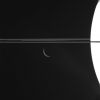
Rhea-W00014280.jpgSliding in the Darkness... (1)54 visiteUn trittico di immagini molto suggestive: Rhea, muovendosi nel silenzio dello spazio circum-saturniano, scivola verso l'ombra del Gigante Anellato e si immerge nella Notte di Saturno.
Commenti? Inutili...
|
|

Rhea-W00014306.jpgSliding in the Darkness... (2)54 visitenessun commento
|
|

Rhea-W00014318.jpgSliding in the Darkness... (3)54 visitenessun commento
|
|

Rhea-W00034589.jpgOn Rhea's Terminator (natural colors: elab. Lunexit)55 visiteCaption NASA:"W00034589.jpg was taken on August 30, 2007 and received on Earth August 30, 2007. The camera was pointing toward RHEA that, at the time, was approximately 17.527 Km away, and the image was taken using the CL1 and CL2 filters.
This image has not been validated or calibrated".MareKromium
|
|
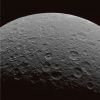
Rhea-W00034590.jpgCrescent Rhea (natural colors; elab. Lunexit)54 visiteCaption NASA:"W00034590.jpg was taken on August 30, 2007 and received on Earth August 30, 2007. The camera was pointing toward RHEA that, at the time, was approx. 15.631 Km away, and the image was taken using the CL1 and CL2 filters. This image has not been validated or calibrated".MareKromium
|
|
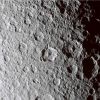
Rhea-W00034593.jpgCraters with Peak near Rhea's Terminator (natural colors; elab. Lunexit)54 visiteCaption NASA:"W00034593.jpg was taken on August 30, 2007 and received on Earth August 30, 2007. The camera was pointing toward RHEA that, at the time, was approx. 8.263 Km away, and the image was taken using the CL1 and CL2 filters.
This image has not been validated or calibrated".MareKromium
|
|

Rhea-W00034594.jpgThe "Big White Splat" of Rhea in the Saturnshine (natural coloring and processing by Lunexit)54 visitenessun commentoMareKromium
|
|
| 2245 immagini su 188 pagina(e) |
 |
|
|
|
|
112 | |
|
|
|
|





