Mars from Orbit (from July 2009)
|
|
|

Volcanoes-Jovis_Tholus-TR-20080519a-PCF-LXTT.jpgPortion of the Jovis Tholus Caldera (Absolute Natural Colors; credits for the additional process. and color: Dr Paolo C. Fienga - Lunexit Team)253 visiteCaption NASA:"Jovis Tholus is a small Volcano in the Tharsis Region (also known as "Volcanic District") of Mars. The Western part of the Volcano - as it can be seen here - has collapsed (meaning that it broke down under its own weight)".
MareKromium
|
|
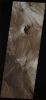
Volcanoes-Nili_Patera-PIA16653-PCF-LXTT-IPF.jpgFeatures of Nili Patera (Absolute Natural Colors; credits for the additional process. and color.: Dr Paolo C. Fienga/Lunar Explorer Italia/Italian Planetary Foundation)81 visiteThis frame, taken by the NASA - Mars Odyssey Orbiter during its 48021st orbit around the Red Planet shows us a portion of the very large Dunefield that covers most of the Floor of Nili Patera. This ancient Volcano, located in the Martian Region of Syrtis Major, spans about 50 Km (about. 31,5 miles) wide, 2 Km (such as a little more than 1 mile) deep, and forms part of a bigger Caldera Complex that stretches some 400 Km (a little less than 250 miles) along a North-to-South direction. What gives Nili Patera special interest for Planetary Geologists is that it contains two kinds of Lava: Basalt and Dacite. This is an unusual circumstance for Mars, where most Lavas are Basalt, and this discovery showed that the Red Planet is, even from a Volcainc point of view, an extremely complex world.
Furthermore, the execution of a series of Gravity Field Measurements which covered the whole Region, showed evidence of a Positive Gravity Anomaly, centered on the Caldera Complex, and suggesting the presence, deep under the Surface, of an approx. 600-by-300 Km (such as about 373-by-186 miles), North-to-South oriented and elongated (now extinct) Magma Chamber, probably containing some very dense Minerals (like, for instance and mainly, Pyroxene, with Olivine also possible).
Latitude: 8,95193° North
Longitude: 67,3367° East
Instrument: VIS
Captured: October, 11th, 2012
This frame (which is an Original Mars Odyssey Orbiter b/w frame published on the NASA - Planetary Photojournal with the ID n. PIA 16653) has been additionally processed and then colorized in Absolute Natural Colors (such as the colors that a human eye would actually perceive if someone were onboard the NASA - Mars Odyssey Orbiter and then looked down, towards the Surface of Mars), by using an original technique created - and, in time, dramatically improved - by the Lunar Explorer Italia Team.MareKromium
|
|
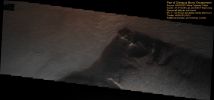
Volcanoes-Olympus-20071204a.jpgPortion of Olympus Mons Escarpment (Absolute Natural Colors; credits for the additional process. and color: Dr Paolo C. Fienga - Lunexit Team)134 visitenessun commentoMareKromium
|
|
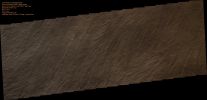
Volcanoes-Olympus-Lava_Flows-PIA13357.jpgLava Flows on Olympus Flank (Natural Colors; credits for the additional process. and color.: Dr Paolo C. Fienga - Lunexit Team)88 visitenessun commentoMareKromium
|
|
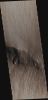
Volcanoes-Olympus-Olympus_Rupes-PIA15569-PCF-LXTT-IPF.jpgOlympus Rupes (Enhanced and Saturated Absolute Natural Colors; credits for the additional process. and color: Dr Paolo C. Fienga - Lunexit Team)160 visiteThis VIS image shows lava flows that cover the steep embankment called Olympus Rupes on the margin of Olympus Mons.
Orbit Number: 45294
Latitude: 13,9548° North
Longitude: 227,275° East
Instrument: VIS
Captured: February, 29th, 2012
Mars Local Solar Time: 18:02 (Middle Afternoon)
MareKromium
|
|
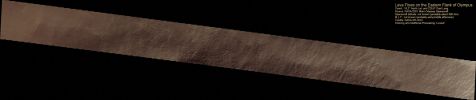
Volcanoes-Olympus_Mons-20071004a-PCF-LXTT.jpgLava Flows on the Eastern Flank of Olympus Mons (Absolute Natural Colors; credits for the additional process. and color.: Dr Paolo C. Fienga - Lunexit Team) 96 visitenessun commentoMareKromium
|
|
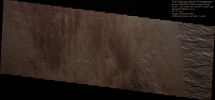
Volcanoes-Olympus_Mons-20080626a-PCF-LXTT.jpgPortion of Olympus Mons' Escarpment (Absolute Natural Colors; credits for the additional process. and color.: Dr Paolo C. Fienga - Lunexit Team)129 visitenessun commentoMareKromium
|
|

Volcanoes-Olympus_Mons-Lava_Flows-PCF-LXTT.jpgLava Flows on the N/W Flank of Olympus Mons (Absolute Natural Colors; credits: Dr Paolo C. Fienga - Lunexit Team)339 visitenessun commentoMareKromium
|
|
Volcanoes-Olympus_Mons-Northern_Flank-20090626a-PCF-LXTT.jpgPortion of Olympus Mons' Northern Flank (Absolute Natural Colors; credits for the additional process. and color.: Dr Paolo C. Fienga - Lunexit Team)67 visitenessun commentoMareKromium
|
|
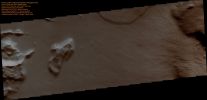
Volcanoes-Olympus_Mons-PIA13713.jpgPortion of the Northern Escarpment of Olympus Mons (Absolute Natural Colors; credits for the additional process. and color.: Dr Paolo C. Fienga - Lunexit Team)89 visitenessun commentoMareKromium
|
|

Volcanoes-Olympus_Mons-SW_Flank-PIA13938-PCF-LXTT.jpgChannelized Lava Flows on the S/W Flank of Olympus (Absolute Natural Colors; credits: Dr Paolo C. Fienga - Lunexit Team)201 visitenessun commentoMareKromium
|
|
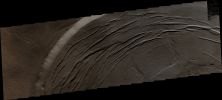
Volcanoes-Olympus_Mons_Caldera-PIA13747.jpgOlympus Mons' Summit Caldera (Absolute Natural Colors; credits for the additional process. and color.: Dr Paolo C. Fienga - Lunexit Team)125 visitenessun commentoMareKromium
|
|
| 1004 immagini su 84 pagina(e) |
 |
|
|
|
|
|
|
81 | |
|
|








