Mars from Orbit (from July 2009)
|
|
|
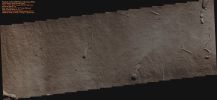
Volcanic_Features-Pits_and_Channels-Ascraeus_Mons-PIA14521-PCF-LXTT.jpgFeatures of the N/W Flank of Ascraeus Mons (Absolute Natural Colors; credits for the additional process. and color: Dr Paolo C. Fienga - Lunexit Team)186 visitenessun commentoMareKromium
|
|
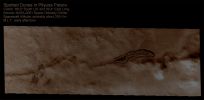
Volcanic_Features-PityusaPatera-PCF-LXTT.jpgThe "Spotted" Dunes of Pityusa Patera (Absolute Natural Colors; credits for the additional process. and color.: Dr Paolo C. Fienga - Lunexit Team) 109 visitenessun commentoMareKromium
|
|
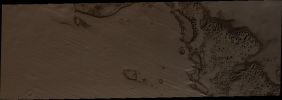
Volcanic_Features-Pityusa_Patera-PIA13865.jpgThe "Spotted" Dunes of Pityusa Patera (Absolute Natural Colors; credits for the additional process. and color.: Dr Paolo C. Fienga - Lunexit Team) 103 visiteOrbit Number: 40059
Latitude: 66,3816° South
Longitude: 36,0515° East
Instrument: VIS
Captured: December, 25th, 2010
Mars Local Time: 17:50 (Late Afternoon)MareKromium
|
|
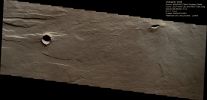
Volcanic_Features-Vent-Alba_Patera-20080530a-PCF-LXTT.jpgGraben and Vent in Alba Patera (Absolute Natural Colors; credits for the additional process. and color.: Dr Paolo C. Fienga - Lunexit) 73 visitenessun commentoMareKromium
|
|
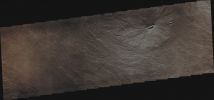
Volcanic_Features-Vent_in_Tharsis_Region-PIA16330-PCF-LXTT-IPF.jpgSmall Volcanic Vent in Tharsis (Absolute Natural Colors; credits for the additional process. and color.: Dr Paolo C. Fienga/Lunar Explorer Italia/Italian Planetary Foundation)77 visiteOrbit Number: 47329
Latitude: 5,10435° South
Longitude: 247,335° East
Instrument: VIS
Captured: August, 15, 2012MareKromium
|
|

Volcanic_Features-Vents-Southern_Tharsis-PCF-LXTT.jpgDegraded Vents in Southern Tharsis (Absolute Natural Colors; credits for the additional process. and color.: Dr Paolo C. Fienga - Lunexit) 78 visitenessun commentoMareKromium
|
|
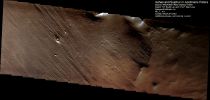
Volcanic_Features-Yardangs-Apollinaris_Patera-20080111a-PCF-LXTT.jpgYardangs and more in Apollinaris Patera (Absolute Natural Colors; credits for the additional process. and color.: Dr Paolo C. Fienga)67 visitenessun commentoMareKromium
|
|
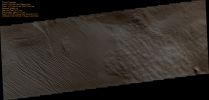
Volcanic_Features-Yardangs-Tharsis_Region-PIA13889-PCF-LXTT.jpgYardangs in Tharsis' Volcanic District (Absolute Natural Colors; credits for the additional process. and color.: Dr Paolo C. Fienga - Lunexit Team)199 visitenessun commentoMareKromium
|
|

Volcanic_Features-_Ascraeus-PIA14089.jpgCollapse Features on the Eastern Flank of Ascraeus Mons (Natural Colors; credits: Dr Paolo C. Fienga - Lunexit Team)296 visitenessun commentoMareKromium
|
|
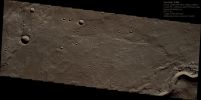
Volcanic_Regions-Buvinda_Vallis-Hecates_Tholus-MO-PCF-LXTT.jpgBuvinda Vallis (Absolute Natural Colors; credits for the additional process. and color.: Dr Paolo C. Fienga - Lunexit Team)76 visitenessun commentoMareKromium
|
|
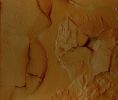
Volcanic_Regions-Elysium_Planitia-PIA11446.jpgFractured Mounds in Elysium Planitia (3D and Enhanced Natural Colors; credits: NASA and Lunar Explorer Italia)66 visiteThis stereo view shows fractured mounds on the southern edge of Elysium Planitia on Mars. It combines two images taken by the High Resolution Imaging Science Experiment (HiRISE) camera on NASA's Mars Reconnaissance Orbiter. When seen through red-green (or blue) glasses, the view appears three dimensional.
This is one example of 362 stereo views posted by the HiRISE team on Dec. 8, 2008, at http://hirise.lpl.arizona.edu/anaglyphs. This view spans an area about 6 Km (3,7 miles) wide.
The mounds on the southern edge of Elysium Planitia are typically a few kilometers or miles in diameter and about 60 meters (200 feet) tall. Fractures that crisscross their surfaces are dilational (extensional) in nature, suggesting that the mounds formed by localized uplift (meaning that they were pushed up from below).
The 3D perspective shows that the uplift is not uniform along a fracture and can favor one side.
The mounds are probably composed of solidified lava. They are contiguous with, and texturally similar to, flood lavas that blanket much of Elysium Planitia. Where dilation cracks provide cross-sectional exposure, the uplifted material is rocky.
Patches of mechanically weak and disrupted material overlie the rocky mound material. This is particularly conspicuous in the northeast corner of the image. These patches may be remnants of a layer that was once more continuous but has been extensively eroded. Smooth lava plains fill the low-lying areas between the mounds. They are riddled with sinuous pressure ridges. The entire area is covered by a relatively thin layer of dust and sand.
One of the HiRISE images used in this stereo view is catalogued as PSP_003597_1765, taken May 3, 2007, and as PSP_002542_1765, taken Feb. 10, 2007. The location is about 3° South Lat. and 168° East Long. .MareKromium
|
|
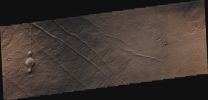
Volcanic_Regions-Tharsis-Collapse_Features-PIA15563.jpgCollapse Features in Tharsis (Absolute Natural Colors; credits for the additional process. and color.: Dr Paolo C. Fienga - Lunexit Team)118 visiteOrbit Number: 45231
Latitude: 7,543° North
Longitude: 243,234° East
Instrument: VIS
Captured: February, 24th, 2012
Mars Local Solar Time: 14:00 (Early Afternoon)MareKromium
|
|
| 1004 immagini su 84 pagina(e) |
 |
|
|
|
|
77 | |
|
|
|
|








