Mars from Orbit (from July 2009)
|
|
|
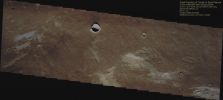
Syria_Planum-PCF-LXTT.jpgUnusually-looking terrain with "White Patches" in Syria Planum (Natural Colors; credits for the additional process. and color.: Dr Paolo C. Fienga - Lunexit Team)129 visitenessun commentoMareKromium
|
|

Tempe_Terra-PIA18251-PCF-LXTT-IPF-1.jpgFeatures of Tempe Terra (Absolute Natural Colors; credits for the additional process. and color.: Dr Paolo C. Fienga/Lunar Explorer Italia/Italian Planetary Foundation)93 visiteIn this VIS image, taken by the NASA - Mars Odyssey Orbiter on March, 5th, 2014, and during its 54.219th orbit around the Red Planet, we can see a small portion of the Eastern Margin of the Martian Region known as Tempe Terra, where numerous Unnamed Outflow Channels can be found. In this picture, if you look at it carefully, you will be able to see an interesting and unusually-looking Craters' Cluster (approx. 13 small Impact Craters, very close to one another and showing different levels of degradation, are visible - look at the lower Right - Dx - center of the frame) and a white-colored, medium-sized Outcrop (lower center of the frame), surrounded by small, low and curvilinear Ridges whose origin is (so far) unknown.
Latitude (centered): 35,3128° North
Longitude (centered): 305,1220° East
Instrument: VIS
This image (which is a crop taken from an Original Mars Odyssey Orbiter b/w and Map-Projected frame published on the NASA - Planetary Photojournal with the ID n. PIA 18251) has been additionally processed, magnified to aid the visibility of the details, contrast enhanced, Gamma corrected and then colorized in Absolute Natural Colors (such as the colors that a human eye would actually perceive if someone were onboard the NASA - Mars Odyssey Orbiter and then looked down, towards the Surface of Mars), by using an original technique created - and, in time, dramatically improved - by the Lunar Explorer Italia Team.MareKromium
|
|
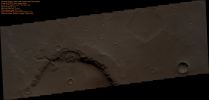
Terra_Cimmeria-PIA13877-PCF-LXTT.jpgUnnamed Crater in Terra Cimmeria (Natural Colors; credits for the additional process. and color.: Dr Paolo C. Fienga - Lunexit Team)119 visitenessun commentoMareKromium
|
|
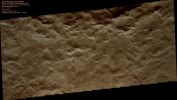
Terra_Sabaea-20091130a.jpgDark Slope Streaks in Terra Sabaea (Natural Colors; credits: Lunexit)65 visitenessun commentoMareKromium
|
|
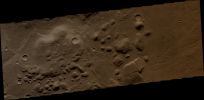
Terra_Sabaea-PIA13554.jpgThe Boudary between Highlands and Lowlands (Natural Colors; credits for the additional process. and color.: Dr Gianluigi Barca - Lunexit Team)86 visiteOrbit Number: 38884
Latitude (centered): 30,4564°
Longitude (East): 81,8197°
Instrument: VIS
Captured: September, 20th, 2010MareKromium
|
|
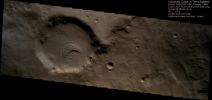
Terra_Sabaea-UC-20080701a-PCF-LXTT.jpgUnnamed Crater with "Fossilized" Dunefield in Terra Sabaea (Absolute Natural Colors; credits for the additional process. and color.: Dr Paolo C. Fienga - Lunexit Team)122 visitenessun commentoMareKromium
|
|
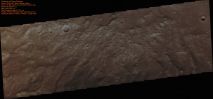
Terra_Sirenum-PIA14366-PCF-LXTT.jpgFeatures of Terra Sirenum (Natural Colors; credits for the additional process. and color.: Dr Paolo C. Fienga - Lunexit Team)74 visitenessun commentoMareKromium
|
|
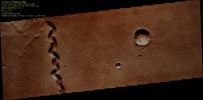
Trough-Patapsco_Vallis-PIA12455.jpgZig-Zagging Trough (Natural - but enhanced - Colors; credits: Dr Paolo C. Fienga - Lunexit Team)73 visitenessun commentoMareKromium
|
|
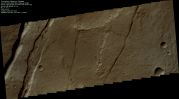
Troughs-Sirenum_Fossae-20091207a.jpgTroughs in Sirenum Fossae (Enhanced Natural Colors; credits: Lunexit)65 visitenessun commentoMareKromium
|
|
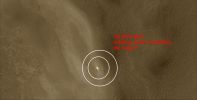
Unusually-looking_Surface_Feature-S22-00831d-00.jpgPossible Surface Anomaly (CTX Frame - False Colors)92 visiteDa un frame "2001 - Mars Odyssey", il Dr Gianluigi Barca ha estrapolato questo dettaglio, assolutamente affascinante, difficile da cogliere e - come quasi sempre accade - davvero inesplicabile.
Una piccola zona superficiale appare possedere - come lo stesso Dr Barca fa correttamente notare - una albedo semplicemente straordinaria: altissima, cioè. L'albedo propria del ghiaccio, nel caso di specie.
Ma come giustificare, scientificamente e razionalmente, un "appezzamento di ghiaccio" all'interno di un'area totalmente desertica?
In passato, a proposito di alcuni "confusi bagliori" simili a geysers e ripresi sia orbitalmente, sia dalla superficie (e MAI spiegati dalla NASA), avevamo lanciato l'idea degli "estrusi": sacche d'acqua di varie dimensioni le quali, spinte da forze mareali (o da sismi?), sorgono dalle profondità di Marte e quindi, una volta giunte in superficie, "esplodono", letteralmente, formando una pozza d'acqua che in parte evapora ed in parte ghiaccia quasi istantaneamente.
Che questa "chiazza bianca" sia un "estruso"?
|
|
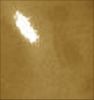
Unusually-looking_Surface_Feature-S22-00831d-01.jpgPossible Surface Anomaly (EDM - False Colors)80 visiteA questo (super) ingrandimento, l'ipotesi che si possa trattare di un image-artifact svanisce totalmente: si tratta, effettivamente, di una Regione "ricoperta" da qualcosa. Qualcosa di bianco e di brillante.
Qualcosa che, con ogni probabilità, è effettivamente "ghiaccio".
Ma come ci è arrivato in quel punto? E perchè solo in quel punto?
Domande, domande, domande...
|
|
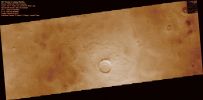
Utopia_Planitia-PIA13136.jpgDD Tracks in Utopia Planitia (Saturated Natural Colors; credits for the additional process. and color.: Dr Paolo C. Fienga - Lunexit Team)113 visitenessun commentoMareKromium
|
|
| 1004 immagini su 84 pagina(e) |
 |
|
|
|
|
71 | |
|
|
|
|








