Mars from Orbit (from July 2009)
|
|
|
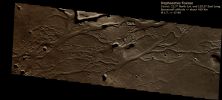
Hephaestus_Fossae-PCF-LXTT.jpgHephaestus Fossae (Natural Colors; credits for the additional process. and color.: Dr Paolo C. Fienga - Lunexit Team)176 visitenessun commentoMareKromium
|
|

Hills-Knob-Elysium_Planitia-PIA08079-00.jpgBizarre "Knob" in Elysium Planitia (Original NASA/JPL/ASU b/w Frame)65 visiteImage information: VIS instrument;
Latitude: 1,1° South;
Longitude: 156,0° East;
Resolution: 18 meter/pixel.
|
|
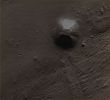
Hills-Knob-Elysium_Planitia-PIA08079-01.jpgBizarre "Knob" in Elysium Planitia (Absolute Natural Colors; credits for the additional process. and color.: Dr Paolo C. Fienga - Lunexit Team)189 visiteImage information: VIS instrument;
Latitude: 1,1° South;
Longitude: 156,0° East;
Resolution: 18 meter/pixel. MareKromium
|
|
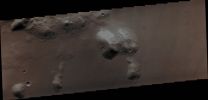
Hills-Tartarus_Colles_Region-PIA15307-PCF-LXTT.jpgHills in Tartarus Colles (Absolute Natural Colors; credits for the additional process. and color.: Dr Paolo C. Fienga - Lunexit Team) 116 visiteOrbit Number: 44484
Latitude: 22,915° North
Longitude: 185,841° East
Instrument: VIS
Captured: December, 25th, 2011MareKromium
|
|
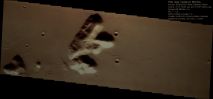
Hills_and_Knobs-Tartarum_Montes-PCF-LXTT.jpgHills and Knobs near Tartarum Montes (Saturated Absolute Natural Colors; credits for the additional process. and color.: Elisabetta Bonora and Paolo C. Fienga - Lunexit Team)74 visitenessun commentoMareKromium
|
|
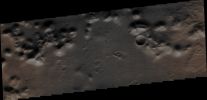
Hills_and_Knobs_in_Amazonis_Planitia-PIA15135-PCF-LXTT.jpgHills and Knobs in Amazonis Planitia (Absolute Natural Colors; credits for the additional process. and color.: Dr Paolo C. Fienga - Lunexit Team)210 visiteOrbit Number: 43710
Latitude: 8,404° North
Longitude: 183,638° East
Instrument: VIS
Captured: October, 22nd, 2011
Mars Local Time (M.L.T.): 09:29 (Morning Hours)
MareKromium
|
|

Inca_City-PIA14281-PCF-LXTT.jpgInca City (Absolute Natural Colors; credits for the additional process. and color.: Dr Paolo C. Fienga - Lunexit Team) 76 visiteOrbit Number: 41834
Latitude: 81,408° South
Longitude: 295,701° East
Instrument: VIS
Captured: 2011, May, 20th
Mars Local Time (M.L.T.): 21:31 (Late Evening Hours)
MareKromium
|
|

Islands-Maja_Valles-PIA13327.jpgStreamlined Islands in Maja Valles (Natural Colors; credits for the additional process. and color.: Dr Paolo C. Fienga - Lunexit Team)87 visitenessun commentoMareKromium
|
|

Islands-Maja_Valles-PIA13631.jpgStreamlined Islands in Maja Valles (Absolute Natural Colors; credits for the additional process. and color.: Dr Paolo C. Fienga - Lunexit Team:)110 visitenessun commentoMareKromium
|
|
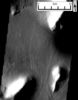
Islands.jpgThe Islands of Mars (Original NASA-2001 Mars Odyssey Orbiter b/w Frame)90 visiteNew HR images of mid-latitude Mars are revealing glacier-formed landscapes far from the Martian Poles, says a leading Mars Researcher.
Conspicuous trains of debris in valleys, arcs of debris on steep slopes and other features far from the polar ice caps bear striking similarities to glacial landscapes of Earth, says Brown University's James Head III. When combined with the latest climate models and orbital calculation for Mars, the geological features make a compelling case for Mars having ongoing climate shifts that allow ice to leave the poles and accumulate at lower latitudes.
"The exciting thing is a real convergence of these things, said Head, who will present the latest Mars climate discoveries on Sunday, 16 October, at the Annual Meeting of the Geological Society of America in Salt Lake City (Utah). "For decades people have been saying that deposits at mid and equatorial latitudes look like they are ice-created, said Head. But without better images, elevation data and some way of explaining it, ice outside of Mars' polar regions was a hard sell.
Now high-resolution images from the Mars Odyssey spacecraft's Thermal Emission Imaging System combined with images from the Mars Global Surveyor spacecraft's Mars Orbiter Camera and Mars Orbiter Laser Altimeter can be compared directly with glacier features in mountain and polar regions of Earth. The likenesses are hard to ignore.
For instance, consider what Head calls "lineated valley fill." These are lines of debris on valley floors that run downhill and parallel to the valley walls, as if they mark some sort of past flow. The same sorts of lines of debris are seen in aerial images of Earth glaciers. The difference is that on Mars the water ice sublimes away (goes directly from solid ice to gas, without any liquid phase between) and leaves the debris lines intact. On Earth the lines of debris are usually washed away as a glacier melts.
|
|

Jus_Chasma-NTV-MO-20090422a.jpgJus Chasma at Night (False Colors; credits: Lunexit)70 visiteCaption NASA:"This is an InfraRed image of Jus Chasma taken at night. Bright surfaces are warmer than dark surfaces; the floor of the chasma is warmer than the plains at the top of the frame. Nighttime InfraRed images are extremely helpful in identifying bedrock outcrops, which stay warmer than dust covered surfaces. The landslide is also easy to identify in this image".
Coord.: 8,0° South Lat. and 280,8° East Long.
MareKromium
|
|

Jus_Chasma-PCF-LXTT.jpgFeatures of Jus Chasma (Absolute Natural Colors; credits for the additional process. and color.: Dr Paolo C. Fienga)77 visitenessun commentoMareKromium
|
|
| 1004 immagini su 84 pagina(e) |
 |
|
|
|
|
55 | |
|
|
|
|








