Mars from Orbit (from July 2009)
|
|
|
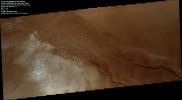
Dunes-NiliPatera-20091008a.jpgLarge Dunefield in Nili Patera (possible Natural Colors; credits: Lunexit)63 visitenessun commentoMareKromium
|
|
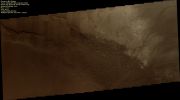
Dunes-NiliPatera-20091120a.jpgDunefield in Nili Patera (Absolute Natural Colors; credits: Lunar Explorer Italia)63 visitenessun commentoMareKromium
|
|
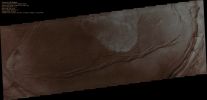
Dunes-Nili_Patera-PIA13229.jpgDunes in Nili Patera (Natural Colors; credits for the additional process. and color.: Dr Paolo C. Fienga - Lunexit Team)77 visitenessun commentoMareKromium
|
|
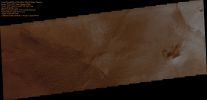
Dunes-Nili_Patera-PIA13367.jpgLarge Dunefield in Nili Patera (Natural Colors; credits for the additional process. and color.: Dr Paolo C. Fienga - Lunexit Team)127 visiteCaption NASA:"The Dunes that are visible in this VIS image are located in Nili Patera, one of the two Paterae of the (very dark) Martian Region known as Syrtis Major".MareKromium
|
|
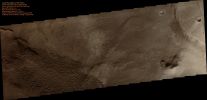
Dunes-Nili_Patera-PIA13535.jpgLarge Dunefield in Nili Patera (Natural Colors; credits for the additional process. and color.: Dr Paolo C. Fienga - Lunexit Team)105 visiteDeve ASSOLUTAMENTE esserci qualcosa di "speciale" in questo grande Campo di Dune posizionato nei pressi della Nili Patera, dato che TUTTI gli Orbiters disponibili (da MGS a MRO, senza dimenticare Odyssey e Mars Express) hanno ripreso e riprendono immagini su immagini di queste coordinate.
Che cosa sarà mai?
Probabilmente si tratta di leggeri movimenti delle Dune (che potrebbero essere tutte "Migranti"), oppure - se andiamo su risoluzioni maggiori - potrebbe trattarsi di cambiamenti di forma e caratterizzazione delle Dune stesse.
Ho fatto una piccola indagine ed ho trovato del materiale NASA interessante qui (http://www.nasa.gov/mission_pages/MRO/multimedia/pia12860.html) e qui (http://www.nasa.gov/mission_pages/MRO/multimedia/pia12858.html).
Per chi fosse interessato... Buona lettura!MareKromium
|
|
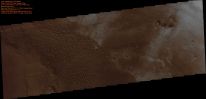
Dunes-Nili_Patera_Region-PIA13992-PCF-LXTT.jpgLarge Dunefield in Nili Patera (Absolute Natural Colors; credits for the additional process. and color.: Dr Paolo C. Fienga - Lunexit Team)217 visitenessun commentoMareKromium
|
|

Dunes-NoachisTerra-20091123a.jpgSmall Dunefield in Noachis Terra (Natural Colors; credits: Lunexit)64 visitenessun commentoMareKromium
|
|

Dunes-North_Polar_Dunes-PIA13344.jpgNorth Polar Dunefields (Natural Colors; credits for the additional process. and color.: Dr Paolo C. Fienga - Lunexit Team)83 visiteCaption NASA:"As Northern Summer approaches on Mars, the Dunes near the North Polar Regions defrost and become darker".
Source: NASA/2001 Mars Odyssey Orbiter
Orbit Number: 37996
Latitude: 78,969° North
Longitude: 158,204° East
Instrument: VIS
Captured: 2010-07-08MareKromium
|
|
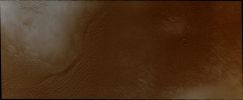
Dunes-North_Polar_Erg-PIA13373.jpgDunes of the North Polar Erg (Natural Colors; credits for the additional process. and color.: Dr Paolo C. Fienga - Lunexit Team)136 visiteThe appearance of the Dunes of the North Polar Erg (or "Sand Sea") changes as the seasons move from Winter to Summer. This Summer image shows the Dunes totally free of Frost.
Orbit Number: 38280
Latitude: 79,0826°
Longitude: 245,52°
Instrument: VIS
Captured: August, 1st, 2010
M.L.T.: 07:21 (Early Morning)
MareKromium
|
|
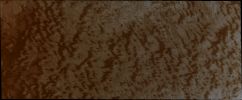
Dunes-North_Polar_Erg-PIA13377.jpgDunes of the North Polar Erg (Natural Colors; credits for the additional process. and color.: Dr Paolo C. Fienga - Lunexit Team)121 visiteAs the Sun warms the Martian Surface and more Frost is removed, the Dunes and other features near the North Pole of Mars are revealed. This VIS image shows how complex the inter-dune areas are.
Orbit Number: 38296
Latitude: 79,184°
Longitude: 143,729°
Instrument: VIS
Captured: August, 8th, 2010
M.L.T.: 14:58 (Early Afternoon)MareKromium
|
|
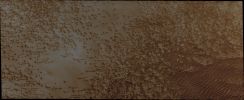
Dunes-North_Polar_Erg-PIA13411.jpgDunes of the North Polar Erg (Natural Colors; credits for the additional process. and color.: Dr Paolo C. Fienga - Lunexit Team)124 visiteCaption NASA:"By high Summer, the extensive Dunefields of the North Polar Region (such as the "Erg", meaning the "Sea of Sands") are completely defrosted and the number and variety of dunes are readily visible".
Orbit Number: 38652
Coord.: 77,84° North Lat. and 311,18° East Long.
Instrument: VIS
Captured: 2010, August, 31
M.L.T.: 22:31 (Late Evening Hours)
MareKromium
|
|
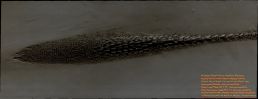
Dunes-North_Polar_Features-PIA13663.jpgExtremely unusually-looking Surface Feature near the North Pole of Mars (Absolute Natural Colors; credits for the additional process. and color.: Dr Paolo C. Fienga - Lunexit Team)155 visiteCaption NASA:"Although this may look like a hostile alien lifeform, it's actually a complex line of Sand Dunes near the Northern Ice-Cap of Mars. The image covers an area about 10 Km (a little more than 6 miles) wide. It was taken in April 2006 by the Thermal Emission Imaging System instrument on NASA's Mars Odyssey Orbiter. It is part of a special set of images marking the occasion of Odyssey becoming the longest-working Mars Spacecraft in history.
The pictured location on Mars is at approx. 82,4° North Latitude and 314,5° East Longitude".MareKromium
|
|
| 1004 immagini su 84 pagina(e) |
 |
|
|
|
|
50 | |
|
|
|
|








