Mars from Orbit (from July 2009)
|
|
|

Craters-Gale_Crater-PIA14290-PCF-LXTT.jpgGale Crater (Enhanced Natural Colors; credits for the additional process. and color.: Dr Paolo C. Fienga - Lunexit Team)203 visiteNASA has selected Gale cCrater as the Landing Site for the Mars Science Laboratory Mission. The Rover will be placed on the ground in a Northern portion of the Crater in August 2012. This view of Gale is a mosaic of observations made in the Visible-Light portion of the Spectrum by the Thermal Emission Imaging System camera on NASA's Mars Odyssey orbiter.
Gale crater is roughly 96 miles (about 154 Km) in diameter and holds a layered mountain rising about 3 miles (approx. 5 Km) above the Crater Floor. The ellipse superimposed in this image indicates the intended Landing Area, which is 12,4 miles (about 20 Km) by 15,5 miles (about 25 Km). The portion of the Crater within the Landing Area has an Alluvial Fan likely formed by water-carried sediments. The lower layers of the nearby mountain -- within driving distance for Curiosity -- contain minerals indicating a wet history.
The intended landing site is at 4,5° South Latitude and 137,4° East Longitude.
The Mars Science Laboratory Spacecraft is being prepared for launch during the period Nov. 25 to Dec. 18, 2011. In a prime mission lasting one Martian year -- nearly two Earth years -- after landing, researchers will use the Rover's tools to study whether the landing region has had environmental conditions favorable for supporting microbial life and for preserving clues about whether life existed.MareKromium
|
|
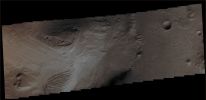
Craters-Gale_Crater-PIA15311-PCF-LXTT.jpgFeatures of Gale Crater (Absolute Natural Colors; credits for the additional process. and color.: Dr Paolo C. Fienga - Lunexit Team)86 visiteOrbit Number: 44524
Latitude: 4,640° South
Longitude: 137,685° East
Instrument: VIS
Captured: December, 28th, 2011
Mars Local Solar Time: 07:29 (Early Morninh Hours)MareKromium
|
|
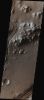
Craters-Gale_Crater-PIA16240-PCF-LXTT-IPF.jpgGale Crater (Absolute Natural Colors; credits for the additional process. and color.: Dr Paolo C. Fienga/Lunar Explorer Italia/Italian Planetary Foundation)110 visiteThis is a 9 years' old frame taken by the NASA - MArs Odyssey Orbiter during its 11330th orbit around the Red Planet; it shows us, again (but, this time, from a slightly different position as to the one where the picture that we published yesterday was obtained), some more Features of the Floor of Gale Crater, including - once again - the Landing Site of the Mars Exploration Rover (and Laboratory) "Curiosity" (bottom right portion of the image, near the Dark Dunes), and a medium-sized Channel that cuts through the Crater's Rim (on the left side of the frame).
Latitude (centered): 4,2574° South
Longitude (centered): 137,3510° East
Instrument: VIS
Captured: July, 4th, 2004
This frame (which is an Original Mars Odyssey Orbiter b/w frame published on the NASA - Planetary Photojournal with the ID n. PIA 16240) has been additionally processed and then colorized in Absolute Natural Colors (such as the colors that a human eye would actually perceive if someone were onboard the NASA - Mars Odyssey Orbiter and then looked down, towards the Surface of Mars), by using an original technique created - and, in time, dramatically improved - by the Lunar Explorer Italia Team.MareKromium
|
|

Craters-Gale_Crater-PIA16289-PCF-LXTT-IPF.jpgGale Crater (Absolute Natural Colors; credits for the additional process. and color.: Dr Paolo C. Fienga/Lunar Explorer Italia/Italian Planetary Foundation)116 visiteDuring the month of April, of the AD 2013, Mars will be in a so-called "Conjunction" relative to the Planet Earth. This means that the Sun is exactly in the line-of-(direct) sight between the two aforementioned Celestial Bodies, such as our Home Planet Earth and the Red Planet. In this Spatial Configuration, as you can easily understand, the communications between the two Planets are - in fact - almost impossible; however, during the Conjunction Period, the Rovers operating on the Surface of Mars and the Spacecrafts orbiting around it, will continue to operate, but without sending all the collected data to Earth. This data, which are all recorded and stored, will be sent to Earth when the Conjunction is over, Mars shall have moved away from behind the Sun (of course, only from our Terrestrial point of view) and therefore the line-of-(direct) sight between Earth and Mars is re-established.
During the Conjunction Period, the "NASA - THEMIS Image of the Day" will be a visual tour of Gale Crater, such as the location of the newest Mars Exploration Rover (and Laboratory) Curiosity. The first image of Gale Crater that we propose you on today's APOD (image that was taken more than 6 years ago, by the NASA - Mars Odyssey Orbiter, during its 23.897th orbit around the Red Planet) shows, among other Features, the Landing Site of the Mars Exploration Rover (and Laboratory) Curiosity (which is located approximately near the center of the image). On the other hand, the Dark Material that is visible towards the South (the lower portion of the frame), is just (Basaltic, most likely) Sand that is set on the Floor of Gale Crater in the form of Dunes; Dunes that the Curiosity Rover, in a way or another, will have to navigate through in order to get to the Layered Central Deposit (also partially visible in the frame), whose official name, as you should know by now, is "Mount Sharp".
Latitude (centered): 4,47891° South
Longitude (centered): 137,46500° East
Instrument: VIS
Captured: April, 5th, 2007
This frame (which is an Original Mars Odyssey Orbiter b/w frame published on the NASA - Planetary Photojournal with the ID n. PIA 16289) has been additionally processed and then colorized in Absolute Natural Colors (such as the colors that a human eye would actually perceive if someone were onboard the NASA - Mars Odyssey Orbiter and then looked down, towards the Surface of Mars), by using an original technique created - and, in time, dramatically improved - by the Lunar Explorer Italia Team.MareKromium
|
|
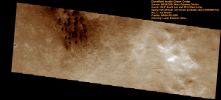
Craters-Green_Crater-Dunefield-PCF-LXTT.jpgDunefield inside Green Crater (Over-Saturated Natural Colors; credits for the additional process. and color.: Dr Paolo C. Fienga - Lunexit Team)64 visitenessun commentoMareKromium
|
|
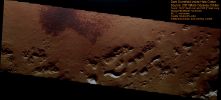
Craters-Hale_Crater-Dunes-20071210a-PCF-LXTT.jpgFeatures of Hale Crater (Darkened Absolute Natural Colors; credits for the additional process. and color: Dr Paolo C. Fienga - Lunexit Team)63 visitenessun commentoMareKromium
|
|

Craters-Hellespontus_Crater-Dunes-MGS-00.jpgFeatures of Hellespontus Crater (Enhanced Absolute Natural Colors; credits for the additional process. and color.: Dr Paolo C. Fienga - Lunexit Team)65 visitenessun commentoMareKromium
|
|
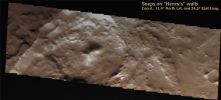
Craters-Henry_Crater-PCF-LXTT.jpgHenry Crater (Natural Colors; credits for the additional process. and color.: Dr Paolo C. Fienga - Lunexit Team)199 visitenessun commentoMareKromium
|
|
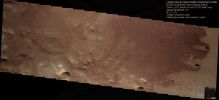
Craters-Herschel_Crater-Dunefield-20080311a-PCF-LXTT.jpgDunefield inside Herschel Crater (Absolute Natural Colors; credits for the additional process. and color.: Dr Paolo C. Fienga - Lunexit Team)103 visitenessun commentoMareKromium
|
|
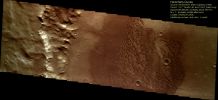
Craters-Herschel_Crater-Dunefield-20080505a-PCF-LXTT.jpgDunefield inside Herschel Crater (Extremely Enhanced Natural Colors; credits for the additional process. and color.: Dr Paolo C. Fienga - Lunexit Team)64 visitenessun commentoMareKromium
|
|
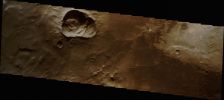
Craters-Herschel_Crater-Dunefield-20090303a-PCF-LXTT.jpgDunefield inside Herschel Crater (Extremely Enhanced Natural Colors; credits for the additional process. and color.: Dr Paolo C. Fienga - Lunexit Team)64 visiteCoord.: 15,5° South Lat. and 131,7° East Long.MareKromium
|
|

Craters-Highly_Cratered_Terrain-Arabia_Terra-PIA08759-2.jpgHighly Cratered Terrain in Arabia Terra Region63 visiteImage information: VIS instrument;
Latitude: 26,7° North;
Longitude: 341,0° East;
Resolution: 19 meter/pixel.
|
|
| 1004 immagini su 84 pagina(e) |
 |
|
|
|
|
29 | |
|
|
|
|








