| |

Phobos: the "Doomed" Moon
|
|
|
![Phobos-F854A82[1]-PCF-LXTT.jpg](albums/userpics/10060/small_Phobos-F854A82%5B1%5D-PCF-LXTT.jpg "Nome del file=Phobos-F854A82[1]-PCF-LXTT.jpg
Dimensione del file=392KiB
Dimensioni=2200x1930
Aggiunta il=Giu 21, 2011")
Phobos-F854A82[1]-PCF-LXTT.jpgStickney Crater and Phobos' Limb (Absolute Natural Colors; credits for the additional process. and color: Dr Paolo C. Fienga - Lunexit Team)348 visitenessun commentoMareKromium
|
|

Phobos-Limb-Mars_Express-00.jpgPhobos, the "Doomed Moon", from Mars Express (Absolute Natural Colors; credits for the additional process. and color.: Dr Paolo C. Fienga - Lunexit Team)204 visitenessun commentoMareKromium
|
|

Phobos-Limb-Mars_Express-01.jpgPhobos, the "Doomed Moon", from Mars Express (Absolute Natural Colors; credits for the additional process. and color.: Dr Paolo C. Fienga - Lunexit Team)199 visitenessun commentoMareKromium
|
|
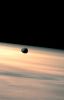
Phobos-MEXP-1-h3909_0000_H.jpgPhobos, the "Doomed Moon", from Mars Express (False Colors; credits: Lunexit)69 visiteCaption ESA:"An image of Phobos by the High-Resolution Stereo Camera on board Mars Express taken on January 22, 2007.
The larger and inner of the two Martian Moons is seen here floating just above the Martian Limb. The image has been enhanced slightly to bring out the detail on the moon".MareKromium
|
|

Phobos-MEXP-2-h3868_0000_H.jpgPhobos, the "Doomed Moon", from Mars Express (MULTISPECTRUM; credits: Lunexit)66 visiteCaption ESA:"An image of Phobos by the High-Resolution Stereo Camera on board Mars Express taken on January 10, 2007.
The larger and inner of the two Martian Moons is seen here floating just above the Martian Limb. The image has been enhanced slightly to bring out the detail on the moon".
MareKromium
|
|
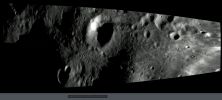
Phobos-MF.jpgPhobos, from MGS (an Image-Mosaic by Dr M. Faccin - Lunexit Team)113 visitenessun commentoMareKromium
|
|
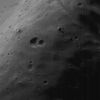
Phobos-PIA01336.jpgHigh-Resolution MOC Image of Phobos' Face74 visiteThis image of Phobos, the inner and larger of the two moons of Mars, was taken by the Mars Global Surveyor on August 19, 1998. The minimum distance between the Spacecraft and Phobos was 1080 Km (about 671 miles).
Phobos was observed by both the Mars Orbiter Camera (MOC) and Thermal Emission Spectrometer (TES). This image is one of the highest resolution images (4 meters or 13 feet per picture element or pixel) ever obtained of the Martian satellite.
The image shows several new features of this lumpy moon -- features that are associated with the prominent crater seen in the upper left quarter of the image. This is the largest crater on Phobos, Stickney, 10 Km (about 6 miles) in diameter. Individual boulders are visible on the near rim of the crater (D), and are presumed to be ejecta blocks from the impact that formed Stickney. Some of these boulders are enormous - more than 50 meters (160 feet) across.
Also crossing at and near the rim of Stickney are shallow, elongated depressions called grooves. This crater is nearly half the size of Phobos and these grooves may be fractures caused by its formation. The far wall of the crater shows lighter and darker streaks going down the slopes (C). The presence of material of different brightness on the far crater slopes and in some of the grooves shows that the satellite is heterogeneous (that is, it is made of a mixture of different types of materials). The motion of debris down slopes is guided by gravity, which is only about 1/1000th that of the Earth -- e.g., a 68-Kg (150- pound) person would weigh only about 57 gr (2 ounces) on Phobos.
Previous images from the Viking Spacecraft in the 1970's were not of sufficient resolution to show the effectiveness of gravity on Phobos in moving material down slopes.MareKromium
|
|
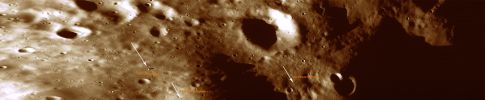
Phobos-The_Monolith-1.jpgThe (many?) "Monoliths" of Phobos (Saturated Natural Colors; credits for the additional process. and color.: Dr Paolo C. Fienga - Lunexit Team)135 visiteSu segnalazione del Dr Gianluigi Barca, il quale – per le sue riflessioni – ha utilizzato questo splendido frame MGS che ritrae una porzione della Luna Marziana Maggiore “Phobos”, abbiamo provato a prendere in considerazione l’eventualità che l’Anomalìa Superficiale conosciuta come “Phobos’ Monolith” (il Monolito di Phobos che, in questo frame, è il rilievo identificato come “The Phobos’ Monolith”, senza numerazione) potesse non essere unica.
In particolare, il Dr Barca si domandava se altri due rilievi minori, ivi contrassegnati dai numeri 2 e 3, potessero condividere o meno la natura singolare (o addirittura anomala, se volete) del rilievo maggiore.
Intuitivamente ed inizialmente la risposta è stata “si”.
Tuttavia, dopo aver esaminato questo frame con attenzione e dopo aver svolto alcune considerazioni, abbiamo ritenuto che la nostra supposizione originaria fosse errata e che, in realtà, su Phobos, alla luce delle immagini che possediamo, di Anomalìe Superficiali ne esiste – a nostro parere – soltanto una.
Cerchiamo di capire, a questo punto, perché gli altri due rilievi che pure proiettano, al pari del Monolito di Phobos, delle ombre di lunghezza medio/grande, NON SONO delle Anomalìe.
Osservate attentamente: il Monolito di Phobos si trova in una regione ancora/già abbondantemente illuminata dai raggi del Sole (così come il presunto Phobos Monolith n. 2) mentre il (pure presunto) Monolito n. 3 è già a ridosso del Terminatore.
Traduciamo questa riflessione in termini di illuminazione dell'Orizzonte Locale sul quale sorgono i tre rilievi: per il Phobos Monolith ed il Phobos Monolith n. 2, il Sole è ancora/già mediamente alto sull'orizzonte e le ombre che derivano dai rilievi superficiali sono di media lunghezza; per il Monolito di Phobos n. 3, invece, il Sole è ancora/già a ridosso dell'Orizzonte Locale (O.L.) e le ombre che ne derivano, anche a fronte di rilievi non eccessivamente alti (diciamo pure piuttosto bassi o comunque di modesta elevazione), sono lunghe.
Phobos è un mondo decisamente piccolo (approx. 13,5 x 10,8 x 9,4 Km) e quindi, nell'immagine in questione, noi vediamo “piatta” – poiché riportata/spalmata sopra un planisfero – una superficie che, in realtà, è abbondantemente curva!
Questo vuol dire, in altre parole, che anche se alcuni oggetti sembrano (e/o sono davvero) collocati a distanze modeste e/o modestissime – relativamente, come ovvio – fra loro, lo scarto in termini di altezza del Sole sull'O.L. per ciascuno di essi diventa/è "sensibile".
Alla luce di queste considerazioni, noi riteniamo che il Phobos’ Monolith originale sia EFFETTIVAMENTE un rilievo piuttosto alto, poichè l'ombra che proietta è sensibilmente lunga (quasi 200 metri – Fonte NASA) anche in condizioni di Sole non radente sull'O.L..
Il Monolito n. 2, invece, potrebbe/dovrebbe essere solo un erratic boulder il quale, probabilmente a forma di pseudo (o simil-) parallelepipedo, "riposa" sul suo lato corto, ma NON E', esattamente, una struttura colonnare o simil-colonnare come il Phobos Monolith originale (o come le Cuspidi di Blair o la Lunexit Cuspid, per chi volesse riferirsi alla Luna per paragoni e confronti).
Per quanto attiene il Monolito n. 3, infine, è difficile essere precisi ma, premesse le considerazioni che abbiamo svolto sull'O.L., noi non escluderemmo l'eventualità per cui si possa trattare anche in questo caso di un erratic boulder il quale proietta un'ombra mediamente lunga a causa NON (solo e NON tanto) della sua altezza, bensì in ragione della sua posizione sulla superficie in rapporto all'altezza del Sole esistente sul SUO Orizzonte Locale.
Conclusioni: il Phobos’ Monolith è effettivamente una struttura colonnare e, quindi, una effettiva Singolarità (o, addirittura, un’Anomalìa di Superficie vera e propria); il rilievo che abbiamo chiamato “Monolito n. 2” è solo un macigno erratico con la forma (approssimativa) di un parallelepipedo e di dimensioni medio grandi il quale, vista la sua posizione al suolo in rapporto alla posizione del Sole sul suo O.L., sembra essere ciò che non è (e quindi non è una Singolarità né, tanto meno, un’Anomalìa).
Infine, il rilievo che abbiamo chiamato Monolito n. 3 potrebbe anch’esso – ragionevolmente – essere null’altro che un altro macigno erratico (neppure troppo alto) il quale, grazie all’illuminazione radente, ci fornisce l’impressione (erronea) di costituire un rilievo che si sviluppa maggiormente in altezza piuttosto che in larghezza.
Sperando di essere stati sufficientemente chiari, ringraziamo il Dr Barca per averci fornito l’occasione di poter riflettere in Vostra compagnia sulla natura di alcuni rilievi i quali, a causa di elementi quali l’altezza del Sole sull’O.L. e le ombre che ne derivano, rischiavano di essere scambiati per delle Singolarità o, in certi casi, per delle autentiche Anomalìe di Superficie.
Dati NASA Ufficiali: il Phobos’ Monolith viene classificato e catalogato come “large boulder” (macigno di grandi dimensioni); l’ombra che si vede in questo frame è lunga circa 190 metri; la larghezza del macigno, invece, dovrebbe aggirarsi intorno agli 80 metri.
MareKromium
|
|
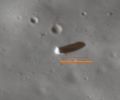
Phobos-The_Monolith-9-3-2003_09_16_SP255103.jpgThe "One" and the "Only" Monolith of Phobos (EDM)112 visitenessun commentoMareKromium
|
|
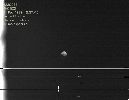
Phobos_Approach.gifApproaching Phobos132 visitenessun commentoMareKromium
|
|

Phobos_Deimos-PIA10117.jpgCRISM Views Phobos and Deimos68 visiteThese 2 images taken by the Compact Reconnaissance Imaging Spectrometer for Mars (CRISM) show Mars' 2 small moons, Phobos and Deimos, as seen from the MRO's low orbit around Mars. Both images were taken while the spacecraft was over Mars' night side, with the spacecraft turned off its normal nadir-viewing geometry to glimpse the moons. The image of Phobos, shown at the top, was taken at 01:19 UTC on October 23, 2007 (19:19 EDT on Oct. 22), and shows features as small as 400 mt (1320 feet) across. The image of Deimos, shown at the bottom, was taken at 20:16 UTC (00:16 EDT) on June 7, 2007, and shows features as small as 1,3 Km (0,8 miles) across.
Both CRISM images were taken in 544 colors covering 0.36-3.92 micrometers and are displayed at twice the size in the original data for viewing purposes.
Phobos and Deimos are about 21 and 12 Km (13,0 and 7,5 miles) in diameter and orbit Mars with periods of 7 hours, 39,2 minutes and 1 day, 6 hours, 17,9 minutes respectively. Because Phobos orbits Mars in a shorter time than Mars' 24 hour, 37.4-minute rotational period, to an observer on Mars' surface it would appear to rise in the West and set in the East. From Mars' surface, Phobos appears about one-third the diameter of the Moon from Earth, whereas Deimos appears as a bright star. The moons were discovered in 1877 by the astronomer Asaph Hall, and as satellites of a planet named for the Roman God of War, they were named for Greek mythological figures that personify fear and terror.
The first spacecraft measurements of Phobos and Deimos, from the Mariner 9 and Viking Orbiter spacecraft, showed that both moons have dark surfaces reflecting only 5 to 7% of the sunlight that falls on them. The first reconstruction of the moons' spectrum of reflected sunlight was a difficult compilation from 3 different instruments, and appeared to show a flat, grayish spectrum resembling carbonaceous chondrite meteorites. Carbonaceous chondrites are primitive carbon-containing materials thought to originate in the outer part of the Asteroid Belt. This led to a commonly held view among planetary scientists that Mars' moons are primitive asteroids captured into Martian orbit early in the Planet's history. More recent measurements have shown that the moons are in fact relatively red in their color, and resemble even more primitive D-type asteroids in the outer Solar System.
Those ultra-primitive bodies are also thought to contain carbon as well as water ice, but to have experienced even less geochemical processing than many carbonaceous chondrites.
The version of the CRISM images shown here were constructed by displaying 0.90, 0.70, and 0.50 micrometer wavelengths in the red, green, and blue image planes. This is a broader range of colors than is visible to the human eye, but it accentuates color differences. Both moons are shown with colors scaled in the same way.
Deimos is red-colored like most of Phobos. However, Phobos' surface contains a second material, grayer-colored ejecta from a 9-Km (5,6-mile) diameter crater.
This crater, called Stickney, is located at the upper left limb of Phobos and the grayer-colored ejecta extends toward the lower right.
These CRISM measurements are the first spectral measurements to resolve the disk of Deimos, and the first of this part of Phobos to cover the full wavelength range needed to assess the presence of iron-, water-, and carbon-containing minerals.MareKromium
|
|
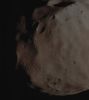
vo1_242a19-PCF-LXTT.jpgPhobos - frame Viking Orbiter 1, n. 242a19 (Absolute Natural Colors; credits for the additional process. and color: Dr Paolo C. Fienga - Lunexit Team)232 visitenessun commentoMareKromium
|
|
| 53 immagini su 5 pagina(e) |
|
3 | |
|
|
|








