Mars, Deimos and Phobos: Maps
|
|
|

034-Methane_of_Mars.jpgMap of the "Martian Methane"83 visiteCaption NASA:"Why is there Methane on Mars? No one is sure.
An important confirmation that Methane exists in the Atmosphere of Mars occurred last week, bolstering previous controversial claims made as early as 2003. The confirmation was made spectroscopically using large ground-based telescopes by finding precise colors absorbed on Mars that match those absorbed by Methane on Earth.
Given that Methane is destroyed in the open martian air in a matter of years, the present existence of the fragile gas indicates that it is currently being released, somehow, from the Surface of Mars.
One prospect is that microbes living underground are creating it, or created in the past. If true, this opens the exciting possibility that life might be present under the Surface of Mars even today. Given the present data, however, it is also possible that a purely geologic process, potentially involving volcanism or rust and not involving any life forms, is the Methane creator.
Pictured above is an image of Mars superposed with a map of the recent Methane detection".
Nota Lunexit: se la Mappa NASA è realmente accurata ed il quantitativo di Metano presente in Atmosfera è quello "suggerito" dalla Mappa stessa, allora - sempre seguendo la "Logica NASA" - ci troveremmo davanti a due possibili scenari:
1) Scenario Geologico (Metano come prodotto di processi geologici): Marte è ancora soggetto attivo di fenomeni vulcanici tutt'altro che minori e residuali, visti i quantitativi e la distribuzione del Metano nell'Atmosfera del Pianeta Rosso, oppure
2) Scenario Biologico (Metano come sottoprodotto di attività biologiche attuali): Marte è, letteralmente, "brulicante di Vita" - altro che batteri e micro-organismi - visti, come sopra, i quantitativi e la distribuzione del Metano nell'Atmosfera del Pianeta Rosso.
SOTTOLINEIAMO che queste nostre congetture DERIVANO LOGICAMENTE DALL'ANALISI DEI DATI NASA e NON da nostre speculazioni!
Vi suggeriamo, inoltre, di notare la posizione dei maggiori quantitativi di Metano nell'Atmosfera Marziana...MareKromium
|
|
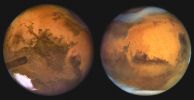
MARS-000.jpgMars: the Orange, Greenish, Bluish, Gray and White Planet (True Colors; credits: NASA)76 visitenessun commentoMareKromium
|
|
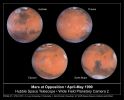
MARS-001.jpgMars from Hubble Space Telescope64 visiteThe Hubble Space Telescope has taken lovely images of Mars, which complement the MOC Atlas Mercator Projection. This image montage is from Mars' 1999 oppoxition.MareKromium
|
|
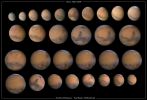
MARS-002.jpgMars in Time63 visiteCaption NASA, da "NASA - Picture of the Day" del 14 Luglio 2008:"Does Mars always appear the same? No.
As both Earth and Mars orbit the Sun, the apparent angular size of Mars changes as viewed from the Earth. Pictured above from Enschede, Holland, Mars was captured in 2007 and 2008 with 30 separate images, all taken with the same magnification.
When Earth and Mars are on opposite sides of the Sun, Mars appears relatively small. Conversely, when Earth and Mars are near each other, Mars looms large and bright. The largest Mars has appeared in recent history was the opposition of August 2003.
Since Mars is always more distant from the Earth from the Sun, Mars never shows a crescent phase to Earthlings. Visible also in the above images are the North Polar Cap of Mars, dark and light soil, clouds, and, in the early images, a Global Dust Storm.
The next opposition, when Earth again passes near to Mars, will occur in early 2010".MareKromium
|
|

MARS-005.jpgMars from the Hubble Space Telescope239 visiteI riflessi azzurri che apparivano evidentissimi nel frame precedente (immagine ripresa da Terra) sono ancora visibili, sia pure in forma meno marcata, in questo fotogramma HST. Che ne dite? Si tratta di segni evidenti che il cielo di Marte è azzurro (magari non sempre, ma comunque abbastanza di frequente)? Oppure sono "scherzi" dello sviluppo delle fotografie? Oppure sono "effetti speciali" creati per confondere le idee?
|
|

MARS-006.jpgMars from the Hubble Space Telescope211 visiteAncora al disco di Marte, come appare agli occhi dell'Hubble Space Telescope: da notare ancora la caratteristica colorazione aranciata del Pianeta ed i riflessi azzurri lungo i bordi. Molto ben sviluppata e definita, in questa immagine come nella precedente, la calotta Sud-Polare.
|
|

MARS-007.jpgMars from Earth241 visiteUna visione solo apparentemente identica alla precedente: in questo secondo caso, infatti - anche se stentiamo a crederlo... - l'immagine arriva da Terra! L'inclinazione dell'asse del Pianeta Rosso è diversa; la calotta Sud-Polare ci appare un pò più sviluppata rispetto a quanto si vedeva nell'immagine HST ed anche la circonferenza del Pianeta sembra leggermente più grande. La definizione è addirittura migliore rispetto al frame HST; il colore della superficie di Marte è più intenso ed i bordi azzurri (blue limbs) sono spariti.
Domanda: ma quale delle due immagini è più veritiera?
|
|
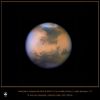
MARS-008.jpgGreen Patches on Mars (Earth View, from Pic-du-Midi)144 visiteLa NASA può, giustamente, sostenere quello che vuole (o, come ha fatto oggi, nella caption dedicata a questo frame, può non dire assolutamente nulla), ma le "macchie di verde" che si vedono con estrema chiarezza sulla Superficie di Marte in questa recentissima immagine ottenuta dall'Osservatorio Astronomico Francese "Midi-Pyrénées" NON SONO, a nostro modo di vedere e di interpretare, il prodotto di una semplice - ancorchè curiosa - aberrazione cromatica.
Anche nei nostri (certo non "fantascientifici", ma sicuramente accurati e professionali) color-processing il "verde" appare, su Marte, sempre più spesso: sia nei frames superficiali, sia nei frames orbitali.
Forse sarebbe il caso di fare, ai livelli di competenza più opportuni, qualche seria riflessione sulla Natura ed, eventualmente, la portata di questo fenomeno...
Caption NASA:"It's Spring for the Northern Hemisphere of Mars and Spring on Mars usually means Dust Storms. So the dramatic brown swath of dust (top) marking the otherwise white North Polar Cap in this picture of the Red Planet is not really surprising.
Taking advantage of the good views of Mars currently possible near opposition and its closest approach to planet Earth in 2010, this sharp image shows the evolving Dust Storm extending from the large dark region known as Mare Acidalium below the Polar Cap. It was recorded on February 2nd, 2010, with the 1 meter telescope at Pic Du Midi, a mountain top observatory in the French Pyrenees".
Nota Lunexit: BIZZARRO! Gli Amici di Pasadena hanno visto la "Striscia Marrone" che taglia la Calotta Nord Polare (marrone che poi è, secondo noi, un bel color arancione vivace...), ma non vedono il Verde che si stende, dalla Pianura di Acidalia, sino alla Regione di Vastitas Borealis e poi "scende", attraversando le Regioni Equatoriali (con una parte di Meridiani Planum), per quindi giungere sino alle porte della Terra di Noachis, nelle profondità dell'Emisfero Australe di Marte.
Certo, è possibile che il Verde che vediamo sia il prodotto - comunque - di un'aberrazione di un qualche tipo: noi ne siamo PERFETTAMENTE consapevoli. Ma, alle volte, quello che ci lascia perplessi, è il silenzio da parte di Coloro che sanno (o che dovrebbero sapere), anche davanti a fenomenologie di indubbia curiosità, se non di "interesse scientifico" in senso stretto.
Insomma: il brown (marrone) è una cosa, il green (che si vede qui), un'altra.
Perchè si sceglie DELIBERATAMENTE di ignorare SEMPRE l'eventualità che "qualcosa di nuovo e di inatteso", su Marte, come forse su Plutone o - chissà - su Titano ed Encelado, stia realmente accadendo?
Ma di che cosa hanno paura "Coloro che sanno"? Forse di dover riscrivere qualche libro?
O forse di dover pubblicamente riconoscere la loro COLOSSALE ignoranza ed arroganza intellettuale?
... Pensateci sopra...MareKromium
|
|
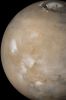
MARS-009.jpgThe "Brown Face" of Mars - Wintertime330 visitenessun commento
|
|

MARS-010.jpgThe "Brown Face" of Mars - Springtime351 visitenessun commento
|
|

MARS-011.jpgThe Planet Mars with "Blue Limb Reflections" (1)486 visitenessun commento
|
|
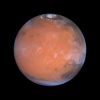
MARS-012.jpgThe Planet Mars with "Blue Limb Reflections" (2)344 visitenessun commento
|
|
| 54 immagini su 5 pagina(e) |
 |
|
4 |
|








