After One-Thousand Soles...
|
|
|
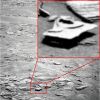
OPP-SOL1711-1P280075293EFF9489P2384R1M1-3.jpgThe "Floating" Rocky Rectangle... - Sol 1711 (by Dr G. Barca)66 visiteSi, lo sappiamo che quella lastra di roccia non sta "volando", però l'effetto ottico è veramente bizzarro! Complimenti al Grande Gigi Barca, come sempre.MareKromium
|
|
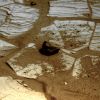
OPP-SOL1713-1P280262410ESF94ARP2588R6M1.jpgSmall, erratic Rock - Sol 1713 (tri-chromatic version; credits: Lunexit)63 visitenessun commentoMareKromium
|
|
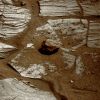
OPP-SOL1713-3.jpgSmall, erratic Rock - Sol 1713 (possible True Colors; credits: Dr G. Barca & Lunexit)75 visitenessun commentoMareKromium
|
|

OPP-SOL1714-1N280349236EDN94B2P1588R0M1.jpgThe Sky over Meridiani - Sol 1714 (natural colors; credits: Lunexit)75 visitenessun commentoMareKromium
|
|
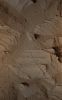
OPP-SOL1715-1P280446841ESF94B2P2590L7M1.jpgSigns of an ancient Tide? (1) - Sol 1715 (natural colors; credits: Lunexit)64 visiteMeridiani Planum doveva essere - in accordo alle più recenti ed accreditate ipotesi NASA - un "Oceano ad Acque Basse".
Va bene: quest'ipotesi può anche essere più che valida. Ma come spiegare le sottilissime e delicate stratificazioni che continuiamo a vedere nei frames Opportunity?
Semplici segni dell'accumulo di detriti nel tempo (nelle ere, letteralmente), oppure si potrebbe trattare di evidenze di un progressivo e disarmonico ritrarsi delle acque?
O forse sono i segni lasciati da moti mareali caotici, ma che comunque si sono ripetuti per migliaia e migliaia di anni (o forse ancora ere ed ere)?
La Verità - da cui siamo comunque ed ancora tutti lontanissimi... - è che, nel passato di Marte, potrebbe non esserci stato solo un cataclisma di proporzioni planetarie (o globali, se volete). che ne ha ridisegnate le fattezze - o che ne ha "cancellato", come pensato in molti, un "volto" che era assai simile alla Terra.
Forse Marte (e questa è la nostra opinione), oggi come nel suo passato più remoto, non era affatto simile alla Terra ed i "Segni Incongruenti ed Inspiegabili" che ora e sempre più di frequente leggiamo sulla sua superficie (sia nelle immagini orbitali, sia in quelle dal suolo) non sono altro che l'oggettivazione postuma di questa profonda diversità.
Una diversità che si manifestava e si manifesta ancora (anche) nei processi geologici (e se non tutti, almeno in una buona parte di essi).
Perchè l'Uomo e la Scienza dell'Uomo cercano le "affinità", certo...Ma il Sistema Solare e l'Universo, a quanto pare, sono MOLTO grandi e quindi, a nostro parere, potrebbe anche essere interessante e costruttivo il fatto di trovare ed evidenziare le Diversità, piuttosto che affannarsi nel cercare (SEMPRE) le similitudini - specie quando esse significano errori interpretativi e forzature logiche.
O no?!?MareKromium
|
|
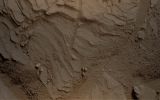
OPP-SOL1715-1P280447216ESF94B2P2590R1M1.jpgSigns of an ancient Tide? (2) - Sol 1715 (natural colors; credits: Lunexit)90 visitenessun commentoMareKromium
|
|

OPP-SOL1715-1P280447623ESF94B2P2590R1M1.jpgSigns of an ancient Tide? (3) - Sol 1715 (natural colors; credits: Lunexit)65 visitenessun commentoMareKromium
|
|

OPP-SOL1715-1P280448066ESF94B2P2590R1M1-2.jpgSigns of an ancient Tide? (4) - Sol 1715 (possible True Colors; credits: Dr G. Barca & Lunexit)65 visitenessun commentoMareKromium
|
|

OPP-SOL1715-1P280448066ESF94B2P2590R1M1.jpgSigns of an ancient Tide? (5) - Sol 1715 (natural colors; credits: Lunexit)75 visitenessun commentoMareKromium
|
|

OPP-SOL1716-1719-PIA11754-C.jpgColor Comparison - Sol 1716 - 171994 visiteUna - speriamo eloquente - comparazione fra lo "stile" di colorizzazione NASA rispetto a quello Lunar Explorer.
Sinceramente, oramai non è più (o, forse, non è mai stata) una questione di "più bello/più brutto"; quello che si può evincere con inequivocabile chiarezza dalle elaborazioni NASA è che una "patina" di color giallo è sovraimposta a tutte le loro "colorizzazioni". Una "patina" opaca, la quale esalta ancora di più l'evidente sovrasaturazione a cui sono stati sottoposti tutti i frames Marziani, sia Spirit, sia Opportunity.
Come sapete bene, Lunar Explorer Italia - per quanto attiene le colorizzazioni - si è evoluta nel tempo: e questo è un fatto, riteniamo, normale e meritorio.
E la NASA? Si, anche la NASA si è evoluta (guardate le prime elaborazioni in approximate true colors di Meridiani Planum - sono nella Sez. "Mars in Colors" - per rendervene conto). Ma lo ha fatto, a nostro umile parere, involvendosi e stabilendo una Linea Insuperabile per il processing (una "linea" tanto ovvia, quanto discutibile): Marte, dice la NASA, è opaco, piuttosto luminoso e con Dominante giallognola.
Tutte le loro elaborazioni, da almeno tre anni a questa parte, risentono di questo gruppo di premesse le quali - e qui viene il "bello" - sono più volte state smentite/modificate sostanzialmente dalla NASA stessa (la quale ha detto che Marte è piuttosto buio, che la visibilità al suolo è tersa e che la dominante cromatica è arancio/rossastra).
Insomma, chi ci capisce qualcosa nei ragionamenti NASA non è solo bravo: è un Fenomeno! Noi, comunque, andiamo avanti per la nostra strada...
Caption NASA:"This 360-degree panorama shows the vista from the location where NASA's Mars Exploration Rover Opportunity spent five weeks in November and December 2008 while the Sun was nearly directly in between Mars and Earth, limiting communications.
Opportunity is approaching the 5th Earth-year anniversary of its landing on Mars, continuing a surface mission that was initially scheduled to last 3 months. The Rover landed on Jan. 24, 2004 (Pacific Standard Time; Jan. 25, 2004 Universal Time). When it reached the location from which its PanCam captured this view, it had driven a total of 13.616 meters (8,46 miles) since its landing.
The view combines 276 different exposures taken with Opportunity's PanCam — 92 pointings, with three filters at each pointing. The component images were taken during the period from the Rover's 1716th Martian Day, or Sol, to the mission's Sol 1719 (Nov. 21 to 24, 2008).
Opportunity has driven 1,83 Km (1,14 miles) since it exited Victoria Crater on Sol 1634 (Aug. 28, 2008). It skirted the West Rim of Victoria and, at the point from which this panorama was taken, had reached a position about a kilometer (six-tenths of a mile) South-West of the South Rim of the Crater.
North is in the center of the panorama. Rover tracks are visible from the drive to the location from which the Pancam captured this view. For scale, the distance between the parallel wheel tracks is about one meter (3 feet).
Opportunity is on a 12-Km (7-miles) trek toward Endeavour Crater: a crater more than 20 times the size of Victoria Crater, which Opportunity studied for about two years.
On the way toward Endeavour the rover is pausing to examine selected loose rocks on the Surface. At the location from which this panorama was taken, the rover used the spectrometers on its Robotic Arm to examine a cobble informally called "Santorini", a dark rock about 8 cm (3") long, which the inspection indicates is probably a meteorite. The rock is too close to the Rover to be visible in this panorama.
The lighter-toned patches of ground in this view are sulfate-rich bedrock. Darker patches are dark, windblown sand. The metal post in the foreground is the top of Opportunity's Low-Gain Antenna.
Opportunity began driving again on Sol 1748 (Dec. 23, 2008).
This is an approximate true-color, red-green-blue composite panorama generated from images taken through the Pancam's 750-nanometer, 530-nanometer and 430-nanometer filters. This "natural color" view is the Rover Team's best estimate of what the scene would look like if we were there and able to see it with our own eyes".
Nota Lunexit: la roccia battezzata "Santorini" (ivi non visibile) è quella su cui noi stessi ci siamo soffermati per qualche elaborazione e commento e che, come la NASA stessa ora conferma, potrebbe essere il frammento di un bolide (andate a vedere, se volete, il frame "Interesting Rock-fragment - Sol 1748 (True Colors; credits: Dr G. Barca).
Che dire? Siamo contenti, perchè ci eravamo arrivati anche noi (che non siamo Scienziati e che i mezzi della NASA ce li possiamo solo sognare...)!MareKromium
|
|
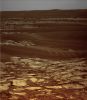
OPP-SOL1716-1P280528604ESF94B2P2280L2M2.jpgPaving and Ripples on the way to Endeavour (1) - Sol 1716 (tri-chromatic version; credits: Lunar Explorer Italia)130 visitenessun commentoMareKromium
|
|
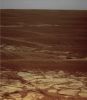
OPP-SOL1716-1P280529844ESF94B2P2280L2M1.jpgPaving and Ripples on the way to Endeavour (2) - Sol 1716 (tri-chromatic version; credits: Lunexit)76 visiteMareKromium
|
|
| 2387 immagini su 199 pagina(e) |
 |
|
|
|
|
47 | |
|
|
|
|








