After One-Thousand Soles...
|
|
|

OPP-SOL1679-1R277248847EFF91G3P1311R0M1.jpgLate Sun over Meridiani... - Sol 1679 (natural colors; credits: Lunexit)121 visitenessun commentoMareKromium
|
|
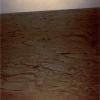
OPP-SOL1682-1P277505130EFF91G3P2367R1M1.jpgEtched Terrain near Victoria - Sol 1682 (possible natural colors; credits: Lunexit)77 visitenessun commentoMareKromium
|
|

OPP-SOL1683-PIA11750.jpgFarewell Victoria! - Sol 1683 (tri-chromatic version; credits: Lunar Explorer Italia)82 visiteCaption NASA:"Since leaving "Victoria Crater", Opportunity has picked up the pace of driving. In the 90 Soles since exiting the Crater, Opportunity has driven more than 1800 meters (1,1 miles), such as three times the distance that was required for the original prime mission.
Scientists expect to encounter younger rocks the farther South the Rover travels. They also expect to find small rocks ejected onto the landscape during formation of nearby craters and to reach these things, the Rover must avoid sand traps as much as possible.
Opportunity acquired this mosaic with the Navigation Camera on the Rover’s 1683rd Sol (Oct. 18, 2008), of exploration".MareKromium
|
|

OPP-SOL1687-1N277961511EFF92IRP1965R0M1.jpgInteresting Surface Details - Sol 1687 (natural colors; credits: Lunexit)115 visitenessun commentoMareKromium
|
|

OPP-SOL1687-MF.JPGThe Dunes of Meridiani - Sol 1687 (Sharp-colored Version; credits: Dr M. Faccin)71 visitenessun commentoMareKromium
|
|

OPP-SOL1687-PIA11743.jpgNorth-Eastern Meridiani - Sol 1687 (natural colors; credits: Lunar Explorer Italia)87 visiteCaption NASA:"This mosaic of frames from the Navigation Camera on NASA's Mars Exploration Rover Opportunity gives a view to the North-East from the Rover's position on its 1687th Sol (Oct. 22, 2008).
By that date, Opportunity had driven Southwestward from Victoria Crater, beginning a long trek toward a larger crater, Endeavour".MareKromium
|
|
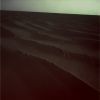
OPP-SOL1691-1N278320340EFF92X2P0703R0M1.jpgMeridiani Twilight - Sol 1691 (natural colors; credits: Lunexit)63 visitenessun commentoMareKromium
|
|

OPP-SOL1691-1P278319688EFF92X2P2373R1M1.jpgOn the way to the South: Sand Ripples - Sol 1691 (tri-chromatic version; credits: Lunexit)63 visiteCaption NASA:"Each day, Opportunity picks a route through two kinds of Martian terrain -- one hard and smooth, the other soft and sandy. Paving the way are flat-lying rocks formed long ago with help from liquid water. Threatening to bury the Rover's wheels are waves upon waves of sand ripples. Both features fill the region that separates the Mars Rover from Endeavour Crater.
In recent weeks, Opportunity has been putting the pedal to the metal.
Since leaving "Victoria Crater", Opportunity has driven almost a mile. Ahead are more miles of similar terrain and interesting things to see. Scientists expect to encounter younger rocks the farther South the Rover travels. They expect to find small rocks ejected onto the landscape when nearby craters were formed. To reach all these things, the Rover must avoid sand traps as much as possible, making the rippled terrain the road not traveled".MareKromium
|
|

OPP-SOL1693-1F278497680EFF9300P1211R0M1.jpgThe Future... - Sol 1693 (natural colors; credits: Lunexit)76 visitenessun commentoMareKromium
|
|

OPP-SOL1693-1R278497629EFF9300P1311R0M1.jpgFarewell to Victoria! - Sol 1693 (natural colors; credits: Lunexit)87 visitenessun commentoMareKromium
|
|

OPP-SOL1695-1P278661422EFF93AVP2375R2M1.jpgCosmic Ray? - Sol 1695 (natural colors; credits: Lunexit)63 visitenessun commentoMareKromium
|
|
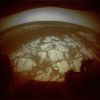
OPP-SOL1695-1R278661306EFF93AVP1311R0M1.jpgReddish Land, Dark Atmosphere... - Sol 1695 (possible natural colors; credits: Lunexit)64 visitenessun commentoMareKromium
|
|
| 2387 immagini su 199 pagina(e) |
 |
|
|
|
|
45 | |
|
|
|
|








