After One-Thousand Soles...
|
|
|
SOL1903-GB.jpgVolcanic Ashes and Dust? - Sol 1903 (possible True Colors; credits: Dr G. Barca)63 visitenessun commentoMareKromium
|
|
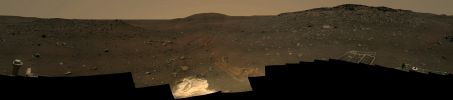
SOL1906-1943-Calypso_L257F_br2-2.jpgCalypso Panorama - from Sol 1906 to Sol 1943 (Natural Colors; credits: Dr G. Barca)88 visitenessun commentoMareKromium
|
|
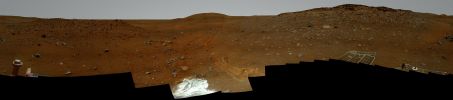
SOL1906-1943-Calypso_L257F_br2.jpgCalypso Panorama - from Sol 1906 to Sol 1943 (Natural Colors; credits: Lunexit)80 visitenessun commentoMareKromium
|
|
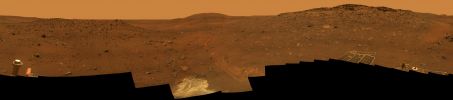
SOL1906-1943-Calypso_L257atc_br2.jpgCalypso Panorama - from Sol 1906 to Sol 1943 (Natural Colors; credits: NASA/JPL-Caltech/Cornell University)74 visiteCaption NASA:"This full-circle view from the Panoramic Camera (Pancam) on NASA's Mars Exploration Rover Spirit shows the terrain surrounding the location called "Troy", where Spirit became embedded in soft soil during the Spring of 2009. The hundreds of images combined into this view were taken beginning on the 1906th Martian Day (or Sol) of Spirit's Mission on Mars (such as May, 14, 2009) and ending on Sol 1943 (such as June, 20, 2009).
North is at the center; South at both ends. The Western Edge of the low plateau called Home Plate dominates the right half of the panorama. At the far right is a bright-topped mound called "Von Braun", a possible future destination for Spirit's exploration. Near the center of the panorama, in the distance, lies Husband Hill, where Spirit recorded views from the Summit in 2005. The ridge on the left, near the Rover Tracks leading to Troy from the North, is called "Tsiolkovsky".
For scale, the parallel tracks are about 1 meter (39 inches) apart. The track on the right is more evident because Spirit was driving backwards, dragging its right-front wheel, which no longer rotates.
The bright soil in the center foreground is soft material in which Spirit became embedded after the wheels on that side cut through a darker top layer. The composition of different layers in the soil at the site became the subject of intense investigation by tools on Spirit's Robotic Arm.
The PanCam Team named this scene the camera's Calypso Panorama.
This version is an Approximate True-Color, red-green-blue composite panorama generated from images taken through the Pancam's 750-nanometer, 530-nanometer and 480-nanometer filters.
This "Natural Color" view is the Rover Team's best estimate of what the scene would look like if we were there and able to see it with our own eyes.
Spirit has been investigating a region within Mars' Gusev Crater for more than 67 months in what was originally planned as a three-month mission".
Note Lunexit: la NASA, a quanto pare, confonde/mischia in maniera scandalosa il concetto di "True Colors" (ancorchè "approximate") con il concetto di "Natural Colors" - rileggete attentamente se non ci avete fatto caso.
Se la colorizzazione di questa immagine è, come scrivono gli Amici di Pasadena, la Best Estimate del Rover Team sul come la Piana di Gusev dovrebbe apparire ad occhi umani...beh, scusateci la presunzione, ma il loro livello tecnico a noi appare piuttosto imbarazzante...MareKromium
|
|
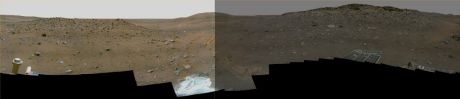
SOL1906-1943-Calypso_L257atc_br2_3.jpgCalypso Panorama - from Sol 1906 to Sol 1943 (Natural Colors; credits: Matteo Fagone)70 visiteUna realistica interpretazione dell'ormai famoso scorcio denominato "Calypso Panorama" ci è arrivata anche dall'Amico e Partner, Matteo Fagone.
L'unica "obiezione" che muoviamo al - comunque eccellente - Lavoro di Matteo è ben esplicitata nella porzione di Dx del panorama e riguarda un "punto di caduta" davvero frequentissimo per tutte le interpretazioni di Marte in Colori Naturali (da qualunque parte esse arrivino e chiunque le abbia realizzate): la Luminosità dell'Ambiente Marziano.
Dalla Superficie di Marte, infatti, NASA o non NASA e Cover-up o non Cover-Up, il Sole appare di un abbondante terzo più piccolo di come invece appare dalla Terra e, convinzioni personali a parte, la Luminosità (Media) dell'Ambiente che ne risulta, sia a causa dell'Opacità Atmosferica, sia a causa della Coltre Atmosferica (comunque di gran lunga più debole di quella Terrestre), non può che essere ampiamente più bassa rispetto alla Luminosità Media della Terra.
Come dire: forse Marte non sarà un Mondo dal "crepuscolo perpetuo" però, e se non altro a nostro parere, il Pianeta Rosso non può neppure essere (mediamente) luminoso quanto è (mediamente) luminosa la Terra.
Grandi Complimenti quindi a Matteo Fagone per il suo, ribadiamo, comunque eccellente Lavoro, che pubblichiamo con piacere (e che, va detto, è molto migliore delle brutture NASA, perennemente ripetitive e sempre "spennellate" di giallo/arancio a tinte ultra-forzate, ultra-coprenti ed ultra-irreali...)!
...e chiudiamo con quanto lo stesso Matteo Fagone ci dice, a proposito di questa interpretazione e della infinita querelle sui "Colori di Marte":"..."Fino a quando l'accesso alle tecnologie informatiche era ancora relativamente proibitivo e non c'era quindi una così vasta diffusione di hardware e software per l'editing fotografico, riusciva probabilmente più facile - come dire? - "imporre" una determinata visione o interpretazione "scientifica" (ma sopratutto "psicologica") dello Spazio Interplanetario.
Oggi, fortunatamente, la situazione è diversa: i computer sono alla portata di tutti ed i software per l'editing ed il fotoritocco costano relativamente poco. La morale della favola è che a certe "interpretazioni" non siamo più inclini ad abboccare tanto ingenuamente.
La conoscenza scientifica è anch'essa ben accessibile ed alla portata di più persone rispetto a come era decenni fa. E questo è da considerarsi un bene prezioso.
Poi, per carità, al Personale della NASA non si può che tributare affetto e stima: ci mancherebbe! Però... quando non la si pensa allo stesso modo, stare semplicemete zitti e passivi... no! Rispettosamente ed affettuosamente, noi esprimiamo il nostro parere e dissenso e ci dissociamo dall'egemonia cromatica degli Amici di Pasadena...".MareKromium
|
|
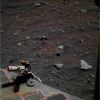
SOL1906-GB-LXT.jpgGray and Purple Surface near Spirit - Sol 1906 (possible True Colors; credits: Dr G. Barca)63 visitenessun commentoMareKromium
|
|
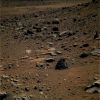
SOL1906-GB-LXT2.jpgPossible Volcanic Features - Sol 1906 (Natural Colors; credits: Dr G. Barca)63 visitenessun commentoMareKromium
|
|
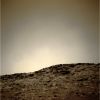
SOL1907-2N295663303EFFB1DNP1902L0M1.jpgBlurry Sky over Gusev Crater - Sol 1907 (Natural Colors; credits: Lunar Explorer Italia)63 visitenessun commentoMareKromium
|
|
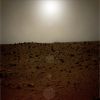
SOL1907-2N295663976EFFB1DNP1902R0M1.jpgPale Sun over Gusev Crater - Sol 1907 (Natural Colors; credits: Lunar Explorer Italia)63 visiteSpirit is embedded in loose, soft terrain on the west side of Home Plate. There is a real risk the Rover may be high-centered (underside touching) on a small mound of rocks right under its belly. Additionally, a left wheel motor stall occurred during the last Rover motion on Sol 1899 (May 6, 2009). No motion has been commanded since.
The project is engaged in a recovery activity. This involves extensive remote sensing observations by the rover of the local soil characteristics, and ground testing using the surface system testbed rover in the sandbox at JPL.
There has been no recurrence of the anomalous behavior that happened between Sol 1872 (April 9, 2009) and Sol 1881 (April 18, 2009). There is still no explanation for the previous anomalies, and the investigation is continuing.
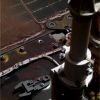
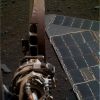
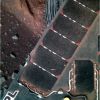
The week provided more good news about solar array energy. Spirit experienced yet another substantial solar array dust cleaning event. On Sol 1900 (May 7, 2009), energy production improved by about 30 percent. With the significant improvement in energy, the rover can now support morning UHF relay passes, which will help with the backlog of collected data onboard. The Mars Odyssey project has made special efforts to support this additional relay.
As of Sol 1905 (May 13, 2009), solar array energy production is estimated around 652 watt-hours, with atmospheric opacity (Tau) at 0,774. The dust factor has improved substantially to 0,678, meaning that 67,8% of Sunlight hitting the solar array penetrates the layer of dust on the array. As of Sol 1906 (May 14, 2009), Spirit's total odometry remains 7729,93 meters (4,8 miles).MareKromium
|
|
SOL1907-GB.jpgVERY Dusty Solar Panels... - Sol 1907 (Natural Colors; credits: Dr G. Barca)63 visitenessun commentoMareKromium
|
|
SOL1907-GB1.jpgBrown and Greenish Surface near Spirit - Sol 1907 (possible True Colors; credits: Dr G. Barca)63 visitenessun commentoMareKromium
|
|
SOL1908-1_copia2.jpgSolar Panel and Surface... - Sol 1908 (RAW Natural Colors; credits: Dr G. Barca)63 visitenessun commentoMareKromium
|
|
| 2387 immagini su 199 pagina(e) |
 |
|
|
|
|
183 | |
|
|
|
|








