After One-Thousand Soles...
|
|
|
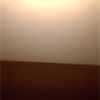
OPP-SOL1225-1P236931207EFF85R9P2629L6M1.jpgDark Skies over Opportunity (3) - Sol 122564 visite"While this only represents enough dust to coat the planet to about the thickness of a human hair, it is enough to decrease the brightness of the noon sun by 96% compared to a completely clear atmosphere", said Steve Squyres, Principal Investigator, Cornell University, Ithaca, N.Y.
"Of course, the solar arrays also receive light that is scattered from the dust, so the decrease in power is not nearly that great".
"We have not seen dust measurements this high on either rover before. If the dust levels were to increase further and stay elevated for several days, there is a risk to how well Opportunity could continue to work in this darkened environment", said Callas".MareKromium
|
|
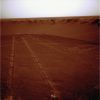
OPP-SOL1230-1N237373775EFF85R9P0099R0M1.jpgSearching for a "Way In" - Sol 123069 visiteLa ricerca, da parte di Opportunity, di un "punto d'ingresso" il quale sia sufficientemente sicuro per entrare nel bacino di Victoria, procede. Si può fare? E' saggio farlo?
Ebbene, è lo stesso Principal Investigator, Steve Squyres, a definire questa operazione "ad altissimo rischio". Insomma: l'Odissea di Opportunity potrebbe finire - e, stavolta, questa possibilità esiste seriamente - sui pendìi del Cratere Victoria.
Che dire? "Quanto è stato fatto sino ad ora - procede Steve - copre già da solo il valore dell'investimento ed anche il significato, in termini di scoperte, della Missione è più che ricco". Ok, noi siamo totalmente d'accordo.
Ma queste - pur legittime - considerazioni, valgono il rischio di (letteralmente) "buttar via" il MER per esplorare le sabbie fangose ed il rim di Victoria, allorchè la possibilità di protrarre - forse in maniera indeterminata - le peregrinazioni di Opportunity su Marte esiste ed è concreta?
Secondo noi, no.
Secondo noi l'idea di far entrare il MER Opportunity all'interno di Victoria, una volta premesso quanto sopra ed una volta chiaro che il Rover può viaggiare ancora per mesi e mesi (o magari addirittura per anni, se i "cleaning events" continueranno a lavorare così come hanno fatto sino ad ora) lungo le "Strade di Meridiani", è una cattiva idea.
O meglio: è un'idea stupida. Il che è anche peggio.
Poi, come ovvio, "Sia fatta la Volontà della NASA"...
E Voi, che ne pensate?MareKromium
|
|
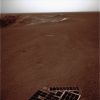
OPP-SOL1232-1N237560239EFF85W0P1993R0M1.jpgClearing Skies over Meridiani... (1) - Sol 123270 visitenessun commentoMareKromium
|
|
OPP-SOL1232-1N237560276EFF85W0P1993L0M1.jpgClearing Skies over Meridiani... (2) - Sol 123266 visitenessun commentoMareKromium
|
|
OPP-SOL1232-1N237560312EFF85W0P1993R0M1.jpgClearing Skies over Meridiani... (3) - Sol 123264 visitenessun commentoMareKromium
|
|

OPP-SOL1233-1N237644676ESF85W0P1569L0M1.jpgVictoria's Rim with Early Morning Fog - Sol 123380 visitenessun commentoMareKromium
|
|
OPP-SOL1233-1P237639492EFF85W0P2688L4M1.jpgAlmost Clear Skies over Meridiani (1) - Sol 123371 visitenessun commentoMareKromium
|
|
OPP-SOL1233-1P237639524EFF85W0P2688L5M1.jpgAlmost Clear Skies over Meridiani (2) - Sol 123379 visitenessun commentoMareKromium
|
|
OPP-SOL1233-1P237639549EFF85W0P2688L6M1.jpgAlmost Clear Skies over Meridiani (3) - Sol,123368 visitenessun commentoMareKromium
|
|
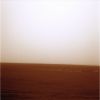
OPP-SOL1235-1P237817044EFF85W0P2689L4M1.jpgThe pale Sky over Meridiani (1 - natural colors, elab. Lunexit)79 visitenessun commentoMareKromium
|
|
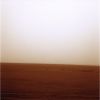
OPP-SOL1235-1P237817067EFF85W0P2689L5M1.jpgThe pale Sky over Meridiani (2 - natural colors, elab. Lunexit)83 visitenessun commentoMareKromium
|
|
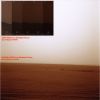
OPP-SOL1235-1P237817092EFF85W0P2689L6M1-00.jpgDark Skies? Clear Skies? Where's the truth?!?109 visiteNel riquadro superiore (scurissimo, quasi nero), l'evoluzione della luminosità del Cielo di Marte nei Soles andanti dal 1205 al 1235. Nel Sol 1235, praticamente, alle 10:53 a.m. sembra notte. Però...
Però in un frame originale NASA relativo al medesimo Dark-Sol - il Sol 1235 - e da noi rielaborato in colori naturali, la situazione appare DECISAMENTE e RADICALMENTE DIVERSA!!!
Come mai?
Forse il MER Opportunity ha fatto uso di filtri "fendipolvere" (anti A.O.) per il frame che abbiamo ingrandito a colorizzato noi, oppure è stato "eccessivo" il darkening adottato per colorizzare il frame-composite NASA (evidentemente elaborato - male - "a tavolino" da qualche Addetto un pò troppo pessimista sullo stato attuale della visibilità su Marte, Regione di Meridiani Planum?).
Voi che dite?
Caption NASA:"NASA's Opportunity rover is literally seeing some of its darkest days. Both Mars Exploration Rovers have been riding out a regional dust storm for several weeks. Conditions became particularly dreary in the Meridiani Planum region where Opportunity sits, perched on the edge of "Victoria Crater."
This image is a time-lapse composite where each horizon-survey image has been compressed horizontally (but not vertically) to emphasize the sky. The relative brightness and darkness of the sky from sol to sol (over a 30-sol period beginning June 14, 2007) is depicted accurately in these images, which view roughly the same part of the plains southwest of the rover. The images are approximately true color composites, generated from calibrated radiance data files using the panoramic camera's 601-nanometer, 535-nanometer and 482-nanometer filters.
The rovers' atmospheric science team is concerned that smaller, regional dust storms could expand into a larger, globe-encircling storm. That could extend the time the sun stays obscured, challenging the capability of Opportunity's solar panels to produce enough electricity for the rover to function.
Fortunately, as of July 19, 2007, the Opportunity site is clearing slightly. When the storm ends, atmospheric scientists hope to review data from the rovers that will help them determine what sort of dust was being lifted and distributed.
The numbers across the top of the image report a measurement of atmospheric opacity, called by the Greek letter tau. The lower the number, the clearer the sky. Both Opportunity and Spirit have been recording higher tau measurements in July 2007 than they had seen any time previously in their three and a half years on Mars. The five sol numbers across the bottom correspond (left to right) to June 14, June 30, July 5, July 13 and July 15, 2007".MareKromium
|
|
| 2387 immagini su 199 pagina(e) |
 |
|
|
|
|
16 | |
|
|
|
|








