After One-Thousand Soles...
|
|
|
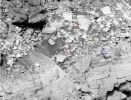
OPP-SOL1213-1P235878503EFF8.jpgWhat's in the Walls of Victoria? - Sol 121361 visiteUn bellissimo lavoro di scoperta, intuizione ed immaginazione del nostro Caro Amico (ed ormai Socio Storico) Lorenzo Leone. Lasciamo quindi che sia lui a parlare ed a suggerirci qualche possibile (e plausibile) interpretazione circa i "Segreti di Marte" (in generale) e di "Victoria Crater" (in particolare)...
"Ancora una volta un gioco di luci ed ombre? Chi può saperlo...Quello che io so è che Marte affascina sempre. Con i suoi colori, la sua geologia ignota e bizzarra.
Nel cerchio blu un possibile fossile; i cerchi rossi evidenziano rilievi circolariformi che sembrano lavorati a mano. Nel cerchio giallo troviamo inconsueti e perfetti angoli di 90° ma...Sappiamo che la Natura non ha né limiti, né confini.
Certo analizzando le cose dal un punto di vista logico e statistico, potremmo dire (sempre e comunque) che tutto è solo un gioco di luci, ombre e oggetti dalla forma bizzarra...Ma se si catalogassero tutte le rocce apparentemente "strane", forse non basterebbero 10 grossi volumi!
Noi, come sempre, possiamo solo ipotizzare, supporre, investigare, a volte sognare (che male non fa...) in attesa di una risposta o di una soluzione concreta.
Speriamo di esserci per quel giorno...".
MareKromium
|
|
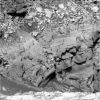
OPP-SOL1213-1P235878503EFF85MYP2442L2M1.jpgThe Inner Wall of Victoria - Sol 121362 visitenessun commentoMareKromium
|
|
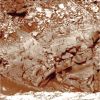
OPP-SOL1213-1P235878503EFF85MYP2442L2M1~0.jpgThe Inner Wall of Victoria (edited, false colors) - Sol 121363 visiteQualche esemplificazione delle "Victoria Oddities":
A: gruppi di rocce "ad incastro" e chiazze di materiale scuro che ricorda il "muschio";
B: prospettive illusorie ed ancora una chiazza scura come sub "A" (la NASA, a tal proposito, parla di possibili depositi di polveri);
C: forse un'ombra ingannevole, forse un'alterazione digitale del dettaglio o forse la conseguenza di uno stretch eccessivo del frame;
D: una roccia impossibile (ma anche in questo caso si potrebbe trattare di una distorsione causata dalla povera risoluzione del frame il quale è stato sottoposto ad un elevatissimo stretch);
E: apertura di uno "sfogo"?MareKromium
|
|
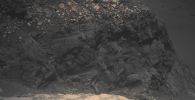
OPP-SOL1213-PIA10211-1.jpgCape St. Mary (natural - but highly darkened - colors; MULTISPECTRUM processing; credits: Lunexit)61 visiteCaption NASA:"Another of the best examples of spectacular cross-bedding in Victoria Crater are the outcrops at Cape St. Mary, which is an approx. 15 mt (45 foot) high promontory located along the Western Rim of Victoria Crater and near the beginning of the Rover's traverse around the rim. Like the Cape St. Vincent images, these Pancam Super-Resolution images have allowed scientists to discern that the rocks at Victoria Crater once represented a large dune field that migrated across this region.
This is a Mars Exploration Rover Opportunity PanCam image mosaic acquired on Sol 1213 (June 23, 2007), and was constructed from a mathematical combination of 32 different blue filter (480 nm) images".
Nota Lunexit: attraverso il darkening del frame originale e l'esaltazione dei contrasti, riteniamo di poter dire - con un ragionevole margine di certezza - che il "Paving" (di Victoria come di Endurance) ed il "Boulders Carpet" (tappeto di macigni) che paiono caratterizzare l'outer rim di questi Crateri, posseggono un'albedo molto più alta delle pareti dei Crateri stessi ed un colore molto più vicino all'argento/arancio, piuttosto che al giallo/cenere. Questi indizi, a nostro parere, sono il possibile indice di una matrice cristallina dei rilievi in questione (vetrificazione?); una matrice che potrebbe essere "responsabile" dei curiosi giochi di colore che i Crateri Victoria ed Endurance sembrano generare allorchè viene tentata la colorizzazione di frames ottenuti in particolari ore del giorno (e cioè con luci radenti e/o con luci perpendicolari al rim dei Crateri).MareKromium
|
|
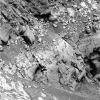
OPP-SOL1214-1P235957410EFF85NOP2445L2M1.jpgThe Inner Wall of Victoria - Sol 121460 visitenessun commentoMareKromium
|
|

OPP-SOL1216-2.jpgBig-Ones and Small-Ones... - Sol 1216 (Superdefinition + MULTISPECTRUM; credits: Dr G. Barca & Lunexit)61 visitenessun commentoMareKromium
|
|
OPP-SOL1220-1P236485422EFF85R9P2629L4M1.jpgMorning Mist over Victoria (1) - Sol 122064 visitenessun commentoMareKromium
|
|
OPP-SOL1220-1P236485480EFF85R9P2629L6M1.jpgMorning Mist over Victoria (2) - Sol 122062 visitenessun commentoMareKromium
|
|
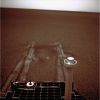
OPP-SOL1224-1N236844860EFF85R9P1963R0M1.jpgFresh wind-tails - Sol 1224 (natural colors - elab. Lunexit)62 visitenessun commentoMareKromium
|
|
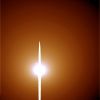
OPP-SOL1224-1P236858280EFF85R9P2682L5M1.jpgThe Sun through the dust - Sol 122471 visiteBoth MERs take daily measurements estimating the amount of dust in the atmosphere. The less dust the better, because it means more sunlight reaches the MERs' Solar Panels, which power the vehicles. In the last week, Opportunity has broken its dust record, with the Opacity level rising from 1.0 to 3.3.
Solar array energy on Opportunity dropped from 765 watt-hours to 402 watt-hours over the same period of time.
"While this only represents enough dust to coat the Planet to about the thickness of a human hair, it is enough to decrease the brightness of the noon sun by 96% compared to a completely clear atmosphere" said Steve Squyres, Principal Investigator, Cornell University, Ithaca, N.Y.
"Of course, the solar arrays also receive light that is scattered from the dust, so the decrease in power is not nearly that great".MareKromium
|
|

OPP-SOL1225-1P236931149EFF85R9P2629L4M1.jpgDark Skies over Opportunity (1) - Sol 122562 visiteA giant dust storm brewing for more than a week on Mars has become worse and is affecting surface operations of the MER Spirit and Opportunity. Because the Rovers depend on solar energy for survival, and the dust is partially blocking the Sun, the storm is being watched closely by the rover scientists and engineers.
Opportunity's entry into Victoria Crater is delayed for at least several days.
The storm, the most severe storm yet to hit the Rovers, is expected to continue for at least another week. Opportunity is perched near Duck Bay as it readies to descend into Victoria Crater, but operations were scaled back on Saturday, June 30, to conserve power.
"The storm is affecting both Rovers and reducing the power levels on Opportunity" said John Callas, MER Project Manager at NASA's JPL, Pasadena, Calif. "We are keeping an eye on this as we go forward, but our entry into Victoria Crater will be delayed until no sooner than July 13".
"We have some data that show the atmospheric opacity is decreasing, so the storm might have peaked and we may have passed the worst of this. The situation could improve quickly from here, but we will have to wait and see", said Callas.
Weather reports from NASA's Mars Reconnaissance Orbiter Mars Color Imager camera are helping track the storm and plan Rover operations. MareKromium
|
|

OPP-SOL1225-1P236931182EFF85R9P2629L5M1.jpgDark Skies over Opportunity (2) - Sol 122564 visitePictures from the orbiter's Mars Color Imager show the storm is regional in extent, and includes several local areas of especially high dust activity. The storm has been moving Eastward and toward Mid-Latitudes, and is now also causing an increase in atmospheric dust at Spirit's location, on the opposite side of the Planet, at Gusev Crater.
Dust levels at Gusev remain much lower than at the Opportunity site, however.
Both rovers take daily measurements estimating the amount of dust in the atmosphere. The less dust the better, because it means more sunlight reaches the rover's solar panels, which power the vehicles. In the last week, Opportunity has broken its dust record, with the opacity level rising from 1.0 to 3.3. Solar array energy on Opportunity dropped from 765 watt-hours to 402 watt-hours over the same period of time.MareKromium
|
|
| 2387 immagini su 199 pagina(e) |
 |
|
|
|
|
15 | |
|
|
|
|





