After One-Thousand Soles...
|
|
|
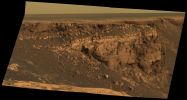
OPP-SOL1167-PIA09694.jpgCape St Vincent (approx. true colors - elab. NASA)60 visiteCaption NASA:"This image captured by NASA's MER Opportunity shows "Cape St. Vincent" one of the many promontories that jut out from the walls of Victoria Crater, Mars. The material at the top of the promontory consists of loose, jumbled rock, then a bit further down into the crater, abruptly transitions to solid bedrock.
This transition point is marked by a bright band of rock, visible around the entire crater.
Scientists say this bright band represents what used to be the surface of Mars before it was impacted to form Victoria Crater. As Opportunity begins to descend into the crater in early July 2007, it will examine the band carefully at an accessible location with a gentle slope.
These investigations might help determine if the band's brighter appearance is the result of ancient interactions with the Martian atmosphere.
This image was taken by Opportunity's PanCam on Sol 1167 (May 6, 2007).
It is presented in approximately true color".MareKromium
|
|
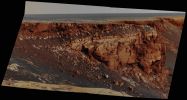
OPP-SOL1167-PIA09695-PCF-LXTT.jpgCape St Vincent - Sol 1167 (Enhanced Natural Colors; credits for the additional process. and color.: Dr Paolo C. Fienga - Lunexit Team)137 visitenessun commentoMareKromium
|
|
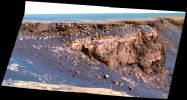
OPP-SOL1167-PIA09695.jpgCape St Vincent - Sol 1167 (False Colors; credits: NASA/JPL/Cornell)61 visiteCaption NASA:"This image captured by NASA's MER Opportunity shows "Cape St. Vincent" one of the many promontories that jut out from the walls of Victoria Crater. The material at the top of the promontory consists of loose, jumbled rock, then a bit further down into the crater, abruptly transitions to solid bedrock.
This transition point is marked by a bright band of rock, visible around the entire crater.
Scientists say this bright band represents what used to be the surface of Mars just before an impact formed Victoria Crater. After Opportunity begins to descend into the crater in early July 2007, it will examine the band carefully at an accessible location with a gentle slope. These investigations might help determine if the band's brighter appearance is the result of ancient interactions with the Martian atmosphere.
This image was taken by Opportunity's PanCam on Sol 1167 (May 6, 2007).
It is presented in false color to accentuate differences in surface materials". MareKromium
|
|

OPP-SOL1167-PIA10210-1.jpgCape St. Vincent (natural - but sligthly darkened - colors; MULTISPECTRUM processing; credits: Lunexit)62 visiteCaption NASA:"The cliff in this image from Opportunity's PanCam is informally named Cape St. Vincent. It is a promontory approx. 12 mt (39 feet) tall on the Northern Rim of Victoria Crater, near the farthest point along the Rover's traverse around the rim. Layers seen in Cape St. Vincent have proven to be among the best examples of meter scale cross-bedding observed on Mars to date. Cross-bedding is a geologic term for rock layers which are inclined relative to the horizontal and which are indicative of ancient sand dune deposits. In order to get a better look at these outcrops, Pancam Super-Resolution (SR) imaging techniques were utilized.
SR is a type of imaging mode which acquires many pictures of the same target to reconstruct a digital image at a higher resolution than is native to the camera.
These SR images have allowed scientists to discern that the rocks at Victoria Crater once represented a large Dunefield, not unlike the Sahara desert on Earth, and that this Dunefield migrated with an ancient wind flowing from the North to the South across the Region. Other Rover chemical and mineral measurements have shown that many of the ancient sand dunes studied in Meridiani Planum were modified by surface and subsurface liquid water long ago.
This is a Mars Exploration Rover Opportunity PanCam image acquired on Sol 1167 (May 7, 2007), and was constructed from a mathematical combination of 16 different blue filter (480 nm) images".MareKromium
|
|
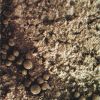
OPP-SOL1168-2.jpgBerries and "Greenish" Dust - Sol 1168 (Superdefinition + MULTISPECTRUM; credits: Dr G. Barca & Lunexit)73 visitenessun commentoMareKromium
|
|

OPP-SOL1171-1N232126810EDN827VP1585L0M1.jpgLate (and dusty) morning over Meridiani Planum - Sol 1171125 visitenessun commentoMareKromium
|
|
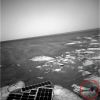
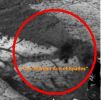
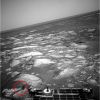
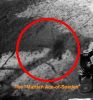
OPP-SOL1173-1N232319876EFF82__P1911L0M1-00.jpgThe "Martian Ace-of-Spades" (1) - context image - Sol 117370 visiteUn nuovo dettaglio della Superficie Marziana, davvero bizzarro ed estremamente intrigante, è stato individuato ed evidenziato anche oggi dal nostro ottimo Dr Gianluigi Barca su ben 2 distinti frames Opportunity.
Come certo saprete, la verifica dell'esistenza di un rilievo "bizzarro" attraverso frames diversi (consecutivi o non) è fondamentale per distinguere la semplice illusione ottica/svista dalla effettiva presenza di un qualcosa che, in ogni caso, vale la pena esaminare.
In questo frangente, come vedete, la Singolarità è data dalla presenza di un rilievo il quale ci ricorda (molto bene, diremmo!) un Asso di Picche.
Fantasia sfrenata? Illusione ottica? Svista? O magari "segnale" in codice?...
Questo non lo sa nessuno, ovviamente.
Ciò che sappiamo, invece, è che il nostro "Asso" si vede molto bene in 2 frames e quindi non è una svista nè un'illusione ottica determinata dal fatto che la ripresa è stata effettuata da un particolare angolo visuale.
Cosa resta, quindi? Resta la "Fantasia Sfrenata", il "Segnale in Codice" e, last but not least, la presenza di un rilievo superficiale curioso il quale, come ovvio, non è certo rappresentativo di un Asso di Picche (almeno nel senso terrestre del termine…).
Ecco: grazie al Dr Gianluigi Barca, anche in questo caso possiamo distinguere la realtà (il rilievo bizzarro, ma genuino - che si vede in frames differenti) dalla fantasia e dalla pura speculazione (l'Asso di Picche).
La differenza fra i Privati Ricercatori ed i cialtroni, a questo punto, la fa l'Onestà Intellettuale.
Quella stessa Onestà che ci fa dire, adesso come mille altre volte, che ciò che si vede in questi frames SEMBRA un Asso di Picche e noi, per sorridere, ci scherziamo sopra pur sapendo benissimo che il solo parlare di "Asso di Picche Marziano" è una (simpatica e leggera) sciocchezza.
Peccato che, come dice il nostro Amico, Collega e Socio - Dr A. Feltri - "il Buon Senso, la Razionalità ed il Pragmatismo, in questo Mondo, non paghino il becco di un quattrino"...
MareKromium
|
|
OPP-SOL1173-1N232319876EFF82__P1911L0M1-01.jpgThe "Martian Ace-of-Spades" (2) - extra-detail mgnf - Sol 117360 visitenessun commentoMareKromium
|
|
OPP-SOL1173-1N232320087EFF82__P1911L0M1-00.jpgThe "Martian Ace-of-Spades" (3) - context image - Sol 117360 visitenessun commentoMareKromium
|
|
OPP-SOL1173-1N232320087EFF82__P1911L0M1-01.jpgThe "Martian Ace-of-Spades" (4) - extra-detail mgnf - Sol 117365 visitenessun commentoMareKromium
|
|

OPP-SOL1176-1M232582439EFF82__P2936M2M1.jpg"Newborn" Berries in the crack? - Sol 1176 (False Colors; credits: Lunexit)61 visiteNella crepa (crack) di questa roccia (che - presumiamo - potrebbe anche essere una porzione della Pavimentazione Marziana più prossima ad Opportunity) si distinguono piuttosto chiaramente dei Martian Berries. L'ipotesi tradizionale (e, sicuramente, la più accreditata) ci dice che si tratta di mini-berries (ossìa di sferule rocciose appena più grandi dei granelli di sabbia che potremmo trovare su qualsiasi spiaggia terrestre) i quali, trasportati/spinti dal vento, sono rimasti intrappolati nelle fenditure delle rocce e pavimentazioni vicine al margine di Victoria Crater. Sarà andata realmente così?
Forse. O forse no.
Ci piacerebbe capire, infatti, per poter rispondere adeguatamente, se questa crepa che vediamo è effettivamente una crepa, oppure se si tratta di una fenditura la quale congiunge la superficie di Marte ad un (probabilmente molto attivo, caldo e, forse, in parte vitale) sottosuolo.
Insomma, la nostra (esotica, lo ammettiamo) domanda è: questi "berries" si sono infilati nella crepa dall'esterno (ribadiamo, poichè spinti dal vento e/o da altre forze che appartengono all'ambiente marziano "aperto"), oppure essi stanno fuoriuscendo dall'interno della roccia?
Pensateci anche Voi...MareKromium
|
|
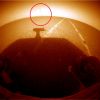
OPP-SOL1196-1F234369336EFF84GZP1212R0M1-1.jpgDark "Streak" (context image) - Sol119662 visiteNella Cerchiatura Rossa ci appare, come ben segnalatoci dal Dr Gianluigi Barca (che ringraziamo per la costante attenzione e dedizione), un "dark streak" (o "striscia di colore scuro") la cui natura è davvero difficile - se non impossibile - da definire.
Le nostre ipotesi le troverete nel frame che segue. MareKromium
|
|
| 2387 immagini su 199 pagina(e) |
 |
|
|
|
|
13 | |
|
|
|
|





