| |
| Categoria |
Album |
Immagini |
|
33 |
3222 |
|
|
|
|
|
|
|
|
|
|
|
|
|
|
|
|
| 33 album su 3 pagina(e) |
1 |
|

|
|
23 |
2207 |
|
|
|
|
|
|
|
|
|
|
|
|
|
|
|
|
| 23 album su 2 pagina(e) |
1 |
|
|
|
24 |
13519 |
|
|
|
|
|
|
|
|
|
|
|
|
|
|
|
|
| 24 album su 2 pagina(e) |
1 |
|
|
|
20 |
4561 |
|
|
|
|
|
|
|
|
|
|
|
|
|
|
|
|
| 20 album su 2 pagina(e) |
1 |
|
|
| DEEP SKYImages From Beyond, Words From Within |
|
4 |
1917 |
|
| 25472 file in 105 album e 5 categorie con 25219 commenti, visti 3659295 volte |
| Immagini a caso |

as10-27-3944.jpgAS 10-27-3944 - Mare Australe and Mare Nectaris (Special Processing by Lunexit)85 visitenessun commentoMareKromium
|
|

M-067-1.jpgM 67 (NGC 2682) - Open Star Cluster88 visite"...Ne credas aurum quidquid resplendet ut aurum..."
(Binder)
"...E' da stolti prendere per oro tutto ciò che luccica come l'oro..."
|
|
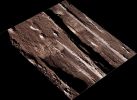
PHOE-SOL138-lg40031-40032-40033-3.jpgThe "Trenches" in Perspective - Sol 138 (Superdefinition and possible True Colors; credits: Dr G. Barca)71 visitenessun commentoMareKromium
|
|
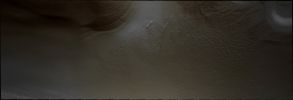
South_Polar_Feartures-Layers-20090223a-PCF-LXTT.jpgSouth Polar Spring (Darkened Absolute Natural Colors; credits for the additional process. and color.: Dr Paolo C. Fienga - Lunar Explorer Italia)86 visiteCoord. 84,4° South Lat. and 313,9° East Long.MareKromium
|
|

ESP_023359_1710_RED_abrowse-PCF-LXTT-01.jpgFeatures of Noctis Labyrinthus (EDM - Enhanced Absolute Natural Colors; credits for the additional process. and color: Dr Paolo C. Fienga - Lunexit Team)152 visiteMars Local Time: 14:01 (early afternoon)
Coord. (centered): 9,0° South Lat. and 264,1° East Long.
Spacecraft altitude: 280,8 Km (such as about 175,5 miles)
Original image scale range: 28,1 cm/pixel (with 1 x 1 binning) so objects ~ 84 cm across are resolved
Map projected scale: 25 cm/pixel
Map projection: EQUIRECTANGULAR
Emission Angle: 23,8°
Sun-Mars-Spacecraft (or "Phase") Angle: 53,8°
Solar Incidence Angle: 30° (meaning that the Sun is about 60° above the Local Horizon)
Solar Longitude: 331,8° (Northern Winter)
Credits: NASA/JPL/University of Arizona
Additional process. and coloring: Dr Paolo C. Fienga - Lunar Explorer ItaliaMareKromium
|
|
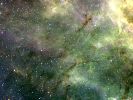
The_Tarantula_Nebula-R136.jpgInside the Large Magellanic Cloud: the "Tarantula Nebula"130 visite"It matters not to me whether my work is read now, today, or by Posterity, a thousand or more years from now.
I can easily wait a century for my Readers, since God himself has waited for a Watcher for six thousand years.
Mine is a triumph: I have stolen the Golden Secret of the Egyptians, and now, I want to abandon myself to my Sacred Fury."
(Traduzione)
"...Non mi importa che la mia opera venga letta ora, oggi, o dalla Posterità, fra mille e più di mille anni.
Potrò tranquillamente aspettare un secolo i miei Lettori, poiché Dio stesso ha atteso un Osservatore per seimila anni.
Il mio è un trionfo: ho rubato l'Aureo Segreto degli Egiziani ed ora, voglio abbandonarmi al mio Sacro Furore..."
Edgar Allan Poe - "Eureka"
|
|

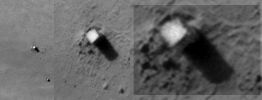
SOU-SOL047.jpgFlat-Top Rock - Sol 47102 visitenessun commento
|
|

SOL332-2N155845220EFF9946P0653R0M1.jpgTracks, stones and distant hills (3)67 visitenessun commento
|
|
| Ultimi arrivi |

SupernumeraryRainbows_Entwistle_1362.jpgSupernumerary Rainbows (Credit & Copyright: John Entwistle)101 visiteAfter the remnants of Hurricane Florence passed over the Jersey Shore, New Jersey, USA in 2018, the Sun came out in one direction but something quite unusual appeared in the opposite direction: a hall of rainbows. Over the course of the next half hour, to the delight of the photographer and his daughter, vibrant supernumerary rainbows faded in and out, with at least five captured in this featured single shot. Supernumerary rainbows only form when falling water droplets are all nearly the same size and typically less than a millimeter across. Then, sunlight will not only reflect from inside the raindrops, but interfere, a wave phenomenon similar to ripples on a pond when a stone is thrown in. In fact, supernumerary rainbows can only be explained with waves, and their noted existence in the early 1800s was considered early evidence of light's wave nature.MareKromiumOtt 09, 2026
|
|

Smile_s_first_ultraviolet_footage_shows_auroral_substorm.gifAuroral Oval (Credits: ESA, CAS, SMILE, UVI)89 visiteHave you ever seen a complete auroral oval? You can't see one from the ground because it makes too large a circle around one of Earth's magnetic poles. But spacecraft high above the Earth can see them. The featured video from ESA and CAS's robotic SMILE spacecraft shows not only a full auroral oval, but using ultraviolet light, one that occurred during the day. The time-lapse covers about an hour in late July and shows visually how variable and turbulent auroras really are. The points of light on the sides are distant stars that appear to move only because SMILE's camera view shifts as the spacecraft orbits the Earth. A goal of SMILE is to better understand how the Sun's wind interacts with the Earth's magnetosphere -- and so better understand how to protect astronauts, spacecraft, and ground-based electrical grids from solar storms.MareKromiumOtt 09, 2026
|
|

0101-Mc_Getchin_Crater_-_2.jpgA New Lunar Crater: Mc Getchin (Credits: NASA/GSFC/Intuitive Machines)148 visiteA once-in-a-lifetime crater has appeared on the Moon! A comet or asteroid roughly the size of a humpback whale (approximately 10-20 meters, 30-60 feet) crashed into the Moon sometime between April and May of 2024. The Lunar Reconnaissance Orbiter (LRO), with its monthly monitoring of the Moon, captured today’s images of the lunar surface before and after the event. The resulting crater, named after Apollo-era lunar scientist McGetchin, is two soccer fields across. Craters of this size are only expected once every 132 years! Follow up thermal imaging revealed a large cold spot that surrounds the warm crater. Surface impacts will puff up the loose lunar sediment, or regolith, making it less dense and harder to retain heat. This event affected an area much larger than the visible crater, which will inform humanity’s understanding of surface impacts and the evolution of the Moon’s surface. It also reminds us all to be thankful for Earth's atmosphere.MareKromiumSet 28, 2026
|
|

0100-Mc_Getchin_Crater_-_1.jpgA New Lunar Crater: McGetchin (Credits: NASA/GSFC/Intuitive Machines)151 visiteA once-in-a-lifetime crater has appeared on the Moon! A comet or asteroid roughly the size of a humpback whale (approximately 10-20 meters, 30-60 feet) crashed into the Moon sometime between April and May of 2024. The Lunar Reconnaissance Orbiter (LRO), with its monthly monitoring of the Moon, captured today’s images of the lunar surface before and after the event. The resulting crater, named after Apollo-era lunar scientist McGetchin, is two soccer fields across. Craters of this size are only expected once every 132 years! Follow up thermal imaging revealed a large cold spot that surrounds the warm crater. Surface impacts will puff up the loose lunar sediment, or regolith, making it less dense and harder to retain heat. This event affected an area much larger than the visible crater, which will inform humanity’s understanding of surface impacts and the evolution of the Moon’s surface. It also reminds us all to be thankful for Earth's atmosphere.MareKromiumSet 28, 2026
|
|

CallanishAnalemma_Petricca_960_Dates.jpgAnalemma over the Callanish Stones137 visiteIf you went outside at the same time every day and took a picture that included the Sun, how would the Sun's position change? A visual answer to that question is an analemma, a composite image taken from the same spot at the same time over the course of a year. The featured analemma was composed from images taken every few days at noon near the village of Callanish in the Outer Hebrides in Scotland, UK. In the foreground are the Callanish Stones, a stone circle built around 2700 BC during humanity's Bronze Age. It is not known if the placement of the Callanish Stones has or had astronomical significance. The ultimate causes for the figure-8 shape of this and all analemmas are the tilt of the Earth axis and the ellipticity of the Earth's orbit around the Sun. At the solstices, the Sun will appear at the top or bottom of an analemma. The featured image was taken near the December solstice and so the Sun appears near the bottom. Equinoxes, however, correspond to analemma middle points -- not the intersection point. In two days there will be an equinox ("equal night"), when day and night are equal over all of planet Earth. Many cultures celebrate a change of season at an equinox.MareKromiumSet 28, 2026
|
|

MoonVenus_Mariat_960.jpgA Daytime Eclipse: Moon Occults Venus (Image Credit & Copyright: Arnaud Mariat)171 visite"Laut Quantenmechanik ist Materie niemals träge, sondern befindet sich in ständiger Bewegung. Auf makroskopischer Ebene erscheinen uns die materiellen Objekte passiv und träge, doch wenn wir ein scheinbar „totes“ Stück Stein oder Metall vergrößern, sehen wir es voller Aktivität. Je genauer wir hinsehen, desto lebendiger wirkt es."
Fritjof Capra, Das Tao der Physik, 1975
(Traduzione)
"Secondo la meccanica quantistica, la materia non è mai inerte, ma è costantemente in uno stato di moto. A livello macroscopico, gli oggetti materiali che ci circondano sembrano passivi e inerti, ma quando ingrandiamo un frammento apparentemente «morto» di pietra o di metallo, vediamo che ribolle di attività. Quanto più lo guardiamo da vicino, tanto più esso appare vivo."MareKromiumSet 16, 2026
|
|
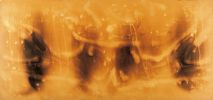
Y__Klein_On-Fire.jpgThe Fire of the Human Mind (Credits: Yves Klein)219 visiteAlbert Einstein: „Gott würfelt nicht mit dem Universum.“
Niels Bohr (Antwort): „Hört auf, Gott vorzuschreiben, was er mit seinen Würfeln machen soll!“
(Traduzione)
Albert Einstein: "Dio non gioca a dadi con l'universo.
Niels Bohr (rispondendogli): "Smetti di dire a Dio cosa dovrebbe fare con i suoi dadi!"MareKromiumSet 15, 2026
|
|
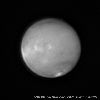
1010_Mars-Possible_Volcanic_Phenomenon-20-March-2012-03.gifPowerful Meteor Strike or Massive Volcanic Event on Mars? 1 - GIF Movie; Credits: Wayne Jaeschke260 visiteThe event captured by Astro photographer Wayne Jaeschke on the night of March 20, 2012, is certainly epochal, whatever its cause might be.
But let's try to understand something and, at the same time, try to make some informed speculation.
So: these are definitely not "normal" cloud formations. Their altitude (note that their tops are already visible while they are still behind the visible portion of Mars, as to Earth), configuration and direction, in fact, rule out this possibility.
Clouds, as such, follow the motion of the planet to which they refer (that is, they generally follow longitudinal movements), and therefore position themselves, relative to an observer, as parallel or semi-parallel to the observed horizon plane and all this applies even if one observes clouds driven by jet streams (these are the so-called "super-rotating clouds", such as clouds traveling faster than the orbital velocity of the reference planet).MareKromiumSet 06, 2026
|
|
|
|