| |
| Category |
Albums |
Files |
|
33 |
3,222 |

|
|
23 |
2,207 |
|
|
24 |
13,519 |
|
|
20 |
4,561 |
|
| DEEP SKYImages From Beyond, Words From Within |
|
4 |
1,917 |
|
| 25,472 files in 105 albums and 5 categories with 25,219 comments viewed 3,658,895 times |
| Random files |

ZZ-ZZ-V-Flare from Clem.jpgTransient Lunar Phoenomena (TLP) - 2212 viewsEccoVi due testimonianze (decisamente autorevoli) riguardo a questi strani fenomeni, estratte dall'articolo 'LTP-Lunar Transient Phoenomena' di W.S. Cameron:"On the night of November 2, 1958, Soviet astronomer Nikolai A. Kozyrev witnessed a strange phenomenon while making spectrograms of the crater Alphonsus with the Crimean Astrophysical Observatory's 50-inch reflector. As he watched through the telescope's guiding eyepiece, he saw the crater's central peak blur and turn an unusual reddish color. The spectrograms confirmed his visual impressions of a volcanic event; they showed an emission spectrum of carbon vapor (S&T: February, 1959, page 184).
On July 19, 1969, the Apollo 11 command module had just achieved orbit around the Moon when the Mission Control Center in Houston received word that amateur astronomers reported a TLP in the vicinity of the crater Aristarchus. Asked to check out the situation, astronaut Neil Armstrong looked out his window toward the earthlit region and observed an "area that is considerably more illuminated than the surrounding area. It just has -- seems to have a slight amount of fluorescence to it." Although he wasn't sure, Armstrong believed the region was Aristarchus".
|
|
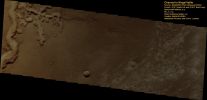
Channels-Unnamed_Channel_in_Nirgal_Vallis-MO-20090706a.jpgTributary Channel in Nirgal Vallis (Natural Colors; credits for the additional process. and color.: Dr Paolo C. Fienga - Lunexit Team)93 viewsnessun commentoMareKromium
|
|
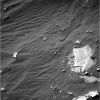
SOL817-2P198896391EFFAR00P2281R1M1.jpgFresh "cracks" on the Martian Surface (2) - Sol 81778 viewsCaption originale:"Right PanCam Non-linearized Full frame EDR acquired on Sol 817 of Spirit's mission to Gusev Crater at approximately 13:06:25 MLT. Camera commanded to use Filter 1 (436 nm)".
|
|

South_Polar_Features-Thawing_Time.gifThawing (GIF-Movie; credits for the additional process.: Mars Unearthed)137 viewsnessun commentoMareKromium
|
|

Asteroids-Polymele.jpg15094-Polymele205 viewsUna luna sconosciuta! Anzi, una mini-luna di un piccolo steroide! La Verità è che non si può dire ancora nulla con certezza, ad oggi.
Certo è che trattasi di un minuscolo Corpo Celeste: un piccolo oggetto roccioso che orbita intorno a un Asteroide (15094-Polymele) vicino a Giove. Le dimensioni? Leggermente superiori a quelle di Manhattan (NY-NY). Se le prossime analisi confermeranno che si tratta effettivamente di una luna, sarebbe uno dei più piccoli satelliti mai individuati nel Sistema Solare.
Il satellite nano è stato scoperto da un gruppo di scienziati che lavorano alla missione Lucy della Nasa: l’obiettivo è inviare una sonda per studiare alcuni degli asteroidi Troiani (Trojans): due grossi gruppi di rocce vaganti nei pressi di Giove. Ma non proprio “attorno”: il campo gravitazionale del Gigante Gassoso, insieme a quello del Sole, controlla un Sistema Complesso di Corpi Celesti, detti appunto "Asteroidi Troiani", che si trovano in corrispondenza di alcuni Punti di Equilibrio (Lagrange Points) di questo rapporto gravitazionale. In quelle regioni la risultante fra l'Attrazione Gravitazionale complessiva esercitata da questi due Corpi Celesti (Giove ed il Sole) e la Forza Centrifuga (Apparente) è pari a 0 (Zero).
La missione esplorativa "Lucy", dedicata per la precisione a quattro di questi Asteroidi (dovrà eseguire sorvoli ravvicinati di 3548-Eurybates, 15094-Polymele, 11351 Leucus e 21900-Horus), ha avuto inizio il 16 ottobre 2021 con il lancio da Cape Canaveral, in Florida. L’arrivo nella "Nuvola Troiana" L4 (Lagrange Point 4) è previsto per la fine del 2027, dopo una breve sosta nella Cintura (Belt) di Asteroidi situata fra Marte e Giove (la cosiddetta “Fascia Principale”). Mentre Lucy, pur con un pannello solare a mezzo servizio, vola verso i suoi obiettivi, gli esperti a Terra studiano l’ambiente in cui arriverà, cercando di identificare dove il suo lavoro potrebbe avere più successo ed essere dunque più utile.
Lo scorso 27 Marzo (2022) il più piccolo dei bersagli di Lucy, 15094 - Polymele, è transitato di fronte a una stella distante, consentendo agli scienziati di misurare le dimensioni dell’Asteroide. L’osservazione ha appunto riservato una sorpresa: un punto più piccolo seguiva la scia di Polymele.
Dopo aver approfondito i dati si è capito che deve trattarsi di un satellite. Avrebbe un diametro di appena 5 Km e ne dovrebbe distare circa 200 dalla piccola roccia "Primaria" (Polymele), a sua volta del diametro di circa 27 Km. Al momento dell’osservazione, Polymele si trovava a 772 MKM dalla Terra.
"Quelle distanze sono più o meno equivalenti a trovare un quarto di dollaro su un marciapiede a Los Angeles mentre si cerca di individuarlo da un grattacielo a Manhattan" ha scritto la Nasa in un comunicato. Nel Sistema solare sono state individuate oltre 200 lune (senza includere quelle degli Asteroidi), un termine che può essere applicato a ogni oggetto solido che orbiti intorno ad un Pianeta, ad un Asteroide, o ad un Pianeta Nano".
Per il momento i Ricercatori possono effettuare solo osservazioni fugaci dell'ipotetico satellite di 15094 - Polymele; quindi, il suo percorso orbitale è molto incerto. Di conseguenza, la roccia spaziale non può ancora essere ufficialmente designata come luna. Ma i ricercatori sono fiduciosi che quando Lucy arriverà da quelle parti, la navicella sarà in grado di raccogliere dati sufficienti per attribuirle il titolo che probabilmente le spetta.MareKromium
|
|

SOL539-2P174219455EFFACB9P2296L5M1.jpg"Airplane" or "Cross-like" drawing on a stone (1) - Sol 53998 viewsUn dettaglio davvero molto suggestivo e decisamente intrigante è stato raccolto dall'eccellente occhio dell'Amico Massimo GRANZO: siamo durante il Sol 539 e, mentre dalla Terra stanno cercando di decidere che strada seguire per raggiungere il Summit di Husband Hill, la Left PanCam del Rover coglie, alle 14:11:48 MLT, uno dei soliti boulder che costellano l'intero paesaggio Marziano. Ma questo boulder, come ha notato il Sig. Granzo, possiede una caratteristica davvero peculiare che lo rende, nel suo genere, unico: si tratta del curioso "disegno", di colore chiaro, che spicca sulla sua sommità. Una sorta di aereo, come lo disegnerebbe un bambino, o una specie di croce.
Come ben sapete, in casi come questi, ognuno può decidere di vedere quello che vuole ma, ad un'analisi più dettagliata del frame, sono apparsi altri particolari interessanti. Eccoli:
1. lo "sbuffo" bianco, alla base del boulder - e che abbiamo evidenziato con la cerchiatura rossa - costituisce un rilievo tecnicamente impossibile...
|
|

SOL736-MI-1.jpgLava? - Sol 736 (True Colors + MULTISPECTRUM; credits: Dr M. Faccin & Lunexit)71 viewsnessun commentoMareKromium
|
|

Prometheus_and_Friends-EB.gifSingle Tone (GIF-Movie; credits: Elisabetta Bonora - Lunexit Team)88 viewsnessun commentoMareKromium
|
|
| Last additions |

SupernumeraryRainbows_Entwistle_1362.jpgSupernumerary Rainbows (Credit & Copyright: John Entwistle)101 viewsAfter the remnants of Hurricane Florence passed over the Jersey Shore, New Jersey, USA in 2018, the Sun came out in one direction but something quite unusual appeared in the opposite direction: a hall of rainbows. Over the course of the next half hour, to the delight of the photographer and his daughter, vibrant supernumerary rainbows faded in and out, with at least five captured in this featured single shot. Supernumerary rainbows only form when falling water droplets are all nearly the same size and typically less than a millimeter across. Then, sunlight will not only reflect from inside the raindrops, but interfere, a wave phenomenon similar to ripples on a pond when a stone is thrown in. In fact, supernumerary rainbows can only be explained with waves, and their noted existence in the early 1800s was considered early evidence of light's wave nature.MareKromiumOct 09, 2026
|
|

Smile_s_first_ultraviolet_footage_shows_auroral_substorm.gifAuroral Oval (Credits: ESA, CAS, SMILE, UVI)89 viewsHave you ever seen a complete auroral oval? You can't see one from the ground because it makes too large a circle around one of Earth's magnetic poles. But spacecraft high above the Earth can see them. The featured video from ESA and CAS's robotic SMILE spacecraft shows not only a full auroral oval, but using ultraviolet light, one that occurred during the day. The time-lapse covers about an hour in late July and shows visually how variable and turbulent auroras really are. The points of light on the sides are distant stars that appear to move only because SMILE's camera view shifts as the spacecraft orbits the Earth. A goal of SMILE is to better understand how the Sun's wind interacts with the Earth's magnetosphere -- and so better understand how to protect astronauts, spacecraft, and ground-based electrical grids from solar storms.MareKromiumOct 09, 2026
|
|

0101-Mc_Getchin_Crater_-_2.jpgA New Lunar Crater: Mc Getchin (Credits: NASA/GSFC/Intuitive Machines)148 viewsA once-in-a-lifetime crater has appeared on the Moon! A comet or asteroid roughly the size of a humpback whale (approximately 10-20 meters, 30-60 feet) crashed into the Moon sometime between April and May of 2024. The Lunar Reconnaissance Orbiter (LRO), with its monthly monitoring of the Moon, captured today’s images of the lunar surface before and after the event. The resulting crater, named after Apollo-era lunar scientist McGetchin, is two soccer fields across. Craters of this size are only expected once every 132 years! Follow up thermal imaging revealed a large cold spot that surrounds the warm crater. Surface impacts will puff up the loose lunar sediment, or regolith, making it less dense and harder to retain heat. This event affected an area much larger than the visible crater, which will inform humanity’s understanding of surface impacts and the evolution of the Moon’s surface. It also reminds us all to be thankful for Earth's atmosphere.MareKromiumSep 28, 2026
|
|

0100-Mc_Getchin_Crater_-_1.jpgA New Lunar Crater: McGetchin (Credits: NASA/GSFC/Intuitive Machines)151 viewsA once-in-a-lifetime crater has appeared on the Moon! A comet or asteroid roughly the size of a humpback whale (approximately 10-20 meters, 30-60 feet) crashed into the Moon sometime between April and May of 2024. The Lunar Reconnaissance Orbiter (LRO), with its monthly monitoring of the Moon, captured today’s images of the lunar surface before and after the event. The resulting crater, named after Apollo-era lunar scientist McGetchin, is two soccer fields across. Craters of this size are only expected once every 132 years! Follow up thermal imaging revealed a large cold spot that surrounds the warm crater. Surface impacts will puff up the loose lunar sediment, or regolith, making it less dense and harder to retain heat. This event affected an area much larger than the visible crater, which will inform humanity’s understanding of surface impacts and the evolution of the Moon’s surface. It also reminds us all to be thankful for Earth's atmosphere.MareKromiumSep 28, 2026
|
|

CallanishAnalemma_Petricca_960_Dates.jpgAnalemma over the Callanish Stones137 viewsIf you went outside at the same time every day and took a picture that included the Sun, how would the Sun's position change? A visual answer to that question is an analemma, a composite image taken from the same spot at the same time over the course of a year. The featured analemma was composed from images taken every few days at noon near the village of Callanish in the Outer Hebrides in Scotland, UK. In the foreground are the Callanish Stones, a stone circle built around 2700 BC during humanity's Bronze Age. It is not known if the placement of the Callanish Stones has or had astronomical significance. The ultimate causes for the figure-8 shape of this and all analemmas are the tilt of the Earth axis and the ellipticity of the Earth's orbit around the Sun. At the solstices, the Sun will appear at the top or bottom of an analemma. The featured image was taken near the December solstice and so the Sun appears near the bottom. Equinoxes, however, correspond to analemma middle points -- not the intersection point. In two days there will be an equinox ("equal night"), when day and night are equal over all of planet Earth. Many cultures celebrate a change of season at an equinox.MareKromiumSep 28, 2026
|
|

MoonVenus_Mariat_960.jpgA Daytime Eclipse: Moon Occults Venus (Image Credit & Copyright: Arnaud Mariat)171 views"Laut Quantenmechanik ist Materie niemals träge, sondern befindet sich in ständiger Bewegung. Auf makroskopischer Ebene erscheinen uns die materiellen Objekte passiv und träge, doch wenn wir ein scheinbar „totes“ Stück Stein oder Metall vergrößern, sehen wir es voller Aktivität. Je genauer wir hinsehen, desto lebendiger wirkt es."
Fritjof Capra, Das Tao der Physik, 1975
(Traduzione)
"Secondo la meccanica quantistica, la materia non è mai inerte, ma è costantemente in uno stato di moto. A livello macroscopico, gli oggetti materiali che ci circondano sembrano passivi e inerti, ma quando ingrandiamo un frammento apparentemente «morto» di pietra o di metallo, vediamo che ribolle di attività. Quanto più lo guardiamo da vicino, tanto più esso appare vivo."MareKromiumSep 16, 2026
|
|
Y__Klein_On-Fire.jpgThe Fire of the Human Mind (Credits: Yves Klein)219 viewsAlbert Einstein: „Gott würfelt nicht mit dem Universum.“
Niels Bohr (Antwort): „Hört auf, Gott vorzuschreiben, was er mit seinen Würfeln machen soll!“
(Traduzione)
Albert Einstein: "Dio non gioca a dadi con l'universo.
Niels Bohr (rispondendogli): "Smetti di dire a Dio cosa dovrebbe fare con i suoi dadi!"MareKromiumSep 15, 2026
|
|
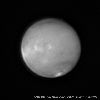
1010_Mars-Possible_Volcanic_Phenomenon-20-March-2012-03.gifPowerful Meteor Strike or Massive Volcanic Event on Mars? 1 - GIF Movie; Credits: Wayne Jaeschke260 viewsThe event captured by Astro photographer Wayne Jaeschke on the night of March 20, 2012, is certainly epochal, whatever its cause might be.
But let's try to understand something and, at the same time, try to make some informed speculation.
So: these are definitely not "normal" cloud formations. Their altitude (note that their tops are already visible while they are still behind the visible portion of Mars, as to Earth), configuration and direction, in fact, rule out this possibility.
Clouds, as such, follow the motion of the planet to which they refer (that is, they generally follow longitudinal movements), and therefore position themselves, relative to an observer, as parallel or semi-parallel to the observed horizon plane and all this applies even if one observes clouds driven by jet streams (these are the so-called "super-rotating clouds", such as clouds traveling faster than the orbital velocity of the reference planet).MareKromiumSep 06, 2026
|
|
|
|