| |

|
|
|
|
|
|
|
|
|
|
|
|
|
|
|
|
| 24 album su 2 pagina(e) |
2 |
|
| Immagini a caso - MARS |
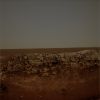
OPP-SOL2541-1P353755800EFFB1I5P2263L2M1-PCF-LXTT.jpgOn the Edge of Santa Maria Crater - Sol 2541 (Absolute Natural Colors; credits: Dr Paolo C. Fienga - Lunexit Team)253 visitenessun commentoMareKromium
|
|

SOL626-GIF-GP.gifBetween Day and Night... - Sol 626-631 (GIF-Movie; credits: Giorgio Picciau)84 visiteUn interessantissimo GIF-Movie realizzato dal nostro Amico e Partner, Giorgio Picciau, il quale ci mostra (a condizione che osserviate il filmato con la MASSIMA attenzione!) delle possibili e minime - ma non per questo scarsamentre significative - alterazioni digitali (tampering).
Le Yellow Bars aggiunte da Giorgio Vi saranno di uteriore aiuto per cogliere delle leggere (e non agevolmente spiegabili) variazioni del contesto ripreso.
ATTENZIONE: onde non essere fraintesi, ribadiamo che non stiamo parlando di un SICURO Image Tampering, ma solo di una POSSIBILE alterazione (ed infatti l'eventualità che le citate variazioni di contesto - che qualifichiamo come "minime" - possano essere attribuite sia ad un modestissimo cambio delle condizioni superficiali esterne - Tau + lighting conditions -, sia ad un fattore generico di disturbo del segnale nella trasmissione dei dati da Marte a Terra - noise + data loss - non è eliminabile).
Ed in ogni caso...Complimenti a Giorgio Picciau per l'Occhio e la Pazienza!MareKromium
|
|

SOL468-Dust_Devil-enhanced_468-A476R1.jpgDust Devils near Spirit on Sol 46867 visiteCaption NASA originale:"This picture shows a large, distant Dust Devil as a dark shape on the horizon near the right side of the image. This Dust Devil was about 5 Km (approx. 3 miles) away from NASA's Mars Exploration Rover Spirit and may have been up to 200 mt in diameter.
Smaller Dust Devils closer to the Rover appear bright against the dark ground. Spirit's NavCam took these images on the Rover's 468th Sol (April 27, 2005)".
|
|

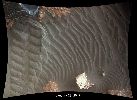
OPP-SOL648-1P185709464ESF64BNP2575L4M1.jpgDetails of the surface (2) - Sol 64862 visitenessun commento
|
|
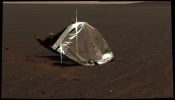
OPP-SOL335_P2364_L456-B339R1_br2.jpgThe Heat-Shield in "approximately true colors" on Sol 335118 visiteLo Scudo Termico viene qui ripreso, durante il Sol 335 e sempre in colori "approssimativamente veri" (!!!), da una distanza di circa 10 metri. Il fatto che al Controllo Missione dicano che lo Scudo si è "rivoltato come un guanto" ci fa sorridere. E' evidente, infatti, che il calore generatosi a causa dell'attrito durante la discesa e l'urto (rovinoso) contro la superficie di Marte, abbiano causato una serie di pesantissime deformazioni a questa componente della Sonda, ma forse occorrerebbe che il Controllo Missione ci spiegasse meglio che cosa intende per "turned itself inside out" (rivoltarsi come un guanto). Uno Scudo Termico che si sia "rivoltato come un guanto", infatti, non crediamo proprio che avrebbe potuto effettivamente ed efficacemente proteggere il suo prezioso carico (e cioè il Rover)... Forse è solo questione di intendersi sul significato delle parole (le traduzioni, spesso, sono ingannevoli). O forse alla NASA si sta cercando di creare "stupore e confusione" anche su questioni banali...
|
|
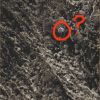
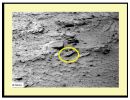
SOL646.jpgMould?!? - Sol 646 (Superdefinition; credits: Dr G. Barca)76 visiteUn altro image-artifact?...MareKromium
|
|
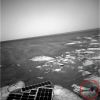
OPP-SOL1173-1N232319876EFF82__P1911L0M1-00.jpgThe "Martian Ace-of-Spades" (1) - context image - Sol 117373 visiteUn nuovo dettaglio della Superficie Marziana, davvero bizzarro ed estremamente intrigante, è stato individuato ed evidenziato anche oggi dal nostro ottimo Dr Gianluigi Barca su ben 2 distinti frames Opportunity.
Come certo saprete, la verifica dell'esistenza di un rilievo "bizzarro" attraverso frames diversi (consecutivi o non) è fondamentale per distinguere la semplice illusione ottica/svista dalla effettiva presenza di un qualcosa che, in ogni caso, vale la pena esaminare.
In questo frangente, come vedete, la Singolarità è data dalla presenza di un rilievo il quale ci ricorda (molto bene, diremmo!) un Asso di Picche.
Fantasia sfrenata? Illusione ottica? Svista? O magari "segnale" in codice?...
Questo non lo sa nessuno, ovviamente.
Ciò che sappiamo, invece, è che il nostro "Asso" si vede molto bene in 2 frames e quindi non è una svista nè un'illusione ottica determinata dal fatto che la ripresa è stata effettuata da un particolare angolo visuale.
Cosa resta, quindi? Resta la "Fantasia Sfrenata", il "Segnale in Codice" e, last but not least, la presenza di un rilievo superficiale curioso il quale, come ovvio, non è certo rappresentativo di un Asso di Picche (almeno nel senso terrestre del termine…).
Ecco: grazie al Dr Gianluigi Barca, anche in questo caso possiamo distinguere la realtà (il rilievo bizzarro, ma genuino - che si vede in frames differenti) dalla fantasia e dalla pura speculazione (l'Asso di Picche).
La differenza fra i Privati Ricercatori ed i cialtroni, a questo punto, la fa l'Onestà Intellettuale.
Quella stessa Onestà che ci fa dire, adesso come mille altre volte, che ciò che si vede in questi frames SEMBRA un Asso di Picche e noi, per sorridere, ci scherziamo sopra pur sapendo benissimo che il solo parlare di "Asso di Picche Marziano" è una (simpatica e leggera) sciocchezza.
Peccato che, come dice il nostro Amico, Collega e Socio - Dr A. Feltri - "il Buon Senso, la Razionalità ed il Pragmatismo, in questo Mondo, non paghino il becco di un quattrino"...
MareKromium
|
|

OPP-SOL2283-1F330865449EFFAJU3P1211L0M1-1.jpgClouds? - Sol 2283 (Enhanced Natural Colors; credits for the additional process. and color.: Dr Paolo C. Fienga - Lunexit Team) 166 visitenessun commentoMareKromium
|
|
| Ultimi arrivi - MARS |

SOL872-1152281618_30555-2_Sol872A_P2263_L257F-A893R1-1.jpgThe Surface of Gusev - Sol 872 (Possible Natural Colors; Credits: NASA/JPL-Caltech; Credits for the add. process. and color.: Dr. Paolo C. Fienga/LXTT/IPF))180 visitenessun commentoMareKromiumAgo 10, 2026
|
|

SOL872-1152281618_30555-2_Sol872A_P2263_L257F-A893R1-3.jpgThe Surface of Gusev - Sol 872 (Possible Natural Colors; credits: Dr. Paolo C. Fienga/LXTT/IPF)107 visitenessun commentoMareKromiumAgo 02, 2026
|
|

SOL4992-Turtl_Rock.jpgTurtle Rock (Credits: NASA/JPL-Caltech/MSSS; Processing & License: Thomas Thomopoulos)127 visiteIs this a fossilized turtle on Mars? No. Although resembling a large Earth tortoise, this is a layered rock outcrop on Mars that is estimated to span about 15 meters, making it much larger than turtles on Earth. NASA’s robotic Curiosity rover came across this unusual mound, dubbed Miraflores, last month during its 4922nd Martian day exploring Mars. The small butte may survive because it was somehow more resistant to erosion than surrounding rock. More recent wind has now covered its top with orange Martian sand. Below the top shell, many layers of stratified rock are visible, possibly indicating a long history of intermittent wind-blown sand being deposited and then hardened by ground water. Similar wind-eroded layered landforms, such as yardangs in the Qaidam Desert of China, exist here on Earth. Curiosity and its companion rover Perseverance continue to investigate the ancient history of Mars as well as searching for signs of primeval life.
(Note: It's with great pain that I note the increasingly ridiculous color processing of images coming from Mars. However, if they and the Space Enthusiasts are happy, that's fine...)MareKromiumLug 24, 2026
|
|

Zz-Mars_Global_Surveyor.jpgFarewell MGS!...115 visiteThe Mars Global Surveyor (MGS) failed on November 2, 2006, due to a software error uploaded five months earlier.
This bug accidentally pointed the spacecraft's battery directly at the sun. The intense heat caused the battery to overheat and drain, permanently cutting off power and communication.
The Breakdown of EventsThe Software Flaw: in June 2006, engineers sent a software update designed to synchronize the spacecraft's two flight computers. The code accidentally wrote two memory addresses in the wrong place.
The First Glitch: This error caused a solar panel to drive against its mechanical limit (or "hard stop"). The spacecraft then entered "safe mode," which is a protective state that shuts down non-essential systems.
The Fatal Reorientation: In safe mode, the spacecraft reoriented itself. Unfortunately, this new position pointed its battery radiator directly at the sun.Total Power Loss: The battery quickly overheated and failed, which caused the second battery to drain as well.
Within 12 hours, the spacecraft lost all power, went completely silent, and was declared lost.MareKromiumLug 12, 2026
|
|

SOL-0009-50993990326_48348a165d_b.jpgSetting Sun over Jazero Crater - Sol 9 (possible True Colors - Credits for the additional process. and color.: Elisabetta Bonora & Marco Faccin)95 visiteImmagine splendidamente processata.
Peccato che gli Autori di questo piccolo capolavoro (vecchi "Amici" di Lunexit) non abbiano aggiunto nulla in sede esplicativa del frame. Peccato davvero. Comunque (e di sicuro) non lo farò io (perché di fare il lavoro degli altri, specie di quelli che non si "sbottonano" mai per poi prendermi anche dello scemo, mi sono stancato).
Bravi loro.MareKromiumGiu 24, 2026
|
|

SOL0832-53021711488_bd0292cc36.jpgTwo-tone Rock - Sol 832 (possible True Colors - Credits for the additional process. and color.: Elisabetta Bonora & Marco Faccin)100 visiteImmagine splendidamente processata. Peccato che gli Autori di questo piccolo capolavoro non abbiano aggiunto nulla in sede esplicativa del frame. Peccato davvero.
Ad esempio: come mai la roccia inquadrata è bicolore?
Ipotesi? No?!? Ok, amen.
Comunque (e di sicuro) non ipotizzerò io (perché anche la mia "stupidità" - così mi venne riferito - ha un limite).
Bravi loro, quindi. In tutto. Certo, magari, in un lontano futuro, uno "sforzino" in più potrebbero anche farlo ma...parlando liberamente, è noto, si rischia di far figuracce.
E quindi, tanto per restare grandi amici di qualcuno che "conta" all'ESA, è meglio starsene buoni e produrre solo delle bellissime "cartoline" a gogò...MareKromiumGiu 24, 2026
|
|

SOL0714-52739052217_46e15dfa34_c.jpgLow Sun - Sol 714 (possible True Colors - Credits for the additional process. and color.: Elisabetta Bonora & Marco Faccin)87 visiteImmagine splendidamente processata. Come sempre. Peccato che, per l'ennesima volta, gli Autori di questo piccolo capolavoro non abbiano aggiunto nulla in sede esplicativa del frame. Peccato davvero.MareKromiumGiu 24, 2026
|
|

SOL0708-52711661976_7422eb394c_c.jpgDimming Light - Sol 708 (possible True Colors - Credits for the additional process. and color.: Elisabetta Bonora & Marco Faccin)102 visiteStupenda elaborazione. Mi chiedo solo se sia un'alba o un tramonto. In ogni caso non vedo l'alone azzurrognolo/celustrino che, in accordo alla NASA, dovrebbe caratterizzare sempre il Sole quando è basso all'orizzonte (che poi si tratti di dawn o di twilights, è indifferente).
Mah.MareKromiumGiu 24, 2026
|
|
|
|