|
|
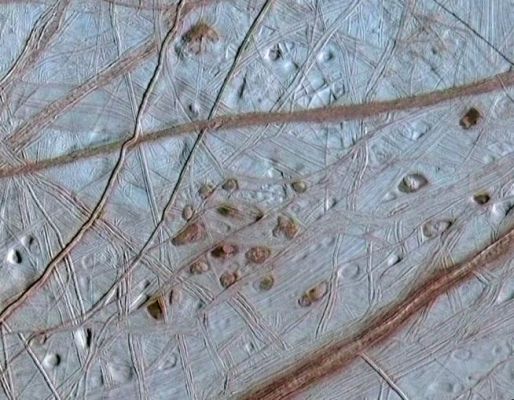
Lenticulae on Europa
|
Caption NASA originale:"Reddish spots and shallow pits pepper the enigmatic ridged surface of Europa in this view combining information from images taken by the Galileo spacecraft during 2 orbits. The spots and pits visible in this region of Europa's northern hemisphere are each about 10 Km across. The dark spots are called "lenticulae," the Latin term for freckles. Their similar sizes and spacing suggest that Europa's icy shell may be churning away like a lava lamp, with warmer ice moving upward from the bottom of the ice shell while colder ice near the surface sinks downward. Other evidence has shown that Europa likely has a deep melted ocean under its icy shell. Ruddy ice erupting onto the surface to form the lenticulae may hold clues to the composition of the ocean and to whether it could support life".
Nota Lunexit: Si, la NASA parla di un "profondo oceano liquido" al di sotto della crosta ghiacciata di Europa.
Un oceano "vivo", forse?
Ci chiediamo: ma perchè abbiamo abbandonato questa strada (sempre complessa, ma più vicina e più solida) per andare a cercare "qualcosa" di completamente indefinibile - e per giunta muovendoci alla cieca - su Titano?
Insomma, l'idea del Landing su Titano (attuata) è stata un Grande Passo, ma fermarsi su Europa e guardare meglio era proprio un'idea sbagliata?!?... Misteri della NASA.
|
|