|
|
Olympia Undae (2)
|
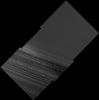
This image shows three representations of the 72 colors. The left panel is a nearly true-color composite in which the blue, green, and red planes are 0.44, 0.53, and 0.60 micrometer light -- nearly as the human eye would see. The contrast between the bright ice and dark dunes is so large that the dunes are barely seen. The middle panel is false color constructed from infrared wavelengths just beyond the range of the human eye. The blue, green, and red planes cover 0.80, 0.95, and 1.06 micrometer light. In this rendering of the data the differences between ice- and soil-rich regions are not as apparent because the colors of ice and dust are similar in this wavelength region. The right panel uses 1.15, 1.8, and 2.25 micrometer light in the blue, green and red planes and provides a dramatically different view of the scene. The areas of highest ice content appear in blue, and those with a mix of dust and ice -- most of the scene -- appear yellowish. The dunes are now visible against the ice because of their higher brightness at longer infrared wavelengths, and appear ruddy brown.
|
|