Inizio Registrati Login

Elenco album Ultimi arrivi Ultimi commenti Più viste Più votate Preferiti Cerca

Inizio > MARS > Walking on Mars with Spirit and Opportunity
Ritorna alla pagina delle miniature FILE 2457/5456 Torna all'inizio Guarda foto precedente Guarda foto successiva Salta alla fine
Wavy sand-dunes around Spirit - Sol 37
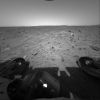
Caption NASA originale:"Spirit took this Front Hazard-Avoidance Camera image on Sol 37 (Feb. 9, 2004) after completing the longest drive ever made by a Rover on another planet - 21,2 mt (approx 69,6 feet). The wavy feature called a "bedform" is created when material is transported and deposited by some process - in this case wind. The Team is interested in the fact that the crests of this and most other bedforms they've observed through orbital data and Rover images are all parallel to each other, indicating uniform wind direction".

Dunque, quelle dunette sinuose che noi chiamiamo Side-Winders, alla NASA le chiamano "Bedform" e le ritengono un frutto esclusivo dell'azione dei venti. Noi riteniamo, sia sulla base dei dati forniti dalla NASA (e relativi alla composizione base - rocce e pietrisco - e tessitura della superficie di Marte), sia in base alle immagini che ci arrivano quotidianamente o quasi, che il vento abbia un ruolo MINIMO (se pure ha un ruolo) nella creazione dei Bedforms (o Side-Winders).
Parole chiave: Mars rocks, sand and debris - Panorama

Wavy sand-dunes around Spirit - Sol 37

Caption NASA originale:"Spirit took this Front Hazard-Avoidance Camera image on Sol 37 (Feb. 9, 2004) after completing the longest drive ever made by a Rover on another planet - 21,2 mt (approx 69,6 feet). The wavy feature called a "bedform" is created when material is transported and deposited by some process - in this case wind. The Team is interested in the fact that the crests of this and most other bedforms they've observed through orbital data and Rover images are all parallel to each other, indicating uniform wind direction".

Dunque, quelle dunette sinuose che noi chiamiamo Side-Winders, alla NASA le chiamano "Bedform" e le ritengono un frutto esclusivo dell'azione dei venti. Noi riteniamo, sia sulla base dei dati forniti dalla NASA (e relativi alla composizione base - rocce e pietrisco - e tessitura della superficie di Marte), sia in base alle immagini che ci arrivano quotidianamente o quasi, che il vento abbia un ruolo MINIMO (se pure ha un ruolo) nella creazione dei Bedforms (o Side-Winders).

SOL036-2N129562979EFF0361P1635R0M1-PCF-LXTT-00.jpg SOL037-1.jpg SOL037-x_pubeng_approved_020904_FHAZ-A037R1.jpg SOL039-2N129824874EFF0426P1883L0M1.jpg SOL039-2N129837559EFF0500P1835R0M1.jpg
Informazioni sul file
Nome del file:SOL037-x_pubeng_approved_020904_FHAZ-A037R1.jpg
Nome album:Walking on Mars with Spirit and Opportunity
Valutazione (5 voti):55555(Mostra dettagli)
Parole chiave:Mars / rocks, / sand / and / debris / - / Panorama
Copyright:NASA - Spirit Rover Mission
Dimensione del file:392 KiB
Data di inserimento:Mag 25, 2005
Dimensioni:1024 x 1024 pixels
Visualizzato:57 volte
URL:https://www.lunexit.it/gallery/displayimage.php?pid=5800
Preferiti:Aggiungi ai preferiti


Powered by Coppermine Photo Gallery