Inizio Registrati Login

Elenco album Ultimi arrivi Ultimi commenti Più viste Più votate Preferiti Cerca

Inizio > SOLAR SYSTEM > Pluto and Charon: The "Double Planet"
Ritorna alla pagina delle miniature FILE 54/79 Torna all'inizio Guarda foto precedente Guarda foto successiva Salta alla fine
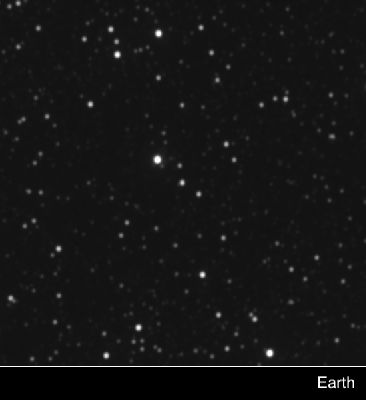
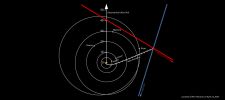
While spacecraft can use stars to get a sense of direction, figuring out how far and where a spacecraft has traveled from home usually requires accurate radio tracking from Earth. But members of NASA’s New Horizons team – using the mission’s spacecraft, now more than five billion miles from Earth – have demonstrated for the first time that it’s possible to determine direction and distance just by examining images the spacecraft snaps of star fields.

“As a spacecraft travels deeper into space, the positions of the stars seen from its location begin to shift from where they are seen from Earth,” explained Tod Lauer, an astrophysicist and New Horizons science team member from the National Optical-Infrared Astronomy Research Laboratory in Tucson, Arizona. “A spacecraft voyaging out into the Milky Way can measure these shifts, due to an effect called parallax, to locate where it is with respect to nearby stars. New Horizons has traveled far enough away that it can provide the first true demonstration of interstellar navigation.”
Parole chiave: Pluto

While spacecraft can use stars to get a sense of direction, figuring out how far and where a spacecraft has traveled from home usually requires accurate radio tracking from Earth. But members of NASA’s New Horizons team – using the mission’s spacecraft, now more than five billion miles from Earth – have demonstrated for the first time that it’s possible to determine direction and distance just by examining images the spacecraft snaps of star fields.

“As a spacecraft travels deeper into space, the positions of the stars seen from its location begin to shift from where they are seen from Earth,” explained Tod Lauer, an astrophysicist and New Horizons science team member from the National Optical-Infrared Astronomy Research Laboratory in Tucson, Arizona. “A spacecraft voyaging out into the Milky Way can measure these shifts, due to an effect called parallax, to locate where it is with respect to nearby stars. New Horizons has traveled far enough away that it can provide the first true demonstration of interstellar navigation.”

ZZ-ZZ-ZZ-ZZ-ZZ-Nhsv-20110401_0515.jpg ZZ-ZZ-ZZ-ZZ-ZZ-Z-New_Horizons_-_Map.png ZZ-ZZ-ZZ-ZZ-ZZ-Z-New_Horizons_Proxima-2025_28129.gif ZZ-ZZ-ZZ-ZZ-ZZ-Z-New_Horizons_Proxima-2025_28129_gifH_Interstellar_v2.jpg ZZ-ZZ-ZZ-ZZ-ZZ-ZZ-Charon-PIA19709-PCF-LXTT-IPF-1.jpg
Informazioni sul file
Nome del file:ZZ-ZZ-ZZ-ZZ-ZZ-Z-New_Horizons_Proxima-2025_28129.gif
Nome album:MareKromium / Pluto and Charon: The "Double Planet"
Valutazione (1 voti):55555(Mostra dettagli)
Parole chiave:Pluto
Copyright:NASA/JPL - New Horizons Mission
Dimensione del file:199 KiB
Data di inserimento:Mag 20, 2026
Dimensioni:550 x 600 pixels
Visualizzato:134 volte
URL:https://www.lunexit.it/gallery/displayimage.php?pid=32068
Preferiti:Aggiungi ai preferiti


Powered by Coppermine Photo Gallery